Tag Archives: wonkhe

Cylinders of excellence – Weeknote #250 – 15th December 2023

I had various meetings this week and spent time in our Bristol office, as well as working from home.

I wondered if silo working is another word for non-strategic working? People often complain about silo working and the resulting challenges that can arise. I think part of the reason why there are problems with duplication, conflict, and lack of communication, across silo working, is teams are working to their own objectives and aren’t necessarily working towards common objectives.

Silos
Image by marcson from Pixabay

The NSA in the US talks of silo working as cylinders of excellence. You can have outstanding or excellent teams, but not necessarily have an excellent organisation. See this blog post I wrote about that. I think I might expand on this on a future blog post.

stove espresso maker
Image by Karolina Grabowska from Pixabay

I attended the Adobe and Wonkhe Education Espresso event on supporting pedagogical development and innovation.

I had a meeting on licensing development and links to intelligent campus and student experience.

I had a meeting with organisers of on possible speaking opportunity and possible session ideas for EDUtech Europe 2024.

I had an Intelligent Campus meeting with the Honeywell PoC team at Jisc.

I also  had a meeting for planning a workshop on building a smart or an intelligent campus.

Had an informal discussion with colleagues in Jisc on learning spaces. I have been looking at how Jisc can support universities in the learning spaces space. What help and support do universities need, and what help and support do we want from Jisc. We also discussed the compromise that is a flexible learning space. Often, we see universities building flexibility into their learning spaces, as that is often seen as easier than building flexibility into curriculum design and timetabling.

Continued my work on a concept for supporting institutions in the smart campus space. This included reviewing the Higher Education Reference Model with an intelligent campus lens.

I recorded some content for an internal podcast. I used my Snowball microphone using Quicktime. I did a test recording, which sounded fine, and then did the actual recording. After sending it off I got some feedback that the audio recording was noisy. I checked my recording and there was a lot of interference. I had written a script for the recording, so it was quite easy to re-record the piece. This time though I used Garageband to record the podcast clip, and then checked that it sounded okay before sending it off.

Microphone
Image by rafabendo from Pixabay

I attended the UCISA Event – Digital poverty and digital capability – a vicious cycle?

What Was Wonkfest – Weeknote #245 – 10th November 2023

I was mainly in London this week trying to avoid the rain.

I was attending the WonkHE Festival of Higher Education, this is the conference previously known as WonkFest. The name change was more about the challenge in delegates getting funding to come to the event… so you want to go to a conference, that should be fine, what’s it called. Seriously?

It was a rather good conference, some really good sessions, too much choice sometimes. Only downside was, one of the rooms for the parallel sessions, was too small, so as a result lots of people who wanted to attend the session were turned away (including me).

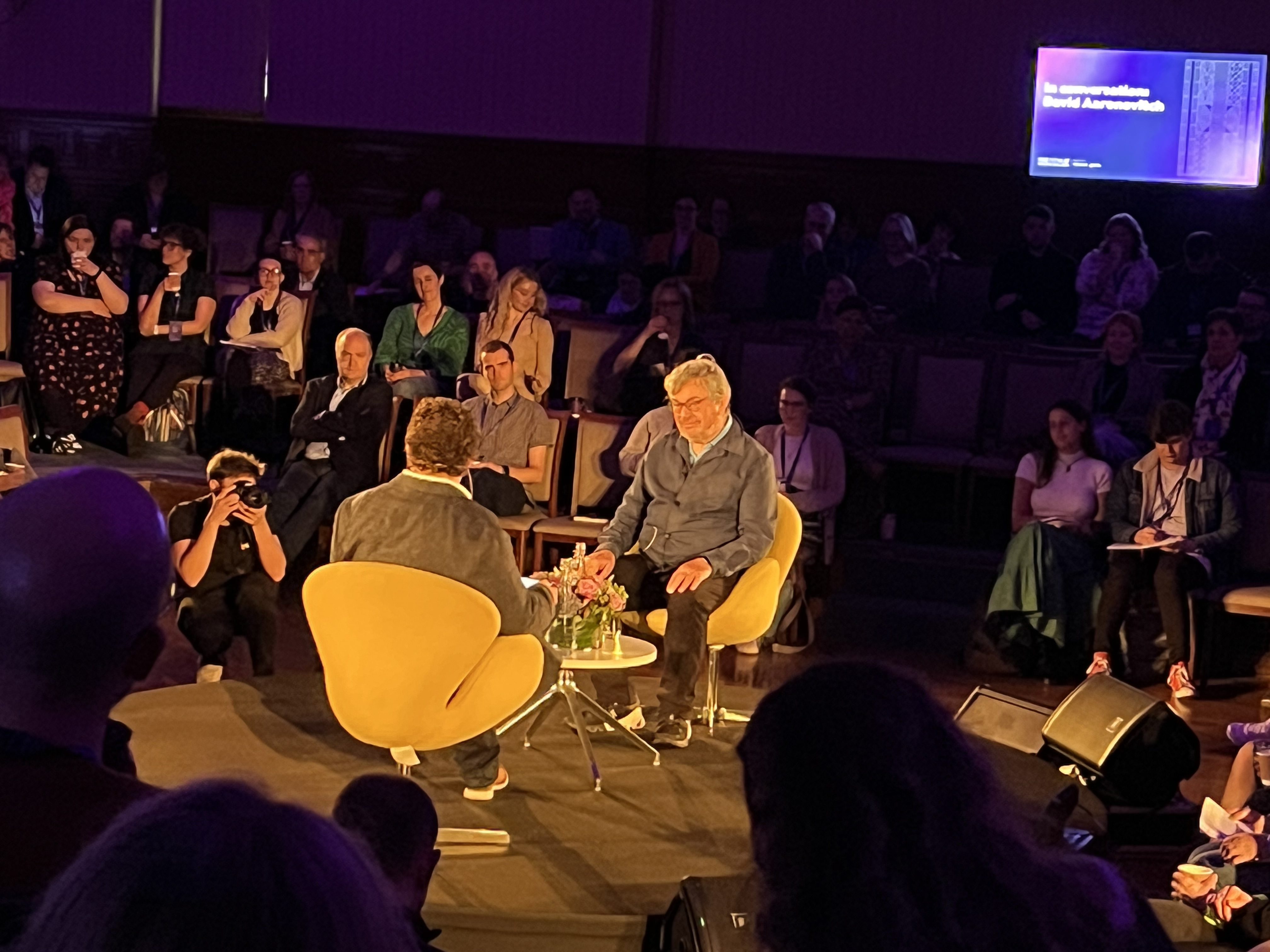
I enjoyed the session, “in conversation with David Aaronovitch“ I did have a question about the Remembrance of the Daleks… but a quick check of Wikipedia and I realise that Ben Aaronovitch wrote the Daleks and is David’s brother… So won’t be asking that question then!

I did a few sketch notes.

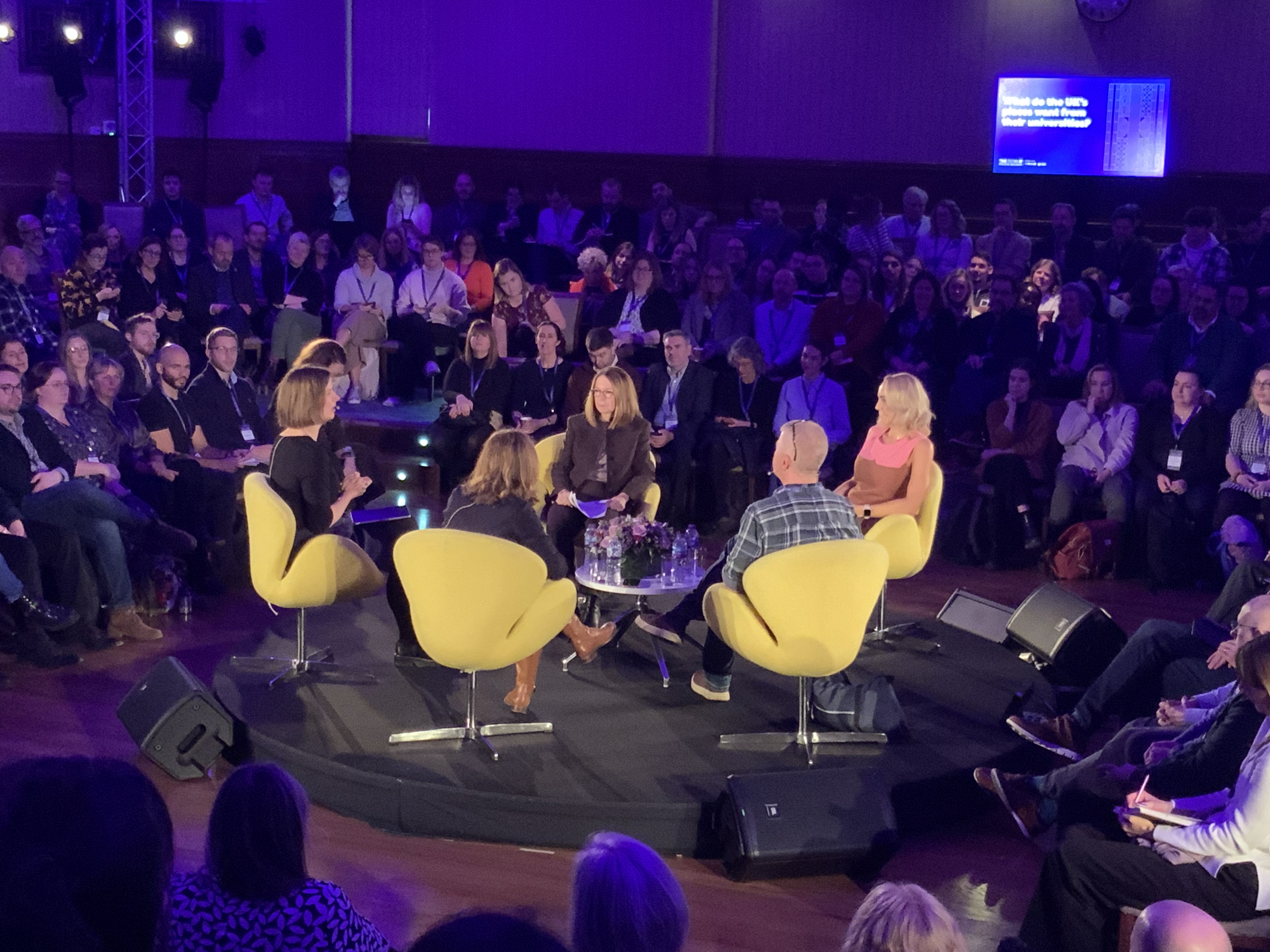
What do the UK’s places want from their universities?

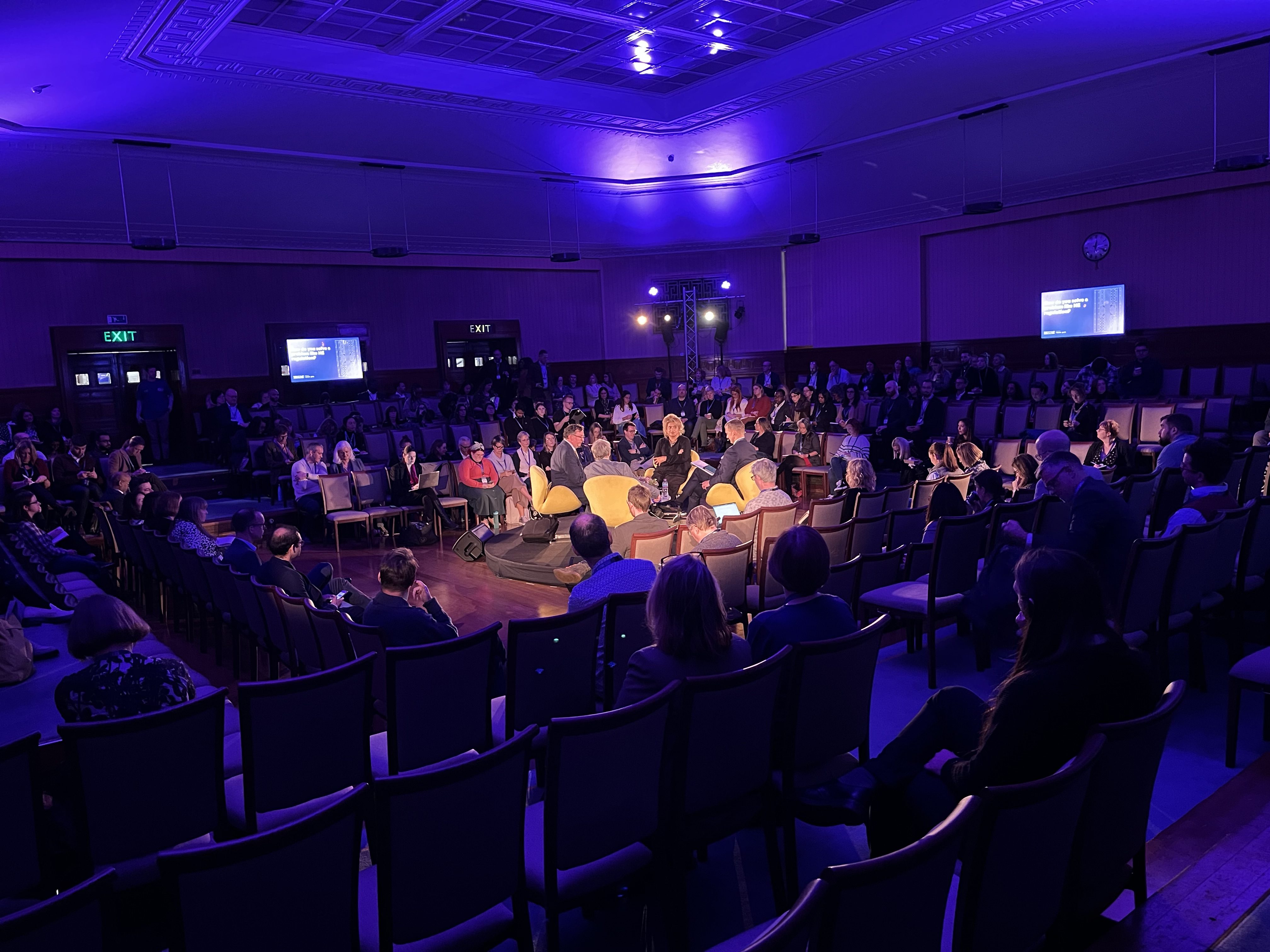
How do you solve a problem like HE regulation?

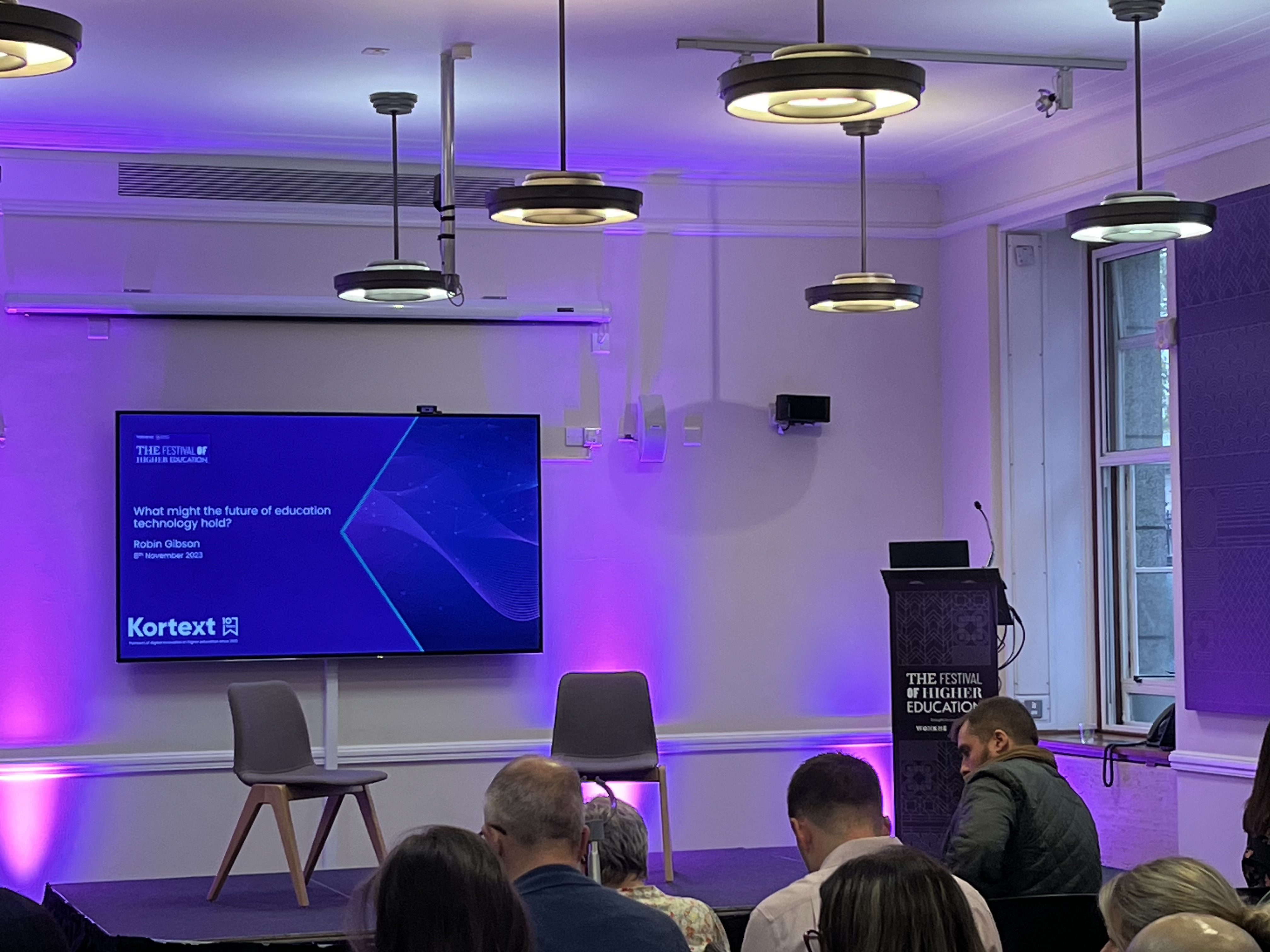
What might the future of education technology hold?

Not as many as I might do at other conferences, as the format of some of the sessions, didn’t lend themselves to sketching.

There was a couple of good blog posts on the WonkHE website about the event.

I had to spend some time reviewing and collating materials, and writing briefing note and bullet points for a panel session at HEAnet on Navigating the Challenges and Opportunities of the Modern Campus. As the considered expert on the intelligent campus, I often get asked to provide a perspective on the future of the university campus.

It is the intelligent campus that I will be speaking about, next week at Learning Places Scotland 2023 in Glasgow. I am doing a presentation on building the intelligent campus.

Universities and colleges spend billions on their campuses, yet they are frequently underutilised and are often a frustrating experience for students. In this session, James Clay will describe the campus of the future. How does a traditional campus become a smart campus? What are the steps to make a smart campus, an intelligent campus? The intelligent campus builds on the smart campus concept and aims to find effective ways to use data gathered from the physical estate and combine it with learning and student data from student records, library systems, the virtual learning environment (VLE) and other digital systems. This session will describe what data can be gathered, how it can be measured and explore the potential for enhancing the student experience, achieving net zero, improve efficiency, and space utilisation. It will demonstrate and explain to the delegates what the exciting future of the intelligent campus. James will also ask delegates to consider the ethical issues when implementing an intelligent campus as well as the legal requirements.

I had to plan in a call to discuss the presentation.

video recording
Image by Pexels from Pixabay

On Monday before heading off to London, I had a great discussion with colleagues in the office about broadcast and recording capabilities within our Bristol office. The reality is that though I would love to have a proper TV studio in the office I really need to plan and deliver some initial content first, to provide some foundations to a proof of concept.

There was a discussion on the possible future of the office, as in redesigning the space to reflect the current (hybrid) working practices. So more collaborative spaces, more occasional spaces, more spaces for online conversations and meetings, and so on…

Continued doing more work on the planning, reflection, and researching concept of optimisation of operations and data.

I had a great meeting with Josie Fraser discussing digital skills and digitisation.

We had some great old person digital transformation reminiscing.

Had a pre-meeting for Jisc OfS meeting next week. As a result I have some preparation to do.

I did miss using the Twitter at the conference this week, though I did post to Bluesky and Threads, it wasn’t quite the same, and very little engagement. I did look at the Twitter and there were some posts, so I do think even if I had engaged, there wouldn’t have been a serious amount of traction and discussion.

What might the future of education technology hold?

Senate House

I am attending the WonkHE Festival of Higher Education 2023 at Senate House in London.

Originally called WonkFest I have attended the conference before, and it’s a great event to learn about higher education policy and the impact on the university sector.

I attended the session titled: What might the future of education technology hold?

a view of the stage

Beyond the hype, and the sales pitch, beyond digital transformation and digital natives – this session will explore how technology is likely to shape higher education provison in the years ahead, what changes universities can realistically expect to learning and teaching, and how they might work with technology providers to get ahead of the curve.

Despite the abstract this was alas something of a sales pitch. As well as the advertised PVC, Claire Pike, Mark Simpson, the PVC from Teesside was also on the stage. However in a thirty minute session, over twenty minutes was devoted to telling us how “wonderful” one specific product was. I think this was a missed opportunity. Yes, I know you sponsored the conference, do provide an insight into the product, but that would have been much more authentic and valuable if it had come one of the PVCs.

I also felt thirty minutes was quite short for the session, so there wasn’t time for question or further discussion.

Jisc did get a mention for their report on student perceptions of generative AI.

This report looks at how students are currently using generative AI and explores its potential impact on their learning experience.

Even so I did do a sketchnote.

How do you solve a problem like HE regulation?

I am attending the WonkHE Festival of Higher Education 2023 at Senate House in London.

Originally called WonkFest I have attended the conference before, and it’s a great event to learn about higher education policy and the impact on the university sector.

I attended the session titled: How do you solve a problem like HE regulation?

Can any higher education regulator realistically be expected to balance the interests of students, providers, government, and the nation – and not get itself into hot water? With regulatory divergence and reform across the UK and criticisms from a House of Lords committee over the efficacy of English regulator the Office for Students, our panel will assess the options for HE regulation and think through what might be done to make it work.

I did a sketchnote which shows the breadth and depth that was covered in the session.

What do the UK’s places want from their universities?

Senate House

I am attending the WonkHE Festival of Higher Education 2023 at Senate House in London.

Originally called WonkFest I have attended the conference before, and it’s a great event to learn about higher education policy and the impact on the university sector.

The opening panel session was entitled What do the UK’s places want from their universities?

“Levelling up” may no longer be the current buzzword in government, but long standing issues of inequitable economic growth, public health, cultural assets, and education outcomes across the UK haven’t gone away – nor has universities’ and colleges’ commitment to their places. As Britain gears up for a general election, how might “place” shape the next generation of policy thinking – and how can universities best meet the needs of their communities?

I did a sketchnote which shows the breadth and depth that was covered in the session.

Secret life – Weeknote #211 – 17th March 2023

I was on leave for part of this week.

I attended The Secret Life of Students last year and enjoyed the conference, so made a point this year of booking a place.

This year the focus of the conference was on belonging.

I made some sketch notes from many of the sessions.

I did some more planning for Senior Education and Student Experience Group Meeting on the 20th March.

I spent time reviewing and having discussions on the Connect More themes.

campus
Image by 小亭 江 from Pixabay

I did some planning , working on ideas for the  Intelligent Campus community event which is taking place on the 24th May 2023. Bookings are now open.

This community of practice gives people a chance to network, share practice and hear what various institutions are doing. You will have the opportunity to discover more about intelligent campus projects and our work in this space. The focus of this community event will be where do we go next? You can read the new guide to the intelligent campus and reflect on your own journey in this space, and where you feel we can provide help and support. This will be an opportunity to discover more about the history of our past and current work in the intelligent campus space as well as hear from others about their work on this exciting topic.

I did some reflecting and reviewing potential priorities for next year, as well as some budgetary planning to support it. Much of what I am planning to do, builds on the work I have done this year and am doing this year.

My top tweet this week was this one.

Sketch notes for the secret life of students

I recently attended the Wonkhe event, The Secret Life of Students 2023, in London.

There was some excellent sessions and I made some sketchnotes for lots of them.

Belonging in a cost of living crisis

The stats are dire and the initiatives have come thick and fast – but what sort of impact is the cost of living crisis having on the student learning experience? Do efforts to enable students to succeed in these circumstances normalise a thin and stretched student experience?

The real risks to equality of opportunity

Tacking equality gaps in higher education remains a huge concern – particularly when some initiatives and efforts seem to fall foul of government guidance and preference. In this session we’ll bust some myths and seek to understand what really works when it comes to narrowing the gaps.

How to (re)calibrate the needle of trust

Post-Covid, there’s been lots of debate about the extent to which safety-net shifts in trusting students should be rolled back in the name of academic standards, as well as discussion about assessment methods that both appear to narrow awarding gaps and exacerbate allegations of cheating. How viable is it in 2023 to maintain the idea that every student should achieve a standard at the same pace? Where is the line between cheating and collaboration? And what could new AI tools mean for teaching, learning and assessment?

Cracking the code

So your department has a difficult NSS score on assessment fairness, and the Dean wants you to turn things around – fast. Or a flag goes up on your engagement analytic dashboard – what now? In a field teeming with data, finding out what is going on with the people behind the numbers can make the difference. In this session we’ll consider the role of the qualitative in turning data to action – and share new insight from our new student survey platform Belong on what students are really thinking.

Why are students so left wing?

The political leanings of students have been central to the free speech debate that has played out in recent years – but is it nature, or nurture? Some would argue that the past decade has seen a huge expansion in higher education participation, opening up opportunity to more students than ever. Others would argue that politics is increasingly skewed away from students and young people’s economic interests. What’s really going on – and what should universities, SUs or governments do about it?

Secrets of the student experience

Increasingly universities are expected to have a handle on “difficult” aspects of the students’ experience: alcohol and drugs, sexual harassment, and sex work. In this session, we will think through the various frames available for managing behaviours and the implications for students, university policy, and the competencies of university staff.

Is this appropriate? – Weeknote #205 – 3rd February 2023

Spent a lot of time this week reading, digesting, reviewing, and reflecting. Also attended a few meetings and spent time having conversations on Teams.

On Tuesday I went to our Bristol office. The train was delayed, so I started attending a meeting on my phone, which I find weird, but it worked.

Attended an internal meeting about Microsoft – Mixed Reality (MR) and Metaverse. There is some excitement around the Metaverse. As I said last week  industry perspectives on the metaverse and immersive platforms are varied. Meta, Google are all laying off technical staff in this space, Apple have delayed their AR/VR product again. Lots of confusion between immersive games and the Metaverse. Apart from some niche areas (such as education) what is the unique selling point of the metaverse? As Paul Bailey in a recent blog post said, the “effective” metaverse is probably decades away…

Had an interesting discussion about the Office for Students and its future. There is criticism that they have been receiving from members and member organisations (such as GuildHE and the Russell Group). Labour (who are likely to win the 2024 election) have been quiet on HE and the OfS. Also found and read this  Can Labour de-Commodify Higher Education? It has a Minor Problem.

The education system in Britain is in the mud. That is scarcely news. But would Labour have the courage and values needed to revive it? The trouble they would have if they win the next General Election is due partly to their Party’s legacy and partly to a personal problem.

Attended Monthly sector strategy leads meeting and discussion. We had an interesting discussion on scenario planning. Thinking about a workshop on this. Continue reading Is this appropriate? – Weeknote #205 – 3rd February 2023

Who turned out the lights? – Weeknote #188 – 7th October 2022

Last week I was in London (oh and a bit of Bristol). This week I worked from home at the beginning of the week and spent the end of the week working in our Bristol office. I think this was the first time in ages that I had actually spent three days in a row working out of the office. Well it was warm.

I spent some time this week organising and planning the Jisc Senior Education and Student Experience Group. This meant organising attendance at meetings, expanding the group, responding to queries, booking rooms and locations. Also rejigging and renaming the Jiscmail list for the group.

I am organising a cross-Jisc conversation to discuss and join up activity across Jisc in the intelligent and smart campus space. We have quite a few projects and ideas in this area.

campus
Image by 小亭 江 from Pixabay

The news is full of stories on the possibility of winter blackouts as the energy crisis continues to hit home. With the continuing prospect of restrictions in gas supplies across Europe, there is a strong chance with a extreme cold spell in the UK that there will be power rationing. This means that some parts of the UK will be dark. Students will face learning without light, power, heat or connectivity. How can you deliver high quality online learning without power or connectivity? So I wrote a blog post exploring this.

Also this from the Guardian: How would three-hour power cuts work if enacted in Great Britain?

People in England, Scotland and Wales are braced for the possibility of rolling power cuts this winter after a warning on Thursday from National Grid. The electricity and gas system operator has said households could face a series of three-hour power cuts…

So I wrote up a follow-up post.

stove espresso maker
Image by Karolina Grabowska from Pixabay

Wonkhe was reporting on the cost of living crisis.

The cost of living crisis will be worse than the impact of the pandemic for some students, a Welsh university Vice Chancellor has warned. Ben Calvert, vice chancellor at the University of South Wales, made the comment as he gave evidence at the opening of a Senedd committee inquiry into mental health in higher education. Calvert told the committee: “I actually think for some of our students that will be harder, particularly where we have got populations of students who are older.”

These concerns have been expressed by many universities at meetings I have attended. What could universities do, and what should universities do?

We potentially could see shifts in attendance patterns on campus by students, as they take advantage of the warm rooms and opportunities to charge devices away from their rented student homes.

This was an interesting read on Eighteen pitfalls to beware of in AI journalism.

We noticed that many articles tend to mislead in similar ways, so we analyzed over 50 articles about AI from major publications, from which we compiled 18 recurring pitfalls. We hope that being familiar with these will help you detect hype whenever you see it. We also hope this compilation of pitfalls will help journalists avoid them.

The first example was this analysis of an article on an AI EdTech product, The Machines Are Learning, and So Are the Students.

It features comments such as this one:

This sentence implies that AI is autonomously grading and optimizing coursework. However, it is only being used to assist teachers in a small part of grading: identifying the answer that a student wrote and checking if it matches the answer provided by the teacher.

I think that the article and analysis is not just useful for journalists, but anyone looking at AI in education (and beyond).

Image by Free-Photos from Pixabay

I have been thinking about the keynote I am delivering for Moving Target 2022 in Berlin in November. Planning a short video for the conference organisers social media for next week as well.

My top tweet this week was this one.

Record temperatures – Weeknote #177 – 22nd July 2022

This week saw record temperatures as a red warning heatwave hit the UK. I spent the week working from home, as trains were cancelled or delayed and there were problems on the roads.

I wrote a blog post on how I can teach anywhere

I use to say things like “I can teach anywhere”. What I meant by this, wasn’t that the environment or space I was using wasn’t important, but I could overcome the disadvantages of the different spaces I had to play with, and still deliver an effective session.

So though I might be able to teach anywhere the reality is that all those challenges and issues I face in an inappropriate space, may well result in poor quality learning, despite the quality of my teaching.

Big news this week was that the QAA was to step away from designated role in England. Over on Wonkhe, David Kernohan  tries to make sense of it all.

The Quality Assurance Agency (QAA) will no longer consent to be the Designated Quality Body (DQB) in England, as of the end of the current year in office (March 2023). The reasoning is straightforward – the work that QAA does in England, on behalf of the OfS, is no longer compliant with recognised quality standards – namely the European Standards and Guidelines (ESG) as monitored by the European Quality Assurance Register for Higher Education (EQAR). For this reason, the QAA registration with EQAR was recently suspended – a decision that highlights international concerns about procedures in England but has an impact in the many other nations (including Scotland and Wales) where QAA needs that EQAR registration in order to fulfil a statutory quality assurance role.

Once more we are seeing more divergence across the UK for higher education.

Alexa
Image by finnhart from Pixabay

I revisited and revised a blog post on voice assistants I had written back in 2018.

Hey Siri, what’s my day like today? Alexa when’s my next lesson? Okay Google, where are my library books?

Voice assistants have become widespread and are proving useful for a range of uses. The cost has fallen over the years and the services have expanded.

The use of voice assistants and smart hubs has certainly continued, and they have become embedded into many digital ecosystems. Their use in education though is still limited and I will be looking at that in a later blog post.

Attended a session on impact this week, which was interesting, but not necessarily that useful. How do you evidence impact of what you do? I wonder for example of the 1,828 blog posts published on this blog have had any impact on the way in which people work, support others or plan their work. For example one of the most popular blog posts on the blog, which though written in 2011, is still regularly viewed, is this one 100 ways to use a VLE – #89 Embedding a Comic Strip, which was one of a series of blog posts on improving or enhancing the use of the VLE.

One use of graphic that can enhance the look of a VLE course or as a mechanism to engage learners is to embed a comic strip into the VLE course.

What has been the impact of this? Has is changed practice? Has it improved the student experience? Has it improved student outcomes? How would I know?

I don’t think I can evidence the impact of this, but other work I have done I can sometimes see the evidence, however I don’t know if their has been actual impact.

I quite liked these tweets from August 2021 from people who had attended the digital leadership consultancy I had delivered for Leeds.

I had as part of the programme delivered a session on e-mail. It incorporates much of what is in this blog post on Inbox Zero and this follow up post. Always nice to see the impact that your training has had on the way that people work, they didn’t just attend the training, engage with the training, but are now acting on what they saw and learnt.

However what I don’t know is, has the change had a positive impact? And what was that impact?

I spent some of the week reviewing our new guide to the Intelligent Campus, and the revamped guide to the Intelligent Library. The library guide was never published but has been updated for 2022. I also reviewed our updated use cases, as well as drafting plans for some additional use cases. I am aiming for publication of these in the autumn.

letters
Image by Gerhard G. from Pixabay

If you are going on leave over the summer, you may want to look at this blog post on managing your summer e-mail.

My top tweet this week was this one.