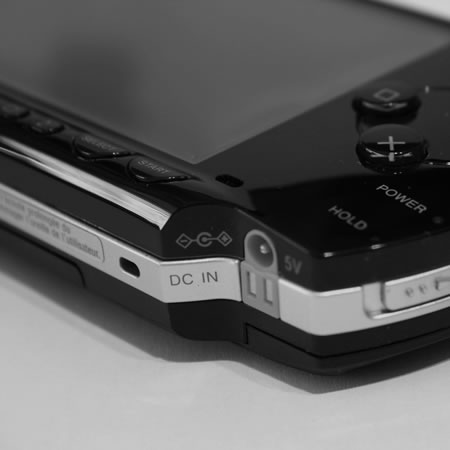
New smartphone features ‘baffle users’

BBC reports on how users are “baffled” by the complexity of modern smartphones.

The complexity of modern mobile phones is leaving users frustrated and angry, research suggests.

Some 61% of those interviewed in the UK and US said setting up a new handset is as challenging as moving bank accounts.

Of course some would say that today’s Google Generation and Digital Natives will be able to handle such smartphones with ease, therefore we do not need to worry about our learners using such devices.

I am not so sure.

The only mobile devices I have ever been able to set up e-mail on to both receive and send has been the iPod touch. Now I know I am not (according to the authors) part of the Google Generation as I am too old; however I do use a range of other services on my phone such as Qik, Shozu, JoikuSpot to name but three – and so I am quite adept at setting up applications and changing settings. However with e-mail, it has always been a pain!

The S60 operating system for example, is a great OS for installing third party applications,and I have done this on both the Nokia N73 and N95. Though there are included features which I can never get to work. For example, making video calls, hasn’t worked for me, so I just don’t do it. I got annoyed with the (Vodafone supplied) Nokia N73 which came with a Flickr application which never worked, in the main as Vodafone blocked Flickr as part of their Content Control.

Today’s devices are full of stuff we can use to save time, increase the quality and quantity of information we receive, to communicate, to share; however many devices are seriously lacking in terms of usability. This survey indicates that I am not alone in this view.
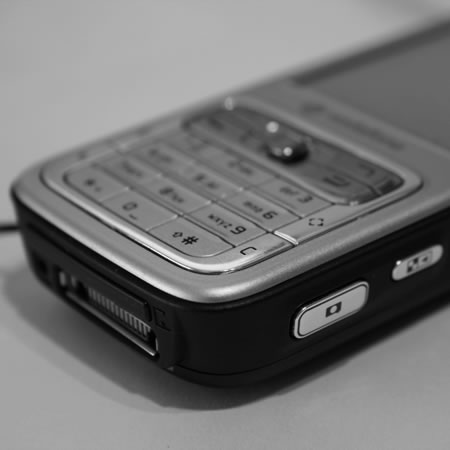
New smartphone features 'baffle users'

Intel’s Classmate comes to the UK

BBC reports that Intel’s netbook for schools in developing countries, the Classmate is now coming to the UK.

A new version of a laptop originally designed by Intel for the developing world is making its debut in the UK.

The newly designed Classmate machine can be converted from a traditional laptop to a tablet PC to allow children to write and draw more naturally.

It will be available in the UK in February, and will be sold directly to schools as well as via online retailer Amazon and high street store Argos.

Won’t be cheap like other netbooks though, it has a list price of £349.

Read a review of the Classmate (with pictures).

Blowing my own trumpet

This blog post is really just me “blowing my own trumpet”, well can’t one do that now and again?

Why the self trumpeting?

Well the evaluation of the JISC 2008 Online Conference has been published on the JISC website.

One of the questions asked was about the blog I wrote for the conference.

The evaluation said:

Most of the respondents who included their comments thought the blog was excellent. Six people from forty-two did not find it useful or thought it was extra reading in an already busy conference, but most of the comments on the blog were in the following vein:

“It gave a useful overview of the conference that looked at the whole picture instead of the detail.  Also generated new ideas.”

“It was excellent and tied together much of the technology and reasoning behind the usefulness of an online conference.”

“For me it was one of the highlights of the conference – very, very good indeed.”

“Also enjoyed James Clay’s blog entries – amusing yet informative! Hats off…”

Really quite chuffed about the comments.

Finally to bring me down to earth, here is the bloopers tape from the conference, as not everything goes to plan….

Charging gadgets using a magnet

At CES the BBC reports on companies which are demonstrating products which allow you to charge your gadgets just be placing them on a mat.

Magnetic induction could soon spell the end of tangled cables and a frustrating hunt for the gadget’s charger.

As someone who has a fair few gadgets, my office is full of small black chargers of various descriptions. Without my Tesco resealable plastic bags, Dymo labeller, I would be a total mess as more often than not before you know it, your chargers are all tangled up and due to poor labelling on the manufacturers’ part you are not sure if you are holding a charger for a USB hub or an UMPC!

I use resealable plastic bags for each charger, this avoids the entanglement problem, while a Dymo label on each charger gives me a much better idea about what it is for.

The thought of just having a mat to place devices on sounds very appealing.

Palm unveils smartphone

Palm, at CES, has unveiled their new smartphone, the Pre.

Palm unveils smartphone

BBC reports

Handheld computing veteran Palm has unveiled its Pre smartphone at CES.

The touchscreen handset runs a web-centric operating system that aims to help people organise and manage their many online contacts and identities.

The device is widely seen as a competitor to rival smartphones such as the iPhone, BlackBerry, N97 and G1.

Find out more from Palm.

“learning by stealth” on the PSP

gamesindustrybiz has an interesting and informative interview with Marco Minoli from Slitherine Software.

Slitherine Software are a games based company but with a slant.

Well, it’s very simple – we make history-based games. That’s our core, and I think while there are other companies who make a variety of products, we have a very clear idea of what we want to do. That’s what’s important for us – our licenses and the types of games we create.

It has to be cultural and entertaining – history is culture, and we don’t want people to notice that they’re actually learning something while they’re playing, that’s the goal. Because retail hates edutainment and culture, they just don’t like it. As soon as you say “culture” they tell you they won’t sell it.

The goal for us has always been to get people to learn by stealth, and movies like Gladiator or Saving Private Ryan – they’re entertainment, but they’re also giving some educational learning content too.

Though making a lot of PC software, they also see the PSP as having real potential as an edutainment device (though like most people I can’t stand the term edutainment).

But I think the PSP is more of a suitable platform right now, and I think at the moment it’s the console has the most potential to target new consumers.

From a learning perspective I do believe that the PSP has a lot to offer learners, and certainly my experiences with our MoLeNET Glossy project last year back this up, the PSP was the most used and popular mobile device we used, over other devices such as the iPod touch and the Asus EeePC.

Will be interesting to see if the PSP starts to have more educationally orientated content, the Nintendo DS certainly at the moment seems to have more non-gaming titles in its catalogue, though PSP sales outsell DS according to Minoli.

I’ve seen sales charts for some territories now and a top ten PSP game sells more than a top ten Nintendo DS game.

What do you think, is the PSP the future of mobile learning?

Original source of news, PSP Fanboy.

Google Android on the Asus EeePC

2008 saw the release of the Google G1 phone using the Android operating system.

Though the battery life was slammed by many the operating system was praised as very innovative.

It would appear that Android was not just developed for mobile phones according to Venture Beat, who have installed Android on an Asus EeePC.

Google Android on the Asus EeePC

The image above shows a netbook Asus EEEPC 1000H running on Google’s mobile operating system Android. Huh? You thought Android was for mobile phones, right? Well, as we’ve written before, Google is planning to use Android for any device — not just the mobile phones.

The article shows how the development team installed and could run Android on the EeePC and speculate that we will see Google Netbooks running Android in 2010!

2008 was year of the smartphone

BBC News has an interesting article on the smartphone and how it made it big in 2008.

There is no doubt that 2008 was the year of the smartphone.

The last 12 months has seen the launch of iconic devices such as the iPhone 3G, Google G1, Blackberry Storm and Nokia N97.

It also saw the emergence of the electronic ecosystems needed to get the most out of such handsets.

Of course it is not all good news, with the economic downturn, sales of smartphones are expected to fall.

What this will mean is that as our learners arrive and may be looking to purchase a phone, they may consider a device which only makes phone calls and SMS, and will ignore the more advanced web enabled smartphones which have so much potential for supporting learning.

The decline in sales could hinder the development and embedding of mobile learning in the UK educational sector, but possibly with the increase in the sales of (cheap) netbooks, maybe it isn’t all bad news for learning technologies.

2008 was year of the smartphone

JISC Legal Toolkits

JISC Legal have a series of toolkits available for those educational institutions using Web 2.0 services.

The following are included:

Web 2.0 and the Law for FE Policy Makers
Web 2.0 and the Law for HE Policy Makers
Web 2.0 and the Law for Information Services
Web 2.0 and the Law for IT Support Staff
Web 2.0 and the Law for Learning Resource Staff
Web 2.0 and the Law FAQs
Web 2.0 Policy Checklist

Find out more: http://www.jisclegal.ac.uk/Web2/index.htm

If you are thinking about integrating or using Web 2.0 services in your institution it would make sense to have a look to ensure that you are aware of any legal implications.

news and views on e-learning, TEL and learning stuff in general…