All posts by James Clay

Lost in translation: time

clock
Image by Monoar Rahman Rony from Pixabay

Time changes everything except something within us which is always surprised by change.

Thomas Hardy

As part of my work in looking at the challenges in delivering teaching remotely during this crisis period I have been reflecting on how teaching staff can translate their existing practice into new models of delivery that could result in better learning, but also have less of detrimental impact on staff an students.

One of the things we noticed when the pandemic struck and lockdown happened, was as the education sector moved rapidly to remote delivery was the different models that people used. However what we did see was many people were translating their usual practice to an online version.

The two hour physical in-person lecture became a two hour online lecture.

Why was the online lecture two hours?

Well in the timetable it was two hours!

Why is it two hours on the timetable?

Well we only have the room for two hours.

But online you don’t need a physical room?

But the programme validation said we need to have a certain number of hours and the term is a number of weeks, the end result was two hours a week. That was in the timetable and that’s how long we have the room for. Someone else has the room before and after my session.

The thing is translating practice online doesn’t really work. You lose the nuances of what made the in-person experience so great and you don’t take the advantage of the affordances of what digital can bring.

There is no physical constraint on why an online two hour lecture needs to be two hours.

There may be (actual) timetabling constraints if the two hours is delivered live online, the students may need to attend another live online session. However this may not always be the case and certainly isn’t if the session is recorded in advance.

When it comes to designing an online module or an in-person module with online elements, we can design the online aspects without the physical, geographical and chronological constraints of an in-person session.

This means sessions can be designed to fit the topic, rather than fitting the topic to the session.

It means you can do longer sessions, or shorter sessions. 

Sessions no longer need to be weekly (as in you only have the room once a week). You can front load the delivery when delivering online, taking advantage of asynchronous recordings for example.

The real challenges here are more cultural and process, than technical or physical.

Was the module validation process designed for in-person modules? Can it be redesigned for mixed (blended) or online delivery?

Does the academic have the necessary skills to design an irregular model of delivery based around the topic and content rather than the availability of a specific room at a specific time once a week?

What about student expectations? Will they find an asynchronous, irregular timetable too much to handle?

Time is not a constraint, we are.

Supporting student transition to HE in a covid context

Published this week was the report from a workshop I worked on with the University of Cumbria and Advance HE.

The pandemic forced a swift move to online learning in March 2020 which for many was the first experience of teaching and/or learning in the virtual environment. The sector news focussed in the educational aspect of the move in that initial phase reporting on concerns of quality, parity and applauding the pace of change with the digital skills agenda. The announcement of further lockdowns meant the initial, emergency, move now needed to be re-shaped into a more considered response that would potentially lead to sustained change across the sector.

Supporting Student Transitions into HE was an excellent event in which many generously shared viewpoints and challenges and having such a variety of institutions and roles added to the richness of the content. A little later than expected, we have published a resource pack we have created as an output from the event. We hope you find is useful in drawing up plans for the new start of term in September and/or January.

Staff conference time – Weeknote #133 – 17th September 2021

Brean Down

I spent much of the week working from home.

Most of the week was spent reading, analysing and writing.

Guardian published this article: Awaiting a ‘tsunami of Covid’: UK lecturers fear students’ return.

Dr Stephanie Coen, assistant professor in health geography at Nottingham University, is eager to get back to teaching in person. But she fears that with students not required to wear masks when classes start in a few weeks, squeezing them like “sardines” into her tiny room for seminars will be unsafe.

I don’t think anyone will be surprised if we see a repeat of what we saw last September when students returned to university. Though the numbers initially back then weren’t high they did start to rise as term continued. What will happen now, we don’t really know.

This tweet from Alejandro Armellini resonated with me.

It was a thread of tweets about the importance of being pedagogically critical of new ways of delivery such as hybrid. Ale has actually done hybrid and brings that experience and perspective to his views.

Lawrie posted a really good blog post this week: We need to stop designing curricula with “white able males” as the default setting, based on a presentation he gave about the research he has been doing.

The pandemic has also shown us that we do not have to do anything special for the people for whom institutions and systems have been built. Our white male able students are going to be fine, they are the default category of person higher education is already built for..  It is ok–I would argue it is necessary– to start saying to ourselves “my starting point for designing this curriculum, this system, this process, will be to serve those students who are disadvantaged, who are disabled by our institutions.

Clifford's Tower in York
Clifford’s Tower in York by James Clay CC BY-NC 2.0

I went to York so this story was interesting for me: University of York offers students accommodation – in Hull.

The University of York is offering students housing an hour’s drive away in Hull due to a shortage of accommodation. The crisis has been sparked by an over-subscription on the university’s courses which has created a surge in demand for student housing.

This kind of situation is one reason why universities might want to consider a more flexible curriculum which takes advantages of the affordances of online and digital so that students don’t have to spent two to three hours commuting to campus five days a week. Though I imagine that students might actually want to go to campus (and the city) as they applied to York not Hull. I went to York as much for the city as for the course.

Thinking that this mobile telephony would never catch on….

https://twitter.com/BBCArchive/status/1437438420867956738

Michael Rodd makes a call with an experimental cordless mobile phone.  It’s 1979 and time for the telephone to go mobile. In this report from a longer programme, Michael Rodd examines a British prototype for a cordless telephone that allows the user to make calls from anywhere. Also included at the end of this item is a rather nice out-take as Rodd also experiences the first mobile wrong number.

I do recall watching this when it was broadcast.

Of course we don’t really use our phones as phones these days, the mini computer we have in our pockets is now used for way more than just making calls.

Thursday I was off to Birmingham for our all staff conference.

This was my second in-person event in a week. I drove to Birmingham, parked my car. I parked at Five Ways. In the past when I parked there I would generally have to park on the roof, this time I could have parked on level 1, though as there was more room I parked on level 2. I walked to the ICC and showed my covid pass and I was into the event. There were nearly 500 Jisc staff in the event.

This was the final day for Paul Feldman as CEO and the first day for Heidi Fraser-Krauss our new CEO.

The day mainly consisted of talks with Q&A. There was some group work, but overall probably about 30 minutes worth, a missed opportunity I think, but it’s always challenging to design a programme such as this for 500 people. What was nice was the time to connect with people, though we obviously talk a lot through Teams and Zoom, there is something different about meeting in-person.

Friday I had a chat with some consultants about some possible work, and we also discussed the Intelligent Campus concept as well.

My top tweet this week was this one.

Away at the away day – Weeknote #132 – 10th September 2021

Waterloo

For the first time in a while I had a full working week.

I was back in London for the first half of the week and then off to Leamington Spa for an in-person Team Away Day at the end of the week. The first half of the week was very hot, very nice in fact, even if travelling was slightly uncomfortable down to the heat. I certainly noticed the large increase in people in London this week compared to visits in the summer.

A very bizarre and interesting Twitter thread on what was required for books.

ALT-C took place this week, as an online event. I decided that I didn’t have the capacity to attend this week (and make the most of it), so viewed it afar via the Twitter.

In the past I’ve always enjoyed attending ALT-C and am looking forward to attending the next time it happens as an in-person event.

To be honest, are we surprised by this?

No. I wasn’t.

Also, it wasn’t AI, it was the human who wrote (or programmed) the algorithm. In the same way that humans can programme bias (usually unconsciously) into algorithms, humans can also programme unbias into those same algorithms.

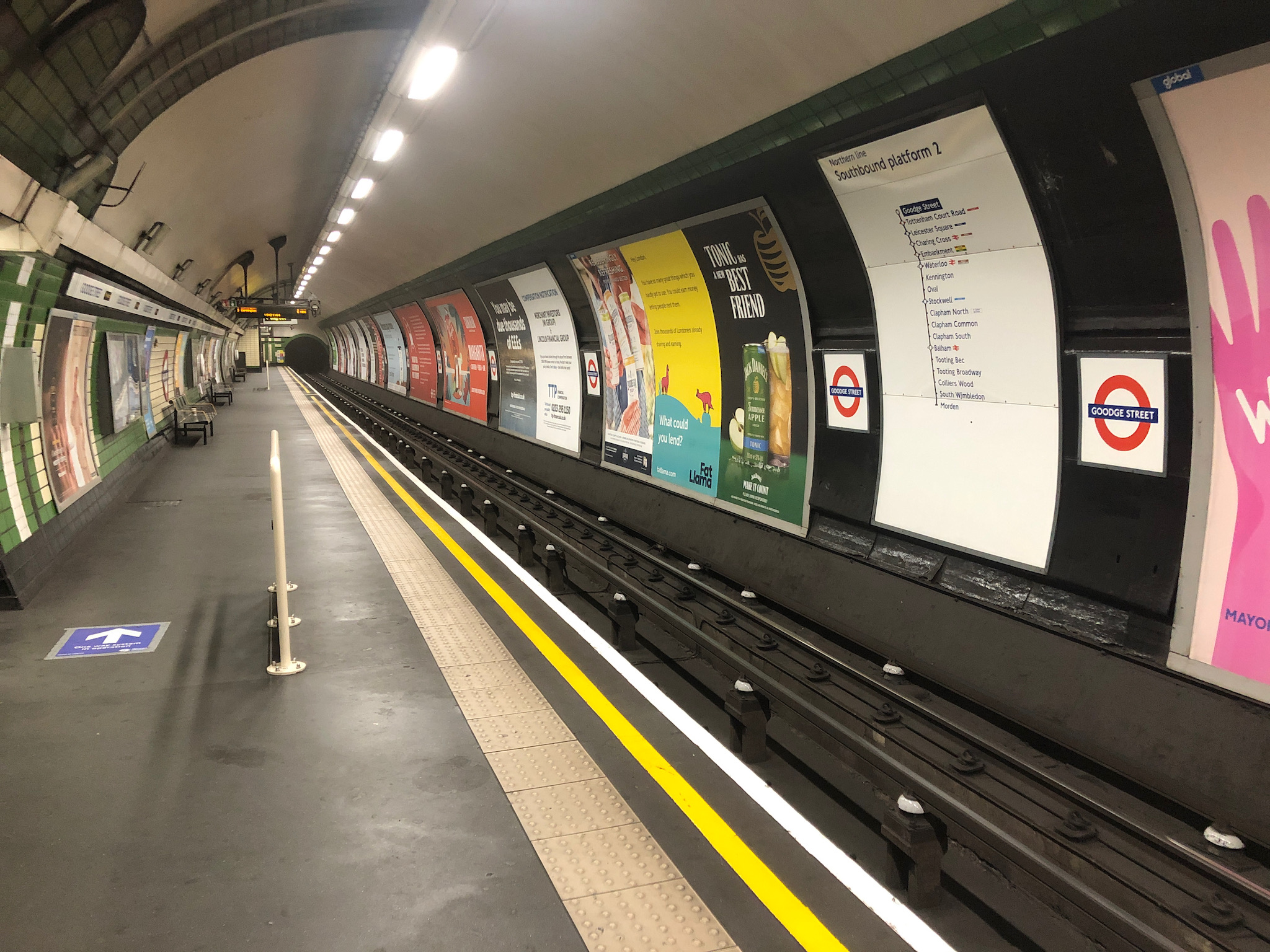
Goodge Street

The Kenyans who are helping the world to cheat from BBC News.

If a student in London or New York goes online to pay somebody to do their essay, the chances are the work will actually end up being done by somebody in Kenya. BBC Trending reports from Nairobi on the ghost writers helping foreigners to cheat.

Though we may want to find technological solutions to essay mills, another option (or an additional option) is to rethink assessment so it is less dependent on essays that can be outsourced.

The BBC News also reports that Three brings in EU roaming charges and ends global scheme.

Three is the latest mobile network to announce it is reintroducing roaming charges between the UK and Europe. From 23 May 2022, customers who have taken out a new or upgraded contract after 1 October will have to pay £2 a day to use their monthly allowance of minutes, texts and data in the EU. It follows similar announcements from EE and Vodafone earlier this year.

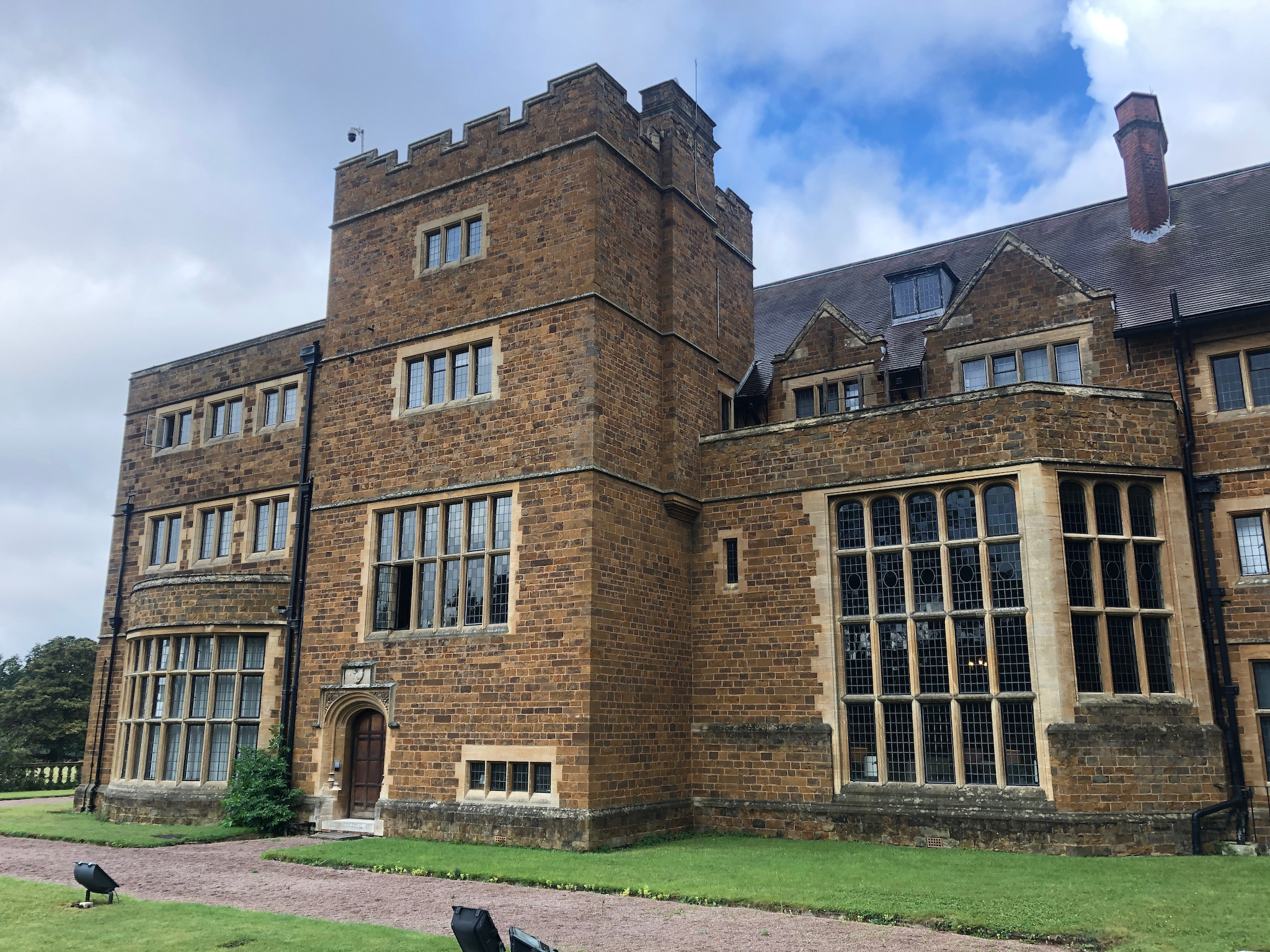
Ashorne Hill Conference Centre

The away day was taking place at Ashorne Hill Conference Centre. To say day was a bit of misnomer, as it was a lunchtime to lunchtime away day over two days. I drove up to the conference centre and parked the car at which point there were some colleagues from my directorate just parking as well. We went inside for coffee. I’ve forgotten how bad conference centre coffee is. Not something I missed. It was bean coffee from a machine, but even so…

We had an introductory session and then we had lunch, before heading inside to listen to some speakers, an external, someone from FE and someone from HE. We then had some team discussions about the next year and what are priorities were.

After finding my room, I had a few snacks. I then changed and went to the bar and had a beer. We had a nice (conference) dinner. I had crispy chilli beef (which wasn’t very crispy).  For my main, I had the chicken with wild mushrooms. For dessert I had cheese and biscuits. We talked and then we went to the bar. It was both a normal and a bizarre experience. I would do this kind of thing a lot pre-covid, but doing this after 18 months of restrictions and lockdowns, it was surprisingly refreshing and normal.

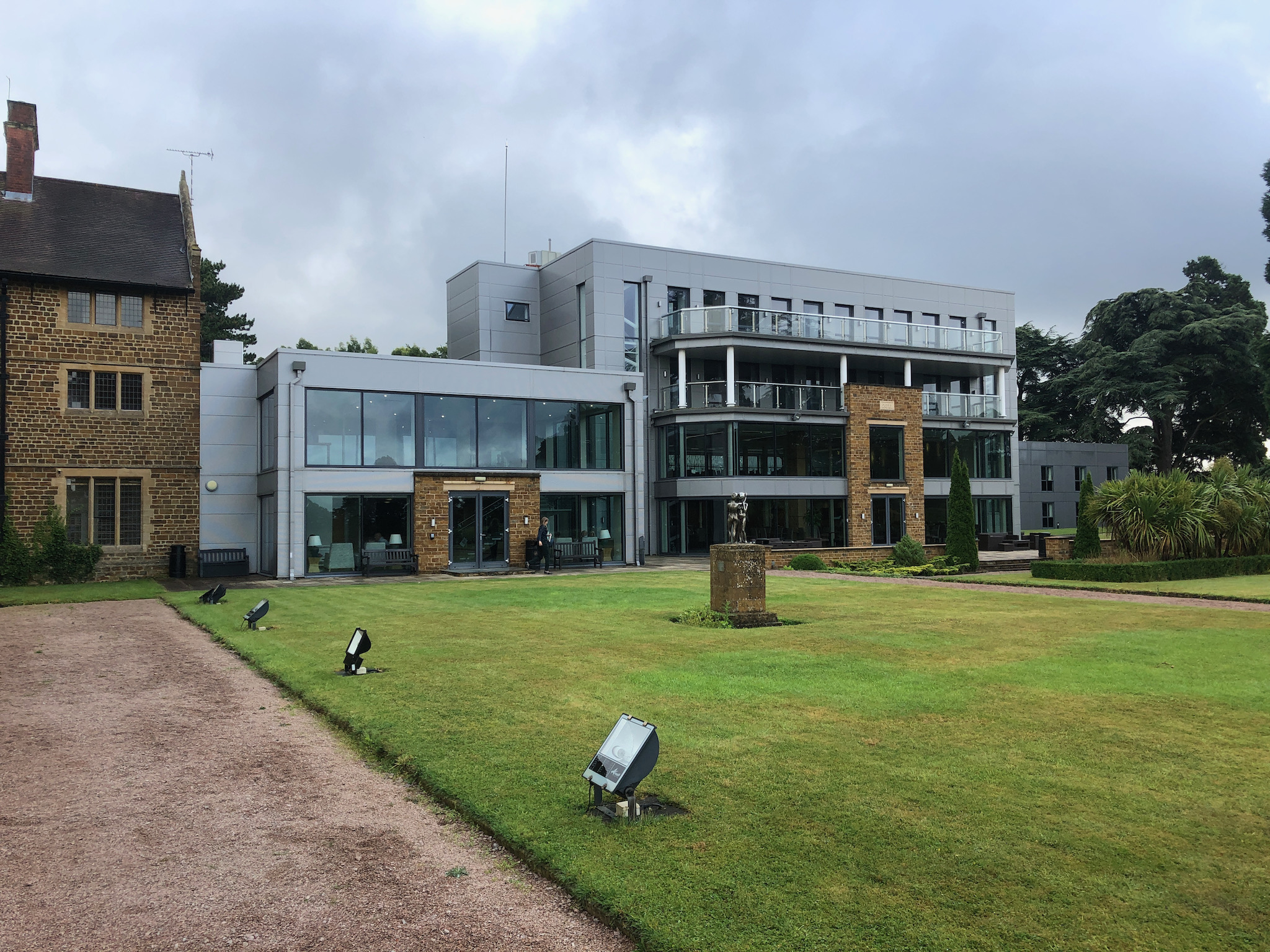
Ashorne Hill Conference Centre

Had breakfast on Friday. Quite bizarre having breakfast with colleagues in a conference centre. I think the last time I did this was back in 2018.

We had a good session discussing the HE strategy. One question came up on priorities and we discussed authentic assessment. In a previous report Jisc has recommended that assessment should be authentic. This is something that in some ways needs to be said, but also in some ways doesn’t. I think what universities find hard to do is to make assessment authentic. How do you actually do that and how do you know you’ve done it? It’s very easy to say make assessment authentic, but hard to actually help people to make it authentic. I am sure most academics, if asked, would argue that their assessments are already authentic. Are they? How would we know and would they know? A further area of discussion was, what was the role of Jisc in this process?

I then drove home. I went via the A46 rather than the M42. For a 90 Mille journey Waze was saying it would take nearly three hours to get home, it was also saying I should take the M4 and then the M49. The implication was that the M5 would be a nightmare (which in the end it was, so I went via Bristol the and A370).

I stopped at the Gloucester services and had a nice flat white sitting outside in the sun. These are nice services and really what you want from motorway services. It was very busy as you might expect. However I was served very quickly.

Universities told by the Government to return to in-person teaching.

Universities have been urged to provide face-to-face teaching when students return this term. Education Secretary Gavin Williamson said students should expect to be taught “in-person and alongside other students”. It would be right to stay online when there’s a “genuine benefit to using technology”, he said. But he warned university leaders: “I do not expect to see online learning used as a cost-cutting measure.”

Bit of an assumption there that ‘online learning’ is (always) cheaper than in-person teaching. Sometimes it can be, but sometimes it can be more expensive.

My top tweet this week was this one.

Turnitin is quite good, it once showed me that I had plagiarised myself

Gloucestershire College
Gloucestershire College by James Clay

Was reminded of this tweet this week.

Turnitin is quite good, it once showed me that JISC RSC London had plagiarised me. This was back in July 2012.

What happened was that for a Turnitin training session at Gloucestershire College I took three pieces of work.

  • A piece of work which was a straight copy of something from the internet.
  • A second piece which contained quotes of content from other sources.
  • A third and final piece of original content.

Each time I did the training I would have to create a new piece of original content, as once submitted it would flag another submission of the same content as plagiarised or with an originality warning.

So with confidence I went through the three pieces of work, so you can imagine the shock and surprise that the Turnitin system flagged my original content as being copied!

Time for a little detective work. The original piece of work (in theory) was authored by JISC RSC London. Though digging deeper, what had happened was that before then I had written a piece of work, which JISC RSC London then copied and used on their website.

When I wrote my original piece of writing, though it was written completely fresh, it bore a huge similarity to my writing that JISC RSC London had copied.

So what I thought was an original piece of work, was so similar to a piece I had written a fair few years ago, it was picked up by Turnitin. Though Turnitin didn’t pick up the original piece of work, it picked up the work by JISC RSC London that had copied my work.

That took some explaining to the academic staff in the training session.

Shorter – Weeknote #131 – 3rd September 2021

Another shorter week as there was a bank holiday on Monday, which of course marked the end of summer.

Term starts for most schools in England (and Wales) this week, though Scottish schools and universities are already back. We are seeing high levels of infection in Scotland where term started earlier, will we see similar levels of infection across the rest of the UK?

With universities ramping up for the start of term, many are now reflecting to the experiences of when the academic year started last year and the challenges of covid infections and self-isolation.

Spent much of the week in London having in-person meetings with people, now there’s something I don’t do very often these days. I drove up to London on Monday evening, had to return home fifteen minutes into the journey as I had forgotten my laptop charging cable. Stopped at Membury Services for a bite to eat. The food court was packed with unmasked queues of people. Felt very pre-COVID. Left with my mask on very quickly. Starbucks drive thru was much quieter inside so grabbed a flat white and left hungry.

Did some thinking about innovation and published a blog post on this.

For me true innovation in educational technology is change which has significant impact across the whole organisation. However this isn’t always exciting and shiny! Too often we focus on the new and the shiny and less on those innovations, that are holistic, organisation-wide and would have a greater impact on the learner experience.

I left London on Thursday after having some (in-person) meetings in the London office. Stopped off at Starbucks at Membury Services. Place was empty. However I still wore a mask as I ordered my flat white and only took it off when I was sat drinking it.

My top tweet this week was this one.

Let’s be more innovative

We often talk about innovation in education and sometimes the context in which it used implies that innovation is required to make things better.

laptop user
Photo by Christin Hume on Unsplash

When I think about innovation in the use of technology in education, I always look at the formal dictionary definition of the word innovation, my dictionary, says it is “a new method, idea, product” whilst the Thesaurus says: change, alteration, revolution, upheaval, transformation, metamorphosis, reorganization, restructuring, rearrangement, recasting, remodelling, renovation, restyling, variation; new measures, new methods, new devices, novelty, newness, unconventionality, modernization, modernism; a break with tradition, a shift of emphasis, a departure, a change of direction.

This means that innovation for me means new or different. It doesn’t necessarily mean better or improved.

For me in the context of education technology, innovation means taking an existing non-digital educational processes and using technology to improve it.

It can also mean looking at how another innovation (such as a new device or an online service) and using it to improve teaching, learning and assessment.

I don’t actually think much of what is defined as innovative within educational technology is in fact innovative. Too much of it is small scale, poorly defined and low impact.

For me true innovation in educational technology is change which has significant impact across the whole organisation. However this isn’t always exciting and shiny! Too often we focus on the new and the shiny and less on those innovations, that are holistic, organisation-wide and would have a greater impact on the learner experience.

These are for me examples of innovations that had a positive impact.

chromebook
Image by 377053 from Pixabay
  • Some staff from one college were using the collaborative aspects of Google Docs for assignment creation, with staff providing ongoing meaningful feedback as the assignment was created. There was also a plan to scale up and roll out across the whole college.
PSP
Image by WikimediaImages from Pixabay
  • At Gloucestershire College, Sports used video capture devices (originally PSPs with cameras, then tablets with cameras) for body movement analysis.
  • Cornwall College used a virtual world (Second Life) to create and display artworks that could not exist physically in the real world.
  • MMU redesigning their entire curriculum to allow for the embedding of the use of Moodle into teaching and learning.
iphone
Image by Jan Vašek from Pixabay

Is innovation a meaningful concept in education, or just a buzzword? Too often innovation focuses on tools and technologies, but innovation in processes and practice is often going to have a great impact.

The main barriers to innovation (change) in large organisations vary, but often a lack of understanding of what large scale implementation actually means. The words pilot and project are used interchangeably. Pilots often don’t scale as they haven’t been planned with a future large scale implementation in mind.

There is often a lack of desire to use existing research or results from other pilots and projects, a good example of this was the Sounds Good project from 2012 on audio feedback. The fact even now nine years later, we are still discussing audio feedback shows that innovation can take a long time.

A focus on innovation in relation to specific devices and tools over impact on teaching and learning.  It’s then about the technology and not the pedagogy. Though you do need to understand the potential of technology to successfully use technology innovatively to enhance and improve learning and teaching.

Google Glasses
Image by Jürgen Schmidtlein from Pixabay

The pandemic has demonstrated that organisations can change, but change caused by a crisis, is just that change caused by a crisis. It wasn’t planned, it wasn’t organized and the change we saw wasn’t necessarily the change we wanted.


Equity of experience – Weeknote #130 – 27th August 2021

A shorter week as I was on leave for a couple of days this week.

Spent the weekend in London, visiting relatives and seeing places. Really impressed with the eduroam availability at Kew Gardens. I wasn’t actually expecting there to be eduroam, I wasn’t even expecting there to be wifi. However using the phone to take photographs, I realised that I was connected to wifi and eduroam. It struck me how seamless and transparent the experience was for me, compared the recent experiences of connecting to hotel and train wifi.

I also bumped into Rod Stewart as one does…

As might be expected in the middle of August, lots of people on leave, taking breaks, as a result very few meetings and e-mails.

We did have a thought leadership meeting on Wednesday and we discussed dual-mode or hybrid teaching. I asked the internal group at Jisc what their definition of hybrid teaching was and as expected there was little consensus and a range of definitions.

Firstly, what is it? Well Durham has a nice definition.

At its best, dual-mode teaching combines the face-to-face and online experience into one cohesive whole. It keeps the class together, providing a shared learning experience that works for students who are on campus and those joining remotely at the same time. It allows you to include and draw on the full diversity of your students and their experiences to date.

They add though…

The challenge is to provide an equitable experience, to engage with the people in the room and those joining remotely, using spaces and technologies that were not designed for this.

That final thought is really what we need to think about, the equity of experience. This is challenging to do at the best of times when doing separately, doing is synchronously in-person and online is really, really challenging. A simple solution is that that the lecturer or presenter is online and the students can either be together in-person, or online. Together could be small groups or one large group. You certainly then get the equity of experience.

Thursday I was in the Bristol office, we had a wash-up meeting about the last year. It reminded me how different in-person meetings can be compared to the Zoom calls we’ve had over the last 18 months. I do miss the online chat that you have in online meetings when meeting in-person, but having had so many Zoom and Teams calls, to do an in-person meeting was a real refreshing change.

My top tweet this week was this one.

Having an impact – Weeknote #129 – 20th August 2021

Well after a week of working in London, Monday with everyone out and about, I had the house to myself so I worked from home. It was also another shorter week as I was on leave on the Friday.

Plan to ban phones from classrooms is out of touch, say UK school leaders in an article on the Guardian.

School and college leaders have condemned the government’s plan to ban mobile phones from classrooms as outdated and out of touch, arguing that schools should be allowed to decide on appropriate rules.

My children’s secondary school have banned the use of mobile phones for some time now. Children are allowed to take phones to and from school, but at school they need to be turned off and put away. One of the challenges is that during the lockdown and forced periods of self-isolation, many young people used their phones to stay in touch and keep in contact with friends. There was a certain amount of reliance on them, so much so, that they became important for wellbeing as much as for communication, games, and distraction.

iphone
Image by Jan Vašek from Pixabay

Back in 2008 when I was working on MoLeNET (Mobile Learning Network) projects the issue of mobile phone bans came up quite often. I was often an advocate about instead of banning phones, think about how they could be utilised for teaching and learning. Today mobile phones are actually much more than phones, they are computers and internet devices. You can do so much more on them then the kinds of phones people had in 2008 (the iPhone was only a year old back then). I personally think a ban misses the point, yes, they can be a distraction, but we need to think about behaviour and engagement as well and how the pandemic has changed how people use their mobile devices.

Wednesday, I headed to the office in Bristol. This was not my first visit to the office, but the first since further restrictions were lifted. The office is now fully open, so we can work on all floors and don’t need to worry about booking desks. It was nice to have a much busier workplace than on previous visits to the office (and compared to last week when I was the only person in the London office).

I also made the decision to catch the train to work, rather than use my car. The train (the first off-peak service) was quite crowded, but then it was only two carriages. There is quite a bit of engineering work happening at Bristol Temple Meads over the summer, so there have been cancellations, rail replacement buses and signalling problems. My train in the end, was only a few minutes late.

Headed up to the third floor of the office. I was joined by some old colleagues from what was Futures within Jisc and had a really good chat. It had been over eighteen months since we had met in-person and in one case I had only met the person online. It reminded me of both the advantages and disadvantages of going to the office. I like the in-person interaction but can be disruptive if you have stuff to do.

The air conditioning was getting to me, so I hid in a meeting room and turned the heating up.

I caught the train home from Bristol Temple Meads (half of which was closed off).

Had a few ad hoc conversations on Thursday.

Quite liked these tweets from people who had attended the digital leadership consultancy I had delivered for Leeds.

I had as part of the programme delivered a session on e-mail. It incorporates much of what is in this blog post on Inbox Zero and this follow up post.

Always nice to see the positive impact that your training has had on the way that people work, they didn’t just attend the training, engage with the training, but are now acting on what they saw and learnt.

My top tweet this week was this one.

Once more to London – Weeknote #128 – 13th August 2021

Well after a week off work, it was back to work. As with a couple of weeks ago I spent the best part of the week working in our London office. It was also a shorter week as I was on leave on the Friday. London was not very busy, but I was expecting that following my previous time in London. The office was even less busy, I was the only person in the office. It was obvious that many staff were still working from home. I don’t mind working from home. There were a few articles about the shift back to office working. Whitehall was looking to remove the London weighting for staff according to this article in the Guardian.

Whitehall officials have held high-level talks about taking away a salary boost awarded to London-based civil servants amid efforts to encourage workers back to the office.

Whilst on the BBC website an article asked: Should I be working from home or going back to the office?

People in England are no longer being asked to work from home. Instead the Prime Minister Boris Johnson is recommending a “gradual return to work”. However, in the rest of the UK, people are still being advised to keep working at home where possible.

I had quite a bit of flexibility on where I worked before the pandemic, so there is less pressure to return to the office. I have been working in the office though, I like the change in scenery and routine. After eighteen months being forced to work from home, I like the option of choice. Also during the summer holidays it makes more sense for me, when working, to be away from home.

First job was to clear that inbox full of e-mail, which to be honest didn’t take too long.

We had a team wide call on Monday, which was interesting. There will be changes in the team from September (a new manager) and we have a new CEO from mid-September.

We had an interesting meeting about the evaluation of Connect More, which people seemed to enjoy and got a lot out of.

Wednesday I had an interesting review and discussion about assessment, and what Jisc can do to support the sector to transform assessment. Despite the opportunities of digital in regard to assessment, many of the issues relating to the digital transformation of assessment, are much more about the transformation of assessment, with digital just being a catalyst. What is the purpose of assessment for example.

On Thursday I had a catchup with our (newish) HR contact. In my role I have no line management responsibilities (though plenty of matrix management responsibilities). We had a great discussion and chat about how we can make that matrix management more effective and efficient going forwards. So, we can move people from one area of Jisc to another to work on projects more easily. Something that a company like Apple do quite often.

I had a useful and interesting meeting with a university talking about our Powering HE document and the possible opportunities and challenges that universities will face over the next few years.

My top tweet this week was this one.