Do you like books or do you like reading?

17:15 – 18:15 on Tuesday, 7 September in Room 1

eBooks and eBook Readers bring new challenges and new opportunities for learning technologists. Sony has the eReader, Amazon the Kindle and now Apple has the iPad. Publishers are now offering more titles as eBooks. There is a huge growth and interest in this new medium. Some learners prefer physical books and the feel of paper, but do eBooks have the potential to offer more to the reader? Are eBooks a new way for learners to access information and learning? Are they just a digital version of print, ignoring the affordances of new technologies? This symposium will explore the potential of eBooks, the role of eBook Readers for learning, and the ways in which learning technologists can utilise eBooks to enhance and enrich the learning experience. The panel consists of: educators who have used eBooks with learners; researchers who have researched the use of eBooks in education by learners; publishers who have designed and developed eBooks; and learning technologists. Each member of the panel brings their experience of embedding the use of eBooks with learners. These experiences have been through using eBooks in the classroom and in the library with learners. Researching user behaviour in the use of eBooks and designing eBooks for learners. The session will commence with an overview and introduction of eBooks and eBook technologies, through mobile devices such as the iPad and using the browser. The members of the panel will each deliver a presentation on their view of the future of eBooks. They will pose questions to the audience to stimulate debate and discussions. Panellists with the audience will debate the strengths and weaknesses of eBooks and the various eBook Readers available. They will discuss whether eBooks offer new pedagogies or reinforce existing ones. By the end of the debate participants will have had an opportunity to discuss the advantages and challenges that eBooks bring to education and the role they could play in the enhancement and enrichment of learning.

Music: Comic Plodding by Kevin MacLeod Licensed under Creative Commons “Attribution 3.0” http://creativecommons.org/licenses/by/3.0/

100 ways to use a VLE – #12 Keeping a teaching journal

We never have enough time.

Teaching is a challenging profession and speaking to many teachers and lecturers one of the key issues that comes up again and again is time, or more specifically the lack of time.

I have talked about time before on this blog back in 2007. There are many productivity tips out there on the web, but one way to save time is to stop reinventing the wheel. Once you have been teaching for a while it has to be said that you will be teaching stuff you have been teaching before.

Even when qualifications change, or we have a change to syllabus, most of what we teach doesn’t change.

Before I did all this e-learning stuff I was a business studies teacher. When I started working in FE, my students were doing the BTEC National in Business Studies, we then moved to the AGNVQ in Business before moving back to (a different it has to be said) BTEC National in Business. Through those changes, though the qualification changed and the syllabuses were different, the topics and subjects were basically the same with marginal differences. So despite changes, much of what I taught was the same from year to year.

For example, demand and supply analysis is pretty much the same now as it was then and ten years previous to that!

What made life easier for me was keeping a teaching journal of what I was teaching, what worked well and what didn’t. This was a practice I picked up undertaking my PGCE and FAETC. So where is that journal now? Probably thrown away! It was in a lever arch file I left at City of Bristol College when I left there in 2000. Someone who could use that content now won’t be able to access it. Nor can I use it now either.

By using the VLE as a store for my teaching journal, I could have kept copies of my notes, resources, reflections on practice all in one place. I could have referred back to it as and when I needed to. If I wanted to I could much more easily share that content with other practitioners in my teaching department. They could add their own commentary and notes if they used my stuff. If I ever moved on, the valuable content would still be there on the VLE and of course as it was in a digital format I could take a copy with me.

There are other online places to store a teaching journal, a blog for example, however the VLE with its range of functions can allow the teaching journal to be much more than just a reflective blog. You could use image galleries, voting, forums, etc… as part of the journal.

Maintaining a teaching journal makes a lot of sense for teachers, there are many places to keep that journal, on the VLE can be a possibility that shouldn’t be ignored.

Photo source.

New iPod touch

Apple have announced their Fall (or Autumn) line up of iPods for the holiday season. In what is becoming a traditional annual announcement, Apple showed is their new iPod shuffle that looks like a second gen model (it has buttons), a new square iPod nano that has got smaller, lost the camera and video playback of the previous version and a new iPod touch that now has many of the features of the iPhone 4G.

The new iPod touch probably has the biggest interest for education users and as it now comes with a camera as well as a much nicer display will be much more useful for various educational activities. Moving from the iPod touch to an iPhone eighteen months ago I was totally impressed with the impact having a camera had, though the iPhone 3G camera was pretty weak as cameras go, it allowed me to do so much more than just having the older iPod touch. The cameras on the 3GS and 4G iPhones are even better and are great for shooting video or taking images. I am looking forward to using the new HDR feature on the iOs 4.1 upgrade available next week. However the new camera on the new iPod touch is not in the same league as the iPhone 4G camera or even the original iPhone 3G camera! It will be okay for shooting video and taking low quality stills. However this is probably going to be okay for most education users. You can always use a proper digital camera for taking photographs, the iPod touch is so much more than just a camera.

iOS 4.1 does make the iPod touch more than just a camera or a media player, with all the apps available, wifi and the web at a touch of the button, there is so much about the iPod touch that makes it idea for enhancing and enriching the learning experience. For some learners this will be their “main” computer.

The new model has increased in price with the base 8GB model now at £189, though it should be remembered that the previous 8GB model was the previous generation (i.e second generation) and was re-introduced alongside the third generation iPod touch in September 2009. This new 8GB model is the fourth generation iPod touch; maybe that accounts for the extra £30! Over that 8GB model it has a lot more memory, 512MB compared to 128MB, a faster processor and a better battery life.

The key really is will learners be buying this device? Probably.

New Sony Readers

I started writing my previous blog post on the price of Sony Readers last week, but only published it this morning.  Andy Kemp on Twitter told me that today Sony have announced their new range of ebook readers and linked to the story on Engadget.

Sony’s tweaked its entire Reader line up — the Pocket, Touch, and Daily editions — by adding improved optical touchscreens, speeding up page turns with E Ink Pearl displays and slimming down the brushed aluminum hardware. Beyond that, it’s also updated its Daily Edition with WiFi — there’s still no connectivity options for the other two.

Engdget have reviewed all three new models with the cheapest reader now $179 which here in the UK would translate to roughly £136 so the cheap models in Waterstones are still pretty good value for money as is the new Kindle from Amazon at £109.

Listening to TWiT on the way into work this morning a lot of discussion by the panel on the pricing of the Kindle and an expectation that the price would drop again. Remember when the Kindle first came out it was $399 and now is just $139. In a year or two it might be $40 and after that free when you buy four or five books from Amazon!

It is an interesting time for ebook readers.

Just £99.99

When the Sony Reader first caught my attention it was over £200.

Today you can pop into Waterstones and get one for just £99!

This is quite a dramatic price drop and as a result I suspect quite a few more people will consider purchasing one of them as an impulse buy.

The more net savvy consumers are probably likely though to purchase the £109 Kindle from Amazon that does a very similar job but also comes with WiFi.

Though some people will wonder about buying a dedicated e-book reader, there are many advantages to these devices for users and learners.

One way to think about ebook readers is thinking about how mp3 music players, such as the iPod, fit into our lives.

Yes we know listening to CD or vinyl on a dedicated sound system is always going to be a preferable experience to listening to music through earbuds on an iPod.

Yes we know that we can play music on our desktop computer and it has a lot more storage than any iPod!

Yes, it is entirely possible to copy your music collection to a laptop and carry that around with you so you can listen to it any location.

Yes listening to the Now Show live is nice on the radio, even though we know we can download it as a podcast.

What the iPod brings is a combination of convenience and access that is different. The ability to play music when and where we want to is what makes it different, a dedicated stereo system is great for music, but it’s not portable. It’s not always easy to use a computer to listen to music, for example while on a bus, again the iPod makes life easier if you want to listen to music while travelling. Podcasts of radio programmes again make it easier to listen to shows such as the Now Show, the News Quiz at a time and place to suit us, which may not be when the show is broadcast.

Despite the quality and storage arguments, I suspect most people reading this blog have an mp3 player or an iPod.

eBook readers are not there to replace books, they are useful in providing a reading experience at a time and place to suit the reader. Yes paper books have their advantages and can be a wonderful reading experience, however try carrying ten or more at any one time. Being able to access your library whilst travelling, on holiday, anytime on the move is what makes the eBook Reader so compelling. With the Kindle the ability to quickly download a book when you want to read it is a real advantage over buying paper books that would either normally require a visit to the bookstore or ordering from Amazon.

Though it is possible to read e-books on a computer or a laptop (or even an iPad) the e-book reader isn’t there to replace that experience, but allow a more portable way of carrying and using e-books. I have all my music on my iMac, but I still use an iPod to listen to music. Likewise I may read e-books on my laptop, but having those books on an e-book reader is an addition to how I use e-books not a replacement. I can use my e-book reader alongside my computer so that it acts as a reference device, in the same way I currently use paper books when writing or researching on the computer.

I do believe that e-book readers have their place in how we access information and knowledge. I do think at this time we don’t know how best to use those e-book readers and as with music and video these new ways will arrive over time. At around a hundred pounds, e-book readers are going to be much more affordable and I can see many people finding one under the Christmas Tree come December. Some will ignore it, some will sell it on eBay, but many I believe will start to use it and use it a lot to read books.

CameraBag for iPad – iPad App of the Week

CameraBag for iPad – iPad App of the Week

This is a regular feature of the blog looking at the various iPhone and iPad Apps available. Some of the apps will be useful for those involved in learning technologies, others will be useful in improving the way in which you work, whilst a few will be just plain fun! Some will be free, others will cost a little and one or two will be what some will think is quite expensive. Though called iPhone App of the Week, most of these apps will work on the iPod touch or the iPad, some will be iPad only apps.

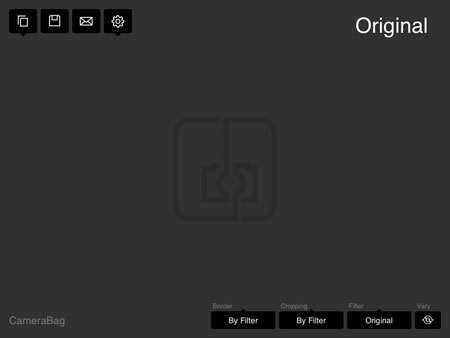
This week’s App is CameraBag for iPad.

A love letter to the analog era, CameraBag is the most popular iPhone photo filter app of all time, and has now come to the iPad. It instantly emulates photography’s most beloved and iconic cameras, film, and processing techniques.

CameraBag’s addictive approach skips hours of processing work and instead puts you in the role of an editor, flipping through a collection of polished, print-ready treatments, each with infinite variation. Simply choose the best one and save, e-mail, or upload it to popular sites.

CameraBag now takes full advantage of the iPad with a re-imagined interface, increased resolution, and innovative new features. The addictive Vary button offers a new take on the current filter each time it’s pressed, for infinite versions of each filter. It’s like telling CameraBag “Try the same look but make it a little different this time.” iPad users also get to mix and match aspect ratio and border styles across filters for fresh new looks.

£1.79

There are various image manipulation apps on the App Store. One type that is quite popular is the filter app. This isn’t an app for editing images, it is there purely to be used to apply filters to an image and then put the image somewhere.

Though the iPad doesn’t have a camera (unlike the iPhone) it is quite simple to get images onto the iPad, either through syncing with iTunes (and iPhoto) on your Mac or using the iPad Camera Connection kit.

I have used CameraBag on the iPhone and did buy it for the iPad. Unlike a lot of apps this is not an universal app and you need to buy separate apps for both the iPhone and the iPad.

This is a relatively simple app to use. Open the image, apply a filter, a border or crop the image.

You can vary the effect of the filter using the vary button.

Unlike other image apps, you can either save the image back to the iPad or e-mail it to someone (or a service if you can remember the unique e-mail for that service).

The filters are quite nice and work well.

This is not my favourite image app, but the simplicity does make it an easy one to use.

VLE Standards at Weston College

I have written before on this blog about the way in which Weston College is using VLE standards to improve the use of the VLE by staff at the college and increasing use of the VLE by learners.

There is a now a case study on Weston College on the Excellence Gateway.

Through the development of a set of standards, Weston College has improved the quality of its Moodle virtual learning environment (VLE) course provision.

Weston College has had a VLE since 2003. In August 2007 it went live with Moodle as its preferred VLE, developed, hosted and supported in-house. In the first year of cross-college deployment, Moodle was well adopted without any particular pressure on staff to achieve specific targets. The new system, in comparison to its former VLE, was seen as intuitive and there was a general level of enthusiasm from staff to receive staff training. ILT enthusiasts were used as champions of the new VLE, developing and sharing good practice. A student and staff Resources User Group was established to feedback on the new VLE and guide its early development.

The VLE standards were devised to set a minimum expectation for online provision to ensure that all learners on full-time courses had a corresponding VLE course. The aim of the standards was to provide and facilitate exemplary course provision through dynamic materials and e-learning resources.

The standards are graded into three categories, which are:

  • Gold
  • Silver
  • Bronze.

Every course must be at Bronze standard and yearly targets are set for the achievement of Silver/Gold standard courses.

Read the full case study.

Sigil

Earlier today I mentioned that Apple had updated Pages to allow you to export to the ePub format. In that post I said

There are other ways of creating ePub publications, but if you already have and are familiar with Pages then it does give you a very easy way to create an ePub e-book.

At the time of writing I knew there was a piece of open source software out there that could do this, but couldn’t remember the name. As I was travelling I was listening to last week’s MacBreak Weekly and Andy Ihnatko’s pick was Sigil.

Sigil is a multi-platform WYSIWYG ebook editor. It is designed to edit books in ePub format.

Available for Mac, Windows and Linux, it is the piece of software I was thinking of when I wrote my previous blog post.

So if you are interested in creating resources in an ePub format, Sigil looks like it could be just right for the job.

Publishing an e-Book

Apple have just updated their Pages word processing application to enable you to export your publication in ePub format.

The ePub format is a standard e-book format that works within Apple’s iBooks apps on the iPad and the iPhone.

It is also works on many other e-book readers, though not on Amazon’s Kindle!

Apple have released some guidance and help on choosing between ePub and PDF.

There are other ways of creating ePub publications, but if you already have and are familiar with Pages then it does give you a very easy way to create an ePub e-book.

There are many different e-book formats which makes life challenging for anyone who wants to create e-books or resources in an e-book format for their learners.

news and views on e-learning, TEL and learning stuff in general…