Most of this week I was on leave or it was a bank holiday, so was in the office for just two days. With soaring temperatures I actually went into the office, as it does have air conditioning and was a nicer environment for working in.
I took the time to finish off some mandatory training that needed to be done. These were two year refresher renewal modules that needed to be done. I have a strategy that when these come in, I prioritise them to get then done and dusted. In the past, like many other people, I would know that I needed to get them done, but then other stuff needed doing, so they were left. Then the deadline would arrive and it was all hands to the deck to get them done. Sometimes this would impact on other deadlines. So, despite sometimes the lack of urgency (initially) with mandatory training, it is important, so I devote time to going through the modules and passing the tests.
For a variety of reasons I won’t be attending TNC this year, which is taking place in Helsinki in Finland. My first (and only) TNC was last year in Brighton. In reality I was less interested in the conference (which is interesting) but was looking forward to attending some side meetings about education. However, I have been helping in the planning and the organisation of these said meetings.
…arguably the most interesting point in these regulations is section 9(2)(b) which puts into English law for the first time the idea that a single academic credit is equivalent to ten notional learning hours.
This equivalency is important for LLE as it means a student can stack credits for a qualification from different institutions and times. This in itself creates another headache. Does a credit from one institution now mean it is equivalent to a credit from another? Will that be accepted by all institutions. Another question that I saw at a recent event was how long is a credit viable for, will it lose its validity over time, and does that matter, or if it does which subjects would need this.
I did my Economics degree back in the 1980s, and much of what I learnt then hasn’t changed much, to be honest it hadn’t changed much in the previous forty years, let alone the last forty years. Some units I did are probably out of date, thinking about that unit I did on the Economics of European Community. Whilst others, such as that module on Economic and Social History probably hasn’t aged.
You might think that – given past failures to attract learners – that the government would want to spread the net as far as possible as regards lifelong learning entitlement (LLE) provision.
You would be wrong.
There are just 130 providers who have registered for LLE provision. Does this mean anything, will it result in a no one caring about LLE, or is this just the beginning.
I attended a webinar about open education early in the week. It reminded me of many discussions I have had about open over the years. Listening in to the conversations I did pitch in that we have to sometimes think open is the solution, not a problem in itself to be solved. Sometimes I think when we start talking about open, we are trying to solve the open problem, how do we ensure education is open, how do we publish open educational resources, etc… As with my recent post on bridge building, we have to remember that open is a solution. A solution to another problem. What we have to do sometimes is remind ourselves on what problem open is trying to solve.
A quiet week for me, though there were a few events running this week, including Jisc’s Connect More. I did get to the Bristol office for one day.
I finished writing my blog post on bookable and unbookable desks, PCs, and sun loungers following a couple of BBC News articles.
Reminds me why I never used PC booking software when running my libraries. Students would reserve PCs with their “towels” and then never turn up. The PC was unused and unavailable for others to use.
News of another higher education merger hit the headlines, with KCL and Cranfield planning to merge next year. I suspect we will hear about more mergers over the next couple of years. I also suspect we might see some higher education institutions close after the OfS and HESA published financial information about the sector, and in some cases the optimism of the sector, which if doesn’t come to pass may see places close. The Office for Students says that there is widespread and persistent over-optimism about sector finances. What this means is that if plans don’t come to fruition then the only choice might be closure (or forced merger).
…it was an earlier start than normal as I had a meeting with some European colleagues about a workshop we’re running at TNC in June in Tallinn in Estonia.
Now I know I didn’t attend TNC 19 in Estonia, so when I did some digging into my email archive and saw that there was quite a bit of chat and conversations. The core of which was the creation of GÉANT’s TF-EDU (Task Force Education) including a draft proposal for the group. I didn’t realise (well didn’t remember) that I was involved back then. Getting old!
A shorter week with the bank holiday and all that.. Talking of holidays, I read this news article on the BBC News site about reserving sun loungers with towels.
A German tourist has won a payout of more than €900 (£850) after he was unable to secure a sun lounger due to other guests reserving them with towels.
Of course if you were to go down to the swimming pool you would find that there were plenty of empty sun loungers (with towels on them). Reminds me why I never used PC booking software when running my libraries. Students would reserve PCs with their “towels” and then never turn up. The PC was unused and unavailable for others to use. Same can be said with sun loungers.
I had a number of meetings this week about the creation of a GÉANT group building on the success of NRENS 4 Education and the work we have been doing looking at student mobility.
The end of the week saw me attending a meeting with the OfS, one of the regular meetings Jisc has with the OfS. I spoke about some of the work we have been doing in the student experience space.
The current consultancy project I am involved in is going well.
I headed to the office on Monday. The rest of the week I was working from home, in the main as I had number of online meetings and as I have mentioned before I don’t really see the value of heading off to Bristol, spending time (and money) commuting, to then frantically book meeting rooms for various online meetings, moving around during the day. If I have a lot of online meetings then I prefer to work from home and take them there. Having said that, I did have a couple of short calls on Monday, one was a team update, the other was a workshop planning session.
This week I was part of a panel session looking at LLE. My focus was on the importance of the student experience, the data journey, and thenecessity of the sector to adhere to standards and enable interoperability. Without this then there will be an administrative burden on both the students and the institutions. I did note some thoughts about the financial viability of LLE.
Had a planning meeting about a workshop at TNC 26 in Helsinki, unfortunately I am unable to attend TNC this year.
I have been doing some quality assurance for one of our consultancy projects. It has been interesting to undertake this and makes a nice change from my usual routine.
A (much) shorter week this week as I was taking some leave towards the end of the week. I also spent time traveling up to Leeds for the AUDE conference where I was part of a panel session looking at the smart campus. We had a good session looking at the wider challenges for higher education and the opportunities for collaboration in the estates space. Due to a number of unavoidable meetings I didn’t really get to attend any of the other sessions at the conference.
Did some preparation for a webinar I am attending next week on LLE. I am focusing on the student experience and the importance of interoperability for student mobility.
Undertook some planning and brainstorming of ideas for workshops at the TNC Conference in June.
This was may first full week for what feels like ages. I worked from home all week, partly as I was expecting deliveries (one of the advantages of working from home) and also I had a lot of online meetings in the diary. I don’t really see the value of heading off to Bristol, spending time (and money) commuting, to then frantically book meeting rooms for various online meetings, moving around during the day. If I have a lot of online meetings then I prefer to work from home and take them there.
Some of my meetings were in relation to student mobility, including an interesting session on stakeholder mapping. The reality of the student mobility agenda is that there are multiple stakeholders, including students (obviously) higher education institutions, national agencies, government departments, and others.
I did attend one meeting, it made me realise that the concept of strategy is one that still seems to confuse people. If you decide what you want to do, and then use that to inform the strategy, then that is not a strategy. At a simple level if you choose what you want to do, then it doesn’t really matter if you then write a strategy based on that or not. I did buy and read Good Strategy/Bad Strategy: The Difference and Why It Matters by Richard Rumelt a few years back on the recommendation of a colleague, it certainly is an interesting read and reflects that a lot of people don’t know what strategy is and how to develop and deliver strategy.
Did preparation for the panel session I am on next week at the AUDE conference. Though the primary focus of the session is on digital, the current university sector climate will be looked at, in terms of collaboration and sharing. I worked on some notes and briefing points for the session.
I also did some work on what LLE could mean for the university sector and for Jisc. Of course the only real focus of Lifelong Learning Entitlement is on the entitlement part, in other words the funding side. Reading about that on the various stakeholder, such as the Office for Students and the Student Loans Company, their focus is on ensuring that the cash side is sorted.
Of course, the full potential of LLE is in the lifelong learning with people being able to draw down funding (loans) to pay for part time learning at a time and place of their choosing. However without some kind of infrastructure and ecosystem in place, then the administrative burden on students and institutions will be huge (and costly). Thinking about every time a student applies for a programme of study, they will need to prove who they are each time, their current qualifications and these will then need to be verified as a true account from accredited institutions. This is why I have been looking at the European Higher Education Interoperability Framework as a potential solution for the student journey in an LLE world.
I will be speaking at a couple of (online) events over the next few months, including one on LLE. I was also invited to speak about digital at an online event on estates.
Another shorter week with Easter Monday. I was working this week, but many of my colleagues had taken the week off, so it was somewhat quiet in the “office”. Actually quite quiet across the sector as many people were having a break at Easter. I suspect next week might be quite quiet as well.
Having said that, I did present at an online event this week, a Public Policy Exchange webinar on supporting university students. The focus of my presentation was about innovation in (essentially) curriculum design, and the importance of interoperability in all that.
Finished adding my comments to a review of the GÉANT TF-EDU survey which goes out soon. The survey looks at how NRENS across the GÉANT community support, provide or deliver services for education.
I have also been writing up some of the internal conversations I have been having around the European Higher Education Interoperability Framework (EHEIF) and what this means (or could mean) for the UK and Jisc.
Did some logistical planning for my trip to Leeds in a couple of weeks where I am on a panel session at the AUDE conference.
I was reminded again this week about how often “solutions” are seen as the problem that needs to be solved, so much so, that the actual problem is lost in the background.
A shorter week this week with Good Friday at the end of the week. I did go to the office on Thursday which was quiet, as expected, as many people were going on leave.
I had quite a few meetings this week.
I did see on WonkHE briefing about a potential £360m fund for restructuring higher education. David Kernohan digs into the detail.
If we have indeed found evidence of DfE plans to prop up the sector, what might such a scheme look like? So is there really £360m in DfE for loans available to help the higher education sector restructure?
Many higher education institutions have been asking for funding to support collaboration, this restructuring fund may be an option. However, this is a loan, so collaboration would need to result in enough savings to pay back the loans. There will probably also be conditions. The WonkHE article does dive into the similarities that we saw some years back in the FE sector and their restructuring.
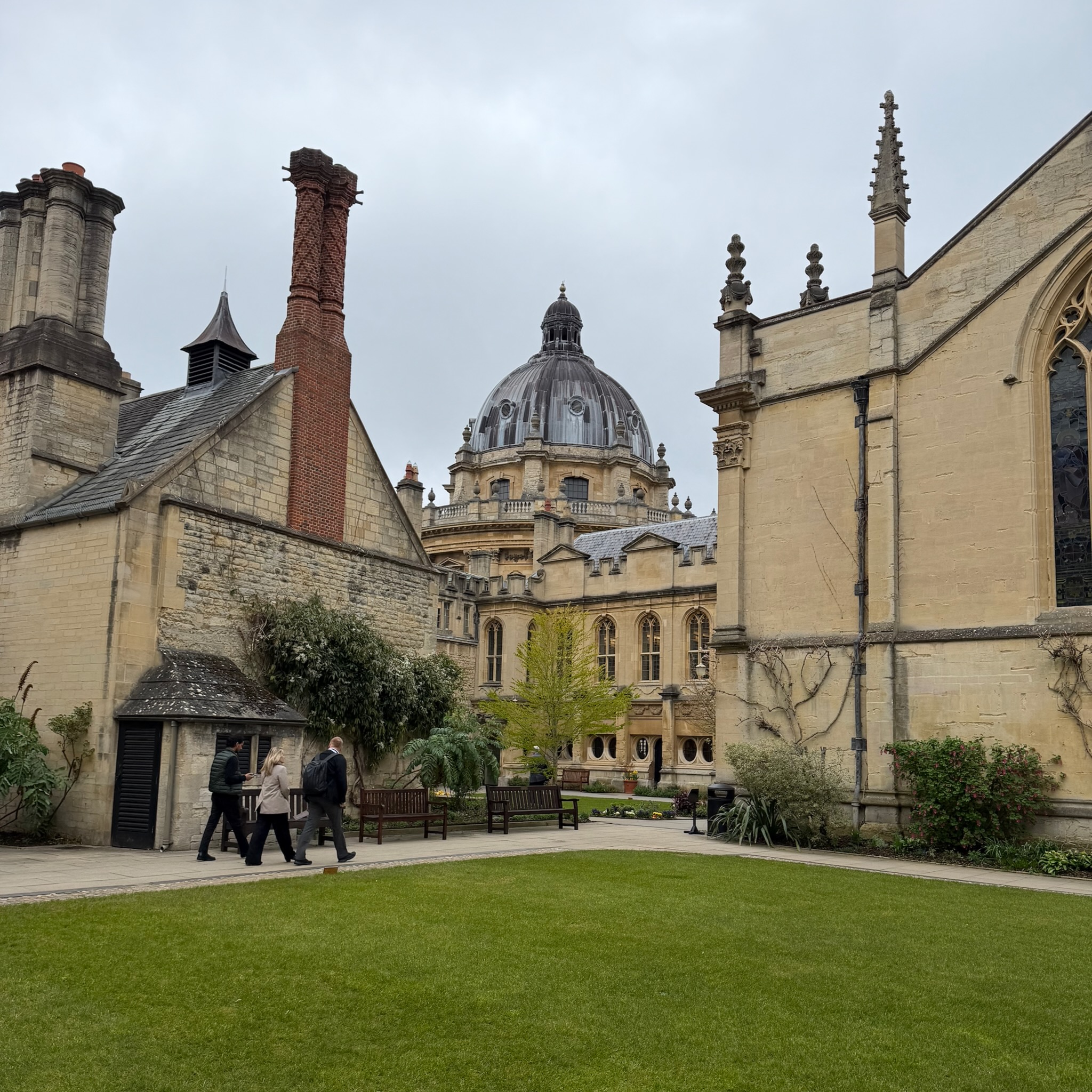
This week I was in Oxford for the HESCA conference. I enjoyed the conference and it was good to hear a range of diverse viewpoints on the use of technology to support the student experience.
I was talking once more about collaboration, but taking more of a reflective look on where we are. I was presenting a state of the nation look at collaboration and why the higher education sector is not doing more collaboration. In many ways the focus of my presentation was based on my blog post on building bridges.
On my way back from Oxford I did pop in and have a meeting at our offices in Milton Park before then heading back to our Bristol office.
I have been having conversations and discussions with colleagues inside Jisc on digital credentials and digital wallets. Within the European Higher Education Interoperability Framework one of the use cases is about how a student can communicate their educational credentials to both other educational institutions and employers. There has been quite a bit of work done in this space, what I was interested in was what has been happening in Jisc.
I wrote a blog post about the impact of student loans on peoples’ lives.
Over the last couple of years I have been saying across various conversations about the impact of paying back student loans could have on future student recruitment. I would talk about how the next generation of students will be the first whose parents were required to take out student loans to pay their fees and for the maintenance. Their parents would have the seen the real life impact of their student debt on their lifestyle. It would reduce their real income and would have had an impact on other financial choices such as mortgage affordability.
I read WonkHE’s report on AI and students. It reflected much of my (admittedly limited) knowledge on how students are using AI.
news and views on e-learning, TEL and learning stuff in general…