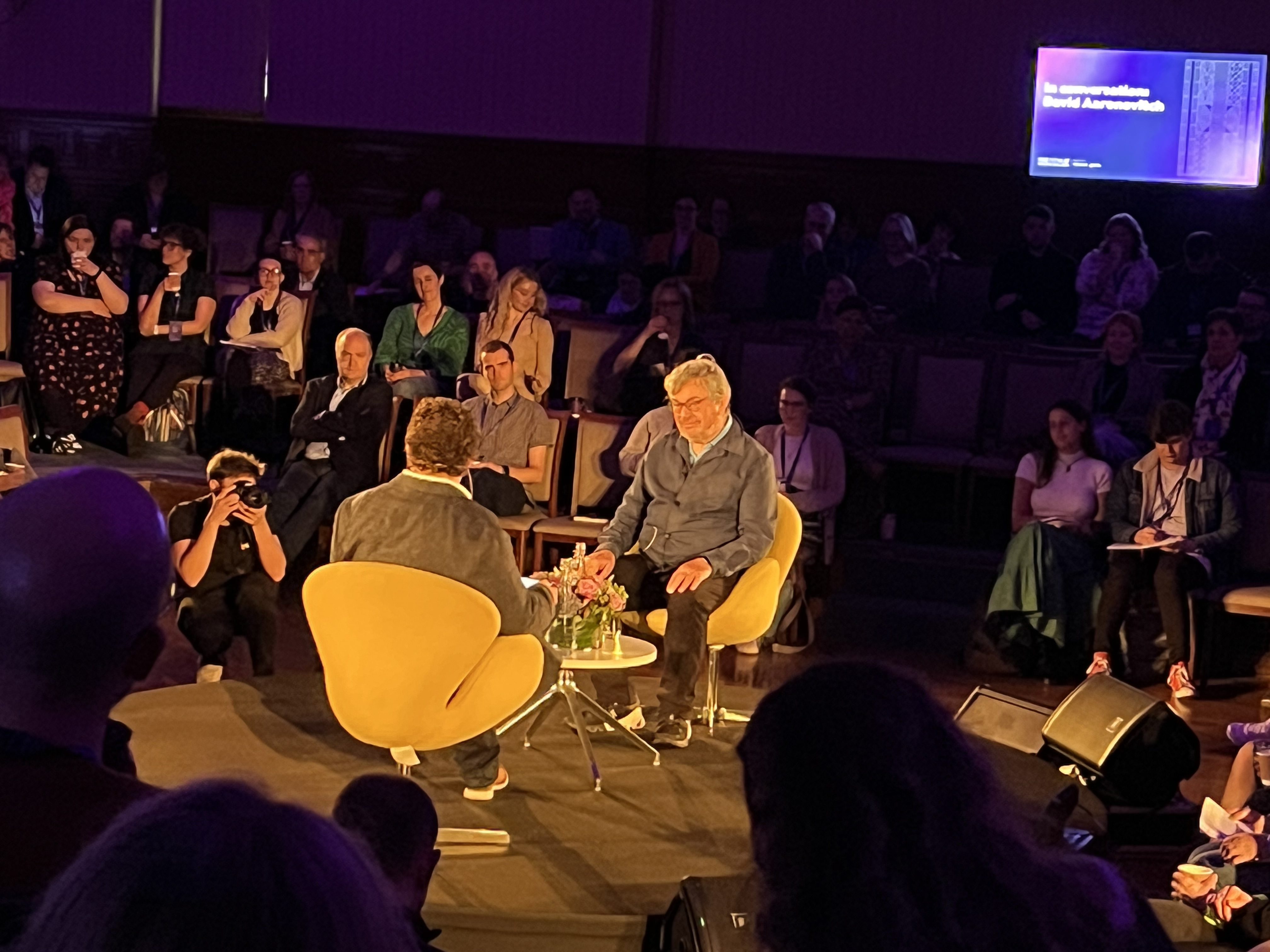
I am attending the WonkHE Festival of Higher Education 2023 at Senate House in London.
Originally called WonkFest I have attended the conference before, and it’s a great event to learn about higher education policy and the impact on the university sector.
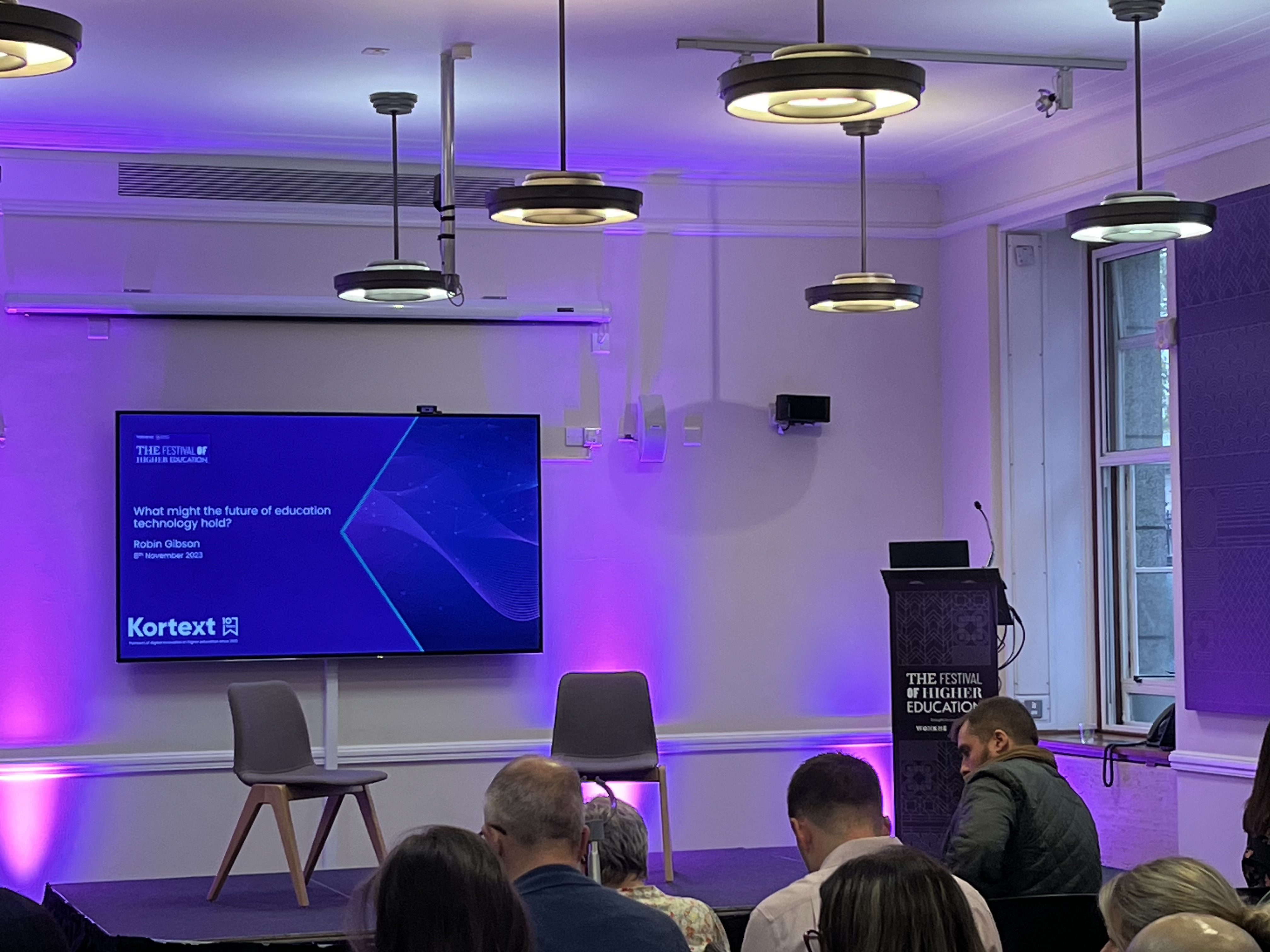
I attended the session titled: What might the future of education technology hold?
Beyond the hype, and the sales pitch, beyond digital transformation and digital natives – this session will explore how technology is likely to shape higher education provison in the years ahead, what changes universities can realistically expect to learning and teaching, and how they might work with technology providers to get ahead of the curve.
Despite the abstract this was alas something of a sales pitch. As well as the advertised PVC, Claire Pike, Mark Simpson, the PVC from Teesside was also on the stage. However in a thirty minute session, over twenty minutes was devoted to telling us how “wonderful” one specific product was. I think this was a missed opportunity. Yes, I know you sponsored the conference, do provide an insight into the product, but that would have been much more authentic and valuable if it had come one of the PVCs.
I also felt thirty minutes was quite short for the session, so there wasn’t time for question or further discussion.
Jisc did get a mention for their report on student perceptions of generative AI.
This report looks at how students are currently using generative AI and explores its potential impact on their learning experience.
I am attending the WonkHE Festival of Higher Education 2023 at Senate House in London.
Originally called WonkFest I have attended the conference before, and it’s a great event to learn about higher education policy and the impact on the university sector.
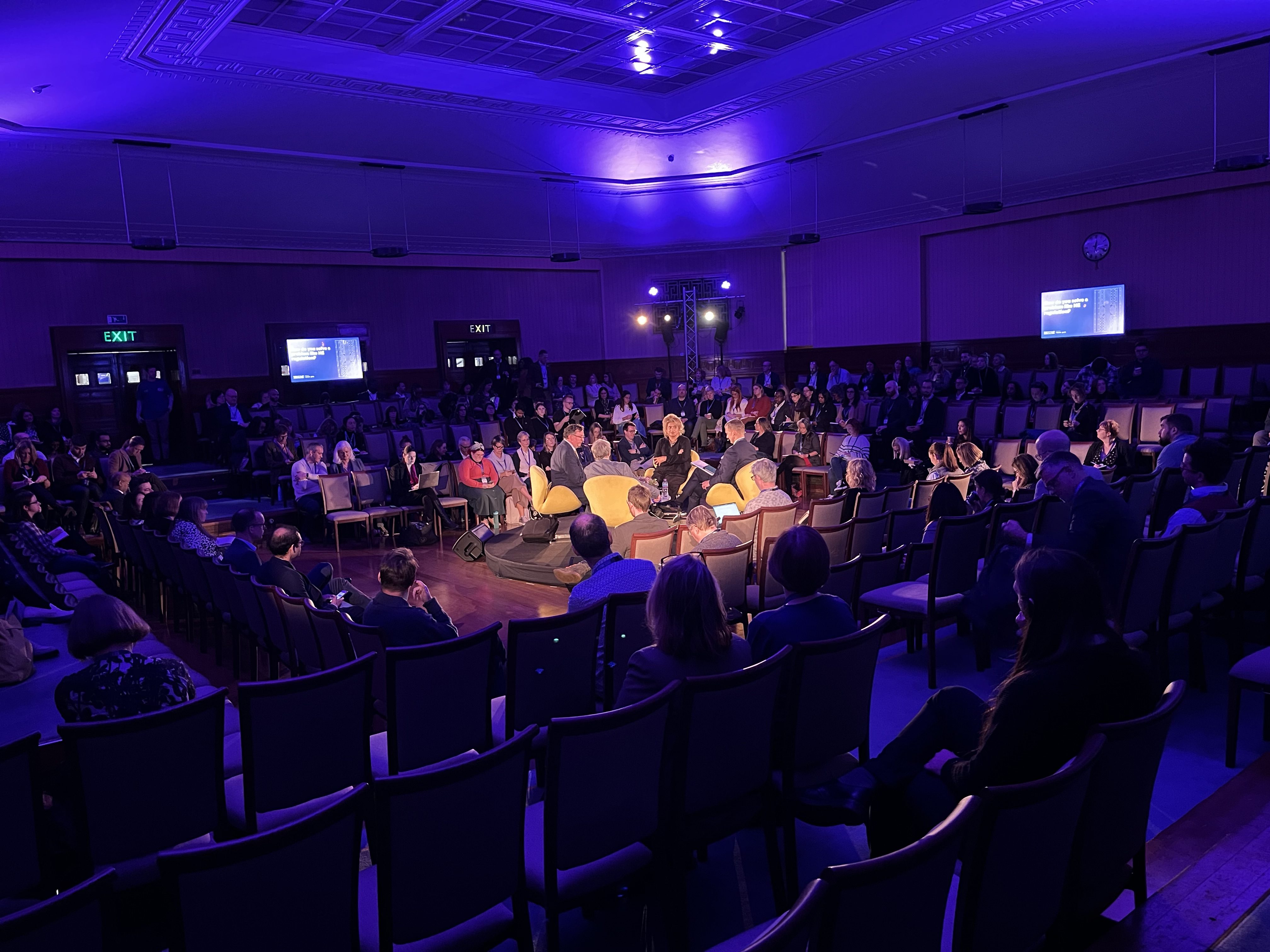
I attended the session titled: How do you solve a problem like HE regulation?
Can any higher education regulator realistically be expected to balance the interests of students, providers, government, and the nation – and not get itself into hot water? With regulatory divergence and reform across the UK and criticisms from a House of Lords committee over the efficacy of English regulator the Office for Students, our panel will assess the options for HE regulation and think through what might be done to make it work.
I did a sketchnote which shows the breadth and depth that was covered in the session.
I am attending the WonkHE Festival of Higher Education 2023 at Senate House in London.
Originally called WonkFest I have attended the conference before, and it’s a great event to learn about higher education policy and the impact on the university sector.
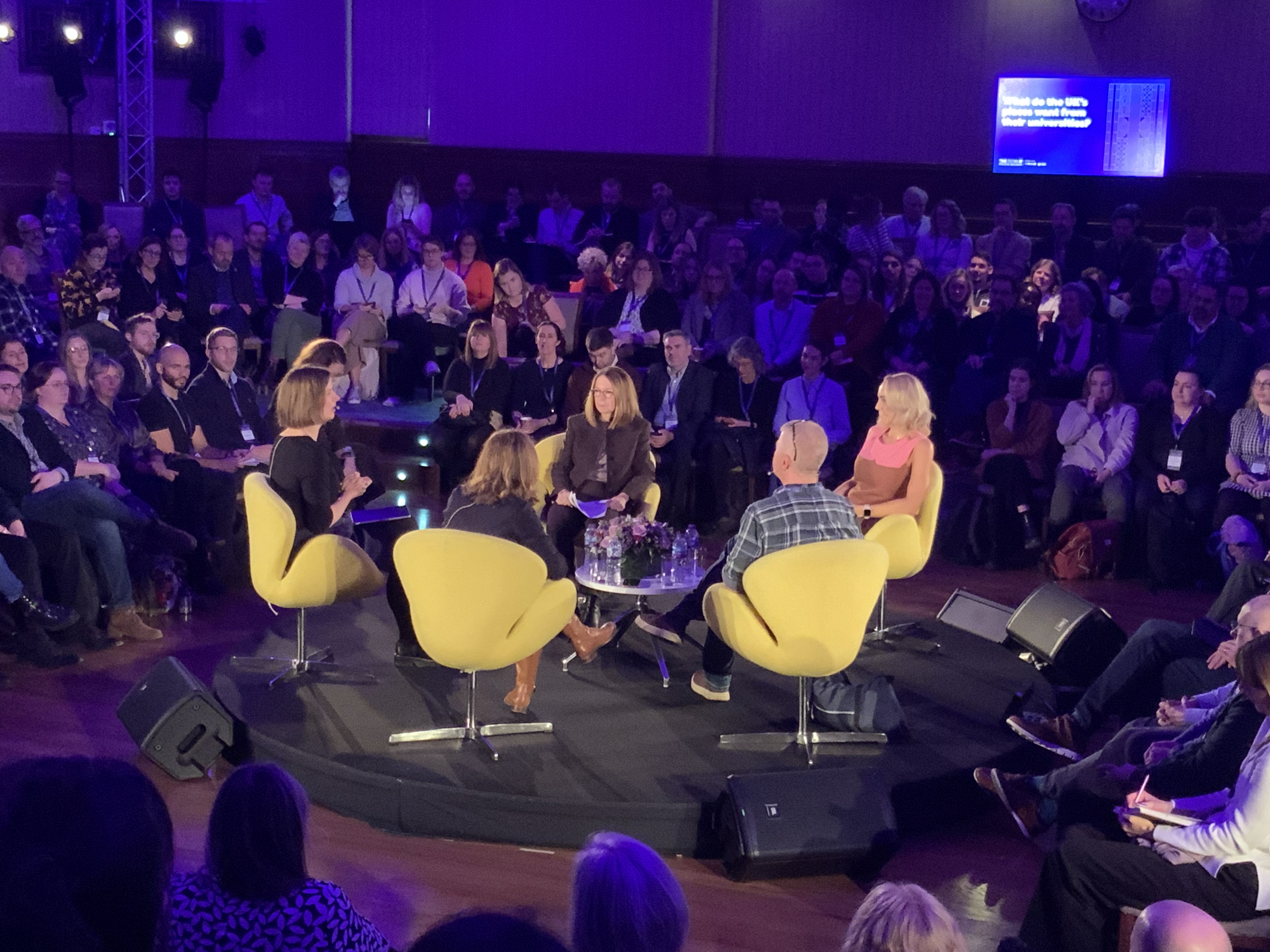
The opening panel session was entitled What do the UK’s places want from their universities?
“Levelling up” may no longer be the current buzzword in government, but long standing issues of inequitable economic growth, public health, cultural assets, and education outcomes across the UK haven’t gone away – nor has universities’ and colleges’ commitment to their places. As Britain gears up for a general election, how might “place” shape the next generation of policy thinking – and how can universities best meet the needs of their communities?
I did a sketchnote which shows the breadth and depth that was covered in the session.
It was a really hot week this week again, weather wise again.
For the third week in a row, I was back in London. I also went to the Bristol office for a couple of days as well.
This time I was in London for the Intelligent Library session I was running. It was nice to focus in a specific use case for the Intelligent Campus looking at the use of data in the library. This workshop demonstrated that there is a real demand for support and help in this space. There are opportunities for more advanced Proof of Concepts, advice and guidance, vision and inspiration, and potential consultancy and training opportunities.
What was shown of value was the range of use cases for stimulating discussion and debate. We have published use cases for the intelligent campus; however, we never published the intelligent library use cases. I did create a series of use cases for various conference sessions I delivered. Something for next year, the key question is where? Also demand for a toolkit to support the use of use cases for both areas.
Working through notes and output captures across the various workshops over the last few weeks. The one consistent across these workshops (internal and external) was that the technical hurdles to the smart or intelligent campus (or library) are relatively simple and easy to deliver on. The challenge is the “so what”. How do institutions exploit the narrative the data is telling them. How does data informed decision making actually work in practice. Something to reflect and think about.
I visited our Harwell office as I returned from London. I often visit our other offices to work, partly for the change in routine, but also to meet other staff and be available for conversations about our HE strategy work.
Spent time developing and working on a new DPS document for student experience, to enable Jisc to utilise external expertise in our work.
Continued my research and analysis on personalisation.
Spent time working through my notes and image captures across the intelligent campus, intelligent library, and smart campus events and inputting them into our research analysis tool Dovetail.
A normal length week! What’s that all about then? A full week next week as well… Well at least the week after that we have another short week.
I reviewed the communication plan Intelligent Campus and Intelligent Library, as well as guides, there will be supporting blog posts and events. I wrote a draft blog post for the comms team.
I ran two personalisation workshops this week. One was a shorter online workshop, the second was an all day workshop in Bristol. In the first instance we were running the internal personalisation workshops to explore the following:
What do we mean and understand about personalisation?
What does personalisation mean in higher education?
What help and support do our higher education members need to deliver on personalised learning and the personalisation of the student experience?
What help and support can Jisc provide to our members in this space?
What was the past work Jisc has done in this space, what is the current work, and what future work is planned?
Following the workshops I spent some time writing up the notes.
On the 24th May I am running an Intelligent Campus Community Event in London. I spent some time planning and organising the event.
Also on the 24th I am presenting at an online event, Advancing Blended Learning in Higher Education. For that event I am doing a pre-recorded video, I spent time planning, recording and editing the video. I would like to have spent more time on this, but realised I needed more people to get the effect and impact I wanted.
#ALTC2016 was my first annual conference. It was held at the University of Warwick in September 2016. While I had been working in HE in IT Training and learning technology roles for ~6 years, I was not aware of ALT or the conference. My colleague introduced me to ALT and it remains a surprise (and source of shame) to me, all these years later, that I had not heard of the organisation at any of my previous institutions.
My first ALT conference was twenty years ago in 2003. I wrote about it in this blog post reflecting on my own ALT-C experiences.
The first Association for Learning Technology Conference (#altc) I attended was in 2003 in Sheffield. ALT was ten years old by now and well established in the world of what we called e-learning back then in the higher education sector, less so in further education. I was in the middle of a project called FAIR Enough part of the JISC FAIR programme and had been asked to deliver a short session on the issues of copyright that we had found as part of the project on sharing resources across our college consortium.
Alas my memory of the conference was one of disappointment, I found it overwhelming, very clique, way too much happening and spread too far across the Sheffield campus, lots of walking. Oh and the conference dinner In the Town Hall was a something of a disappointment.
I didn’t know many people and it was “quite hard” to get to know people without dropping into conversations over coffee, which can be challenging. What I did learn from this is this how other people, new to ALT-C must feel?
Pleased to see that my ILTA EdTech Conference submission was accepted.
Why does no one care about my digital strategy?
The pandemic gave universities challenges and required creative thinking to provide solutions. Universities have needed to act at pace and scale with restrictions. Digital gained more prominence during the emergency response. Now the question is what role will digital play in the post-pandemic strategic priorities of the university?
There are two key questions facing universities?
Does the strategy still meet the needs of the university in a changing and uncertain landscape?
What is the role of digital in the strategic aspirations of universities?
The digital lens approach can enable effective and transformational behaviours. There is a history of people talking about applying a lens to challenges, to look at things differently. (Phipps and Clay 2018) To give a different perspective on what has been written or talked about.
In this session we will reflect on the various ways in which universities can respond to these questions, you may want to create new strategic priorities, which reflect the new landscape in which universities will operate. Some universities will want to consider creating a digital strategy, or giving their existing one a major overhaul.
Another quarter goes pass that means another review meeting, so I did the paperwork last week, these blog posts are very useful for that.
It was with minimal disappointment to read in my inbox this from IFTTT.
Starting on May 23, all free users will be limited to 2 Applets and unable to access Twitter Applets. We hope you understand this change is designed to help us support our community and continue to focus on improving IFTTT. To ensure that your existing Applets continue without interruption, consider upgrading to Pro or manage your Applets via My Applets.
Though I like IFTTT I don’t use it enough to justify paying for it. So, expect less photos in my Twitter stream form May 23rd.
The pandemic changed the whole concept of the campus. From being a physical hub for staff and students, the campus is becoming more of a platform for extending teaching and learning. As a consequence, the importance of data analytics to enhance the learner experience is increasing.
I was in London this week running a personalisation workshop. I spent some time this week planning and organising the workshop. I decided to go for an open and conversational approach to the workshop. We did ramble now and then, but I got some real insights into what some colleagues think and feel about personalisation.
I was reviewing another draft of the Intelligent Library guide. This was originally written a few years ago, but last year we did some additional research and updated the guide. Even to I had to research some broken links and sources for the guide. It’s at times like this that I wish I had a date based search engine that could search like it was the past, so, search the web as though it was 2013.
I have been planning and writing Intelligent Library blogpost to supplement the publication of the guide.
On the 24th May I am running an Intelligent Campus community Event looking at the guide and providing feedback on what Jisc should do next.
This community of practice gives people a chance to network, share practice and hear what various institutions are doing. You will have the opportunity to discover more about intelligent campus projects and our work in this space. The focus of this community event will be where do we go next? You can read the new guide to the intelligent campus and reflect on your own journey in this space, and where you feel we can provide help and support. This will be an opportunity to discover more about the history of our past and current work in the intelligent campus space as well as hear from others about their work on this exciting topic. People working in the area of the intelligent campus who have an interest in the work being undertaken in this space.
Publishing an intro to generative AI is a challenge as things are moving so quickly. However, we think things have now settled down enough for us to bring together information in a single place, to create a short primer. We aim to publish this as a more formal guide that will be updated regularly, but we are posting an initial version as a blog post to get feedback on whether it is useful and if there is other information you would like included.
Given some of the recent media coverage of the rise of generative AI and its potential impact on universities, especially around assessment and academic misconduct, it would be easy to fall into the trap of thinking that university leaders are running scared in the face of ChatGPT. However, when the Jisc-Emerge HE edtech board of higher education leaders met recently to discuss the potential and pitfalls of generative AI, instead of a discussion about the assessment arms race, there was real curiosity and enthusiasm to explore the potential of the technology and what it holds for universities and students.
I am more than likely going to attend ALT-C this September. I read this update from the conference co-chairs.
Many of you who engaged with us in putting in proposals will have noticed we avoided using terms such as digital transformation, and digital strategy. This is because even though we know that staff at the conference will undoubtedly influence and shape those things, we wanted to use the conference to take a step back and recognise that we can not build strategies and roadmaps without first understanding the topography of the digital landscape and the people it will affect. That landscape is still being carved, by the unyielding forces of things like generative AI, political pressures and ideologies, and even social justice, and climate change, which are forcing us to rethink our relationship to educational technology.
Attended the Wonkhe and Adobe Education Espresso online event – Curriculum for the whole person. There was an excellent presentation from Hull University.
I spent most of the week in London working in our London office.
Wrote up notes for internal and external use on the Senior Education and Student Experience Group meeting. I also updated CRM for those that attended the Senior Education and Student Experience Group meeting. Spent time planning logistics and informing for (next) Senior Education and Student Experience Group Meeting on 21st April.
Had a meeting on a possible Learning Spaces session for Connect More. In the end I recognised what I wanted from the session and how I would like to run it, wasn’t aligned. So, I dropped myself from the session. From a strategic perspective, I want a learning spaces session at Connect More, this doesn’t mean I need to deliver such a session.
Planning a meeting with SURF sharing notes on the concepts of the Smart Campus and the Intelligent Campus.
Went down to Portsmouth, to look at a city campus. I am planning some reports on the smart city, civic university, belonging. I wanted some inspiration for a place I had not visited before.
Spent time planning and inviting colleagues to some internal personalisation workshops. This will be followed by some external workshops. We are doing this as part of a strategic target that we will undertake and publish research into the concept of personalised learning and what it could mean for higher education.
I was supporting our events team with invitations for people to present at Connect More.
Thursday, we had our monthly sector strategy leads meeting.
Had to spend some time planning travel and accommodation for April and May. I am off to LILAC 23, UCISA’s Spotlight 23, as well as some internal training in London.
My top tweet this week was this one.
Sadly the IFTTT recipe for posting from Instagram to Twitter no longer works. Looks like my personal stream is about to get much more textual…
Monday I was in London at the Jisc offices in Fetter Lane. We had our Senior Education and Student Experience Group Meeting with 12 PVCs (including a VC and DVCs). As you might expect ChatGPT and AI was a hot topic of conversation in the meeting.
After the meeting I was heading up to London for the UCISA Leadership Conference in Liverpool.
I did enjoy the conference, not sure if I enjoyed it as much as the previous year, but it was still an excellent conference. Various sessions got me thinking, and I am contemplating writing some of my thoughts up from the conference.
The equality, diversity, and inclusion sessions were interesting and useful. Why don’t universities try and be more flexible in their recruitment practices, for example how many offer term time only contracts (reduced hours) to attract working parents. Family friendly policies can widen the talent pool. Why are so many jobs 37.5 hrs 52 weeks? Also why is it so often that recruitment for an individual, rather than recruiting for the team. A more diverse team is often more effective.
Was a little disappointed that one of the opening sessions talked about digital natives. They don’t exist, never have.
When I was young we had a Commordore Vic-20, I had a Casio electronic calculator, does that make me a digital native? According to Prensky yes it does.
However digital is not a constant, the digital technologies we grew up with, are no longer relevant or useful. #ucisa23pic.twitter.com/xUyD1fshOp
Wondered if any university was looking at implementing a four day week?
This BBC news article reflects on the experiences of those involved in a four day week trial.
The scheme, organised by 4 Day Week Global, took place between June and December 2022, and involved organisations across the UK, including some non-profit organisations, as well as private firms in recruitment, software, and manufacturing. A report assessing its impact has found it had “extensive benefits” particularly for employees’ well-being.
I spent time reviewing the Connect More 2023 themes and topics with others across Jisc.
Started reflecting on possible ideas for ALT-C 2023 now that the call for papers is out. In 2021 I did a blog post about the digital lens, based on earlier work, so looking at possibly revisiting this.
Continued my researching AI in education. Have had early access to Bard, which looks very good.
Saw this on the Twitter – Fake Trump arrest photos trigger a new AI panic. The quality of AI images is getting better and better, and as you might expect, the images they are creating can be problematic.
Spent time writing and reviewing some ideas for next year, including looking at the rumoured Apple Reality Pro.
Final comment, often we know where we are, and where we want to be. The harder job is working out how to get there. What do we need to do to make it happen. How do we get there?
My top tweet this week was this one.
My sketchnote from the excellent Trust, teamwork and technology: building a culture of educational innovation at scale presentation here at #ucisa23pic.twitter.com/oKkCn1xiUZ
I spent some time in London this week. I hadn’t been to our London offices for a while and with plenty of events in my diary for the next few weeks, I wouldn’t otherwise be getting there in a while.
I am planning a range of meetings, workshops, and events over the next few months. I am also attending a few events and conferences as well. Throw in some training days and away days, it wasn’t long before something went wrong. There is one week now where I need to be at three different things, in three different places, with three different organisations. Yup, I need to think again.
Had a meeting with Dom Pates about our fireside chat next week at Digifest.
The revised guide to the intelligent campus was published on the Jisc website.
Wrote What is the intelligent campus blog post for web team.
Getting ahead of myself I spent time producing slides for Senior Education and Student Experience Group Meeting happening later in March. I also designed and developed a brown paper workshop for the same meeting.
My top tweet this week was this one.
Ah the Tesco at Bar Hill, I think I went there once (and probably in 1984). It was huge. My over-riding memory was that, this is in the middle of nowhere, as it was one of the few out of town supermarkets at the time.