This week I was in Birmingham for Jisc’s Digifest. This is Jisc’s annual big event at the ICC. I wasn’t presenting but was attending sessions and networking.
Much of the rest of the week was about working on the UUK project on collaboration.
Attended the NREN Technical Solutions Group start up meeting which is looking at education and student mobility in Europe.
Much of the week was about working on the UUK project on collaboration.
I have been working on supporting the work on 12 ideas; combine that with review meetings, writing content, tidying up slides for a presentation, and then some.
Also been working on the E in NREN work looking at student mobility across Europe.
Attended the Wonkhe and Mills and Reeve Connect More webinar realising opportunities for strategic collaboration in higher education which was very interesting and relevant to my current work.
Attended a briefing for Digifest which is happening next week.
Quite a busy week as a couple of people threw a lot of stuff into my in-tray. Writing this reminded of how when I first started working as a lecturer in Further Education, I had a pigeonhole for communicating. People would put stuff in there. A lot of the time the stuff was memos with a series of names on. Once read, you would cross out your name, replaced in the reuseable envelope and put the next person’s name on it. Of course usually there was one person who would never read the memos and their pigeonhole would be stuffed with stuff they hadn’t read.
The Lifelong Learning Entitlement (LLE) will transform the post-18 student finance system to create a single funding system. I read this new overview of LLE from the UK Government. The Lifelong Learning Entitlement (LLE) will transform the post-18 student finance system to create a single funding system. It will replace higher education student finance loans and Advanced Learner Loans.
The LLE will deliver transformational change to the current student finance system by:
broadening access to high-quality, flexible education and training
supporting greater learner mobility between institutions
This has implications for student mobility across the UK as students will be able to move and transfer between institutions. Also students will be able to take a single module or part of a course. In addition the government are expecting new and smaller providers to deliver a range of level 4 and 5 programmes.
Of course the funding is only part of the picture if this is going to happen.
Had various meetings about Jisc’s presence at the Digital University UK (DUUK) Conference happening at the University of Lancaster. I might be going, but it does clash with another meeting I need to attend at the University of Warwick. Looked over Google Maps if travelling between them was even feasible.
Had an internal catch up meeting on digital leadership and sharing what I have been doing. I don’t do much with digital leadership these days, but with my work on collaboration there is potentially some work to do on leadership for collaboration.
Continued to work on the collaboration project we are doing with UUK. This work is looking at possible opportunities and narrowing them down to some realistic and potential opportunities.
I reviewed the work we have been doing for the Education in NREN work. We have been writing stories to explain the student journey. I also reviewed a potential submission for TNC in Brighton.
I am now attending Digifest on the 11th and 12th March. Come and say hi if you’re there. I have had to miss Digifest last year as I was attending another event which was on at the same time.
I also spent time this week responding to various requests to speak at events.
While the notion of “radical collaboration” may present a potentially appealing way of responding to the challenges that the sector is facing, there is, however, a significant tension between the principles of such transformational integration and the principles of competition law. As things currently stand, many forms of greater integration between institutions, particularly in relation to curriculum mapping and sharing the provision of courses, would breach the competition rules.
I am no competition expert, nor am I a lawyer, but having read much of the advice and notes by the CMA on higher education, I have noted that the advice is very much focussed on consumer protection for students, and less about collaboration or collusion.
None of this is advice and is my opinions put here, mainly for me as a thinking exercise, but for informational purposes only.
If higher education is to collaborate more in the non-student realm, then in my view this would be unlikely to attract the attention of the CMA. If a university decides to outsource their IT support for example, this is not a competition or consumer law issue.
Where there is collaboration that would impact on the student, an institution could collaborate with other institutions for prospective students but could potentially come under consumer protection legislation if the changes would impact current students.
The CMA’s advice is very much aimed at the students already at university. There is also advice for institutions about treating prospective students fairly. Most of the published documents in relation to commitments from universities is in relation to universities policies on student non-tuition debt and academic sanctions. This kind of action is seen as an unfair contract between the student and the university.
Reflecting on this, I think the kind of issues that universities need to think about when it comes to student facing collaboration is what would be the impact on current students and what would be the impact on future prospective students.
The timeframe of any changes is critical. So, imagine a scenario where a number of institutions in a local area decide to collaborate on student provision. Instead of all the institutions delivering a course, only one will deliver it. If you implement that straight away, then you might find yourself in breach of the consumer protection law in relation to higher education as stated by the CMA. However if you undertook to do the implementation over three years so no impact on current students, though it would impact on prospective students. Obviously, there are also staff changes, but that is not a consumer protection issue.
There is very little on the CMA and Gov.uk website on educational collusion in relation to courses, but across the web there are many articles written by legal firms on the grounds where universities should be careful in relation to competition, for example this one. This article does provide a useful rule of thumb test.
The following four-step analytical framework should provide useful rule-of-thumb guidance on whether a particular arrangement might comply with the competition rules.
First, there is an objectively reasonable and justifiable aim that the participating universities are seeking to achieve.
Secondly, under the arrangement no unnecessary restrictions on competition are being imposed or accepted.
Thirdly, the proposed arrangement will lead to tangible benefits for students (or consumers of university services).
Finally, the proposed arrangement is the least restrictive means of achieving the objective and consumer benefits.
If the answers to these questions are all affirmative, then the arrangement may be compatible with the competition rules.
This is a complex issue, and these are just some thoughts from my reading around the subject.
Bangor University aims to cut about 200 jobs to make savings of £15m, its vice-chancellor told staff in an email. Vice-Chancellor Edmund Burke said the drop in international students, a rise in costs and the UK government’s changes to national insurance had left them needing to make “unprecedented” changes.
The University of South Wales (USW) also announced on Wednesday it plans to cut 90 jobs.
Attended a meeting with the DfE looking at the Collaboration for a sustainable future report we published.
There was a lot of work kicking off the collaboration project we are doing with UUK.
Continuing with my writing draft for higher education State of Activity report.
Researching and reading up on data standards for teaching and learning, and corporate systems. Realising that I know a lot less than I thought I did in this space.
Had a call with HESCA to discuss collaboration presentation at HESCA 25.
This week I was in Finland for a workshop regarding NRENs for Education. NRENs are the National Research and Education Networks that most countries have for connecting their universities and research institutes. In the UK Jisc is the NREN.
This workshop was bringing together a group of like-minded NRENs to work together on essentially student mobility across Europe. The group has written a series of use cases on a prospective student journey. This takes the student through the recruitment process, transferring easily between institutions, and ensuring that they are accredited and recognised for what they have been studying.
Now of course we know that the UK is no longer part of the EU, however there are potentially good core reasons why the UK should be involved in this. First the situation in Northern Ireland and the Republic of Ireland ensuring students can move freely between institutions. Secondly, there has been discussions about free movement for young people, streamlining and aligning education would enable young people in the UK to study at universities in the EU, and for EU students to come to the UK.
This can happen now, but it’s a complex and often manual process. It also favours the institution rather than the student.
I have been to Finland before, I was there for a conference in July 2006, nearly twenty years ago. Back then I was presenting at the EU e-Learning Conference in Espoo. It was a quick trip in 2006, flying out on Monday and then back home on the Wednesday. I flew from Bristol Airport and then there was a bit of a mad rush at Schiphol where I had to change to a flight to Helsinki. Schiphol is one huge airport… Having arrived at Helsinki, I needed to get to Espoo and travelled by shared taxi to the hotel. I spent part of the evening walking around the area, before ending up in the hotel restaurant. It was lovely and sunny, and as being so far north, the sun never really set. I had spent the Tuesday at the conference. I had some time the following day before my flight to have a really quick look around Helsinki. I caught a bus to the centre and back. I had always planned to return, so nineteen years later I was back.
This time I flew direct to Helsinki from Heathrow. I arrived late afternoon, this time I took a train from the airport to the centre. I then walked to my hotel, so after checking in I did explore the area around the hotel.
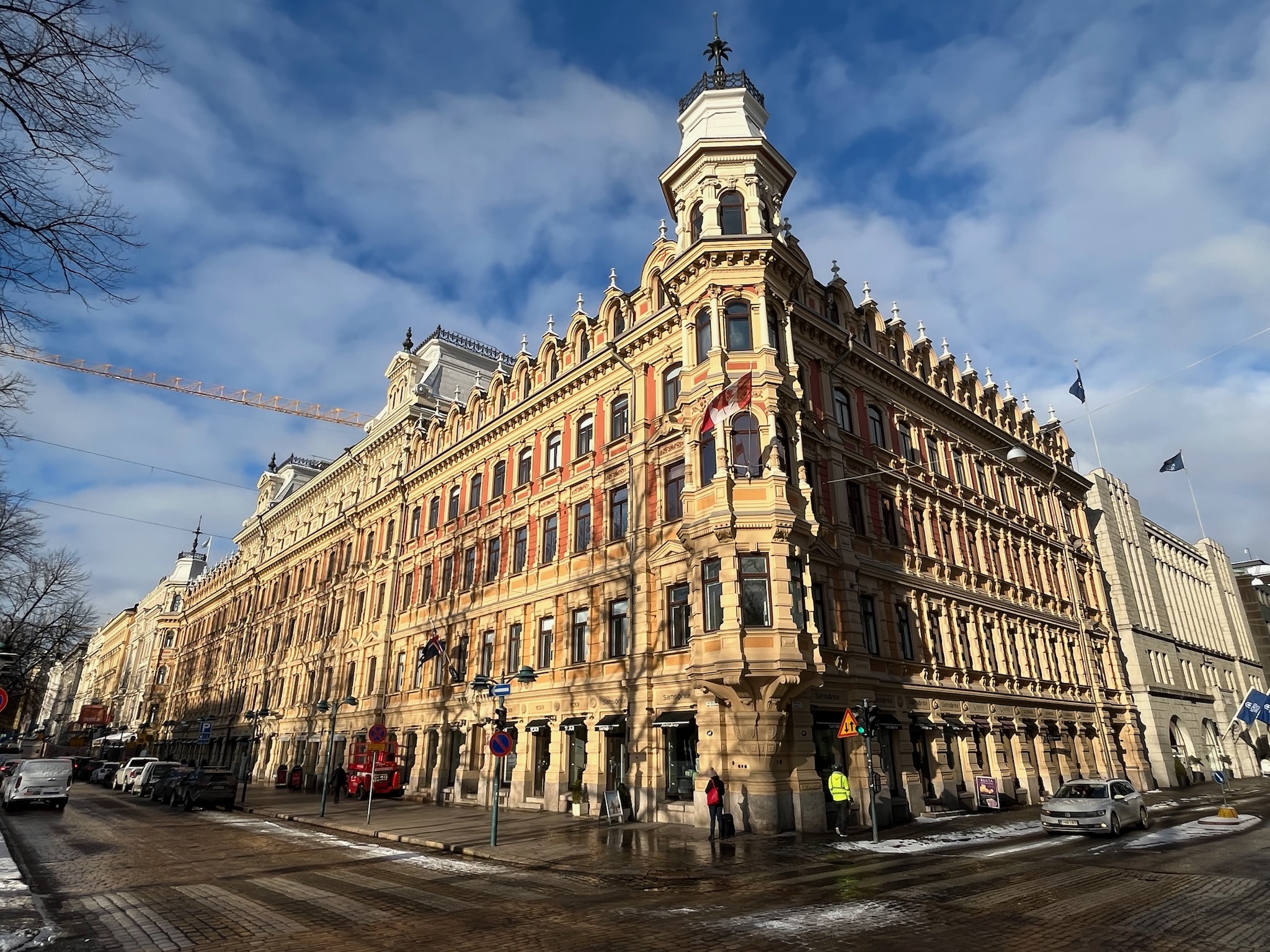
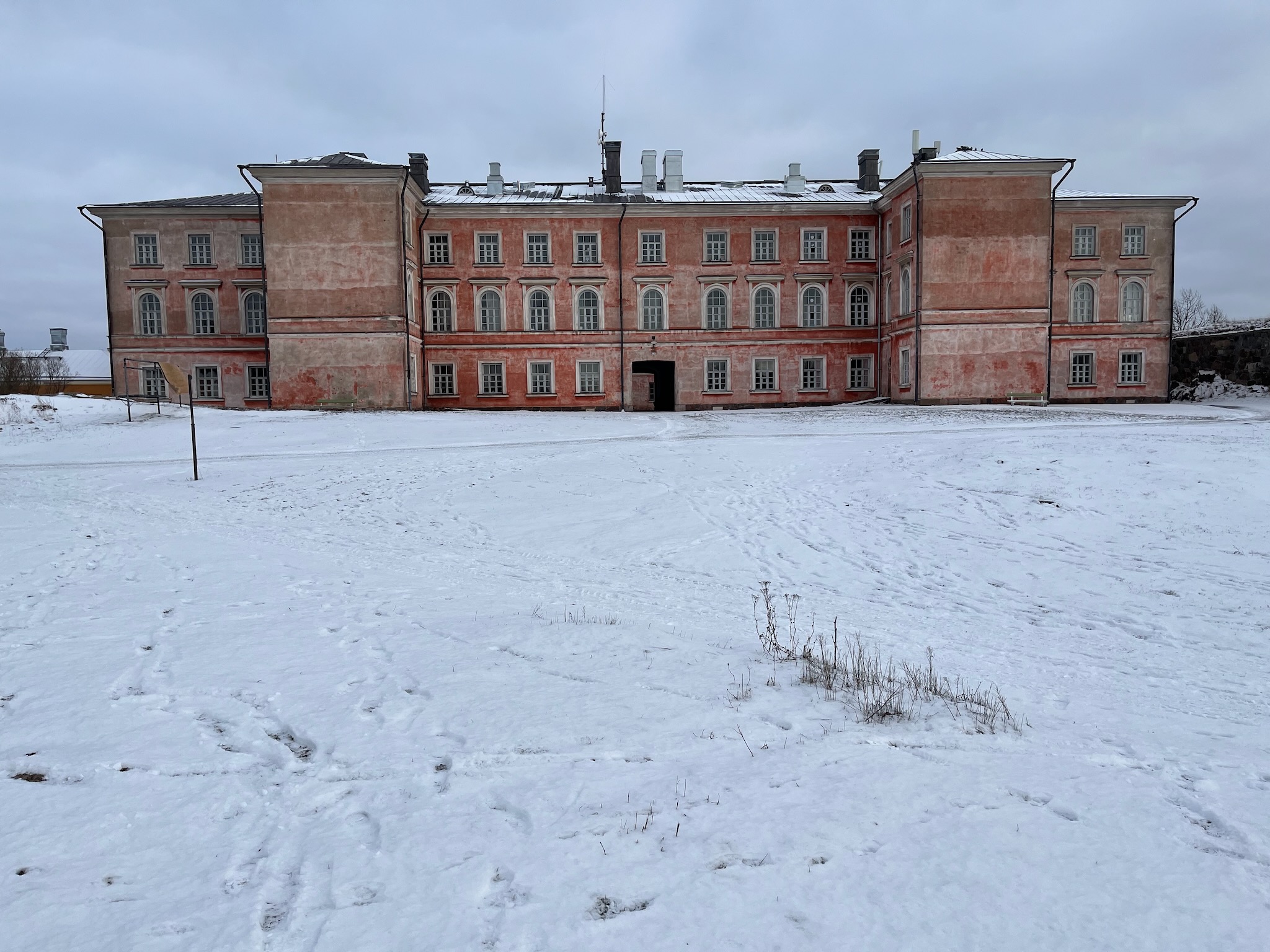
The following morning, I was up early so I went for a walk around the city centre. I then headed off to Espoo for my workshop, using the Metro to get there. The workshop was over two days. I had an evening flight the following day. I woke up to 4cm of snow, so after working at the hotel, after checking out I took a walk down to the harbour to catch a ferry to Suomenlinna. Suomenlinna is an island fort that has a long history and some amazing architecture and a few museums.
Helsinki is an amazing city, and there is some incredible architecture and buildings. I was impressed with the public transport, there were trains, buses, trams, a metro, and even a ferry. I used the HSL app extensively for tickets. It was nice to return to Helsinki and having a little more time to see something of the place, whereas back in 2006 it was very rushed.
I had a fair few meetings in my calendar for Friday, when planning my trip, and originally going by train, I had intended to head to the London office on Fetter Lane and have my meetings there. With potential issues with the trains the preceding Sunday, I had decided to drive to Heathrow. That didn’t preclude going to the London office, but I thought, as I had the car, I would travel to our relatively new offices in Milton Park near Didcot. These replaced our old offices in Harwell. However with my body clock still on Helsinki time, having woken up early I had the time to make the trip back to Bristol and still do my meetings, so I did that.
Next week I am off to Helsinki for an E in NREN workshop. Looking at the predicted weather forecast I think it might be cold. So the question is do I buy some cold weather gear for a few days in Finland, or do I make do with what I have, and if necessary just stay indoors? I am not expecting to be spending a lot of time outdoors, so…
Managed to get to the office this week. I do like going to the office, nice for a change of scenery, and the social aspect is important as well.
I had a couple of meetings with NREN colleagues this week discussing some stuff. That workshop, future collaboration, and sharing what we do.
I attended a regular meeting Jisc has with the OfS and discussed the various activities Jisc has been undertaking for higher education.
Continued my researching, planning and writing initial draft for higher education State of Activity report. Getting there.
This week I attended the joint HEPI and Jisc webinar: Competition or collaboration? Opportunities for the future of the higher education sector. This was building on the Collaboration for a sustainable future report we recently published.
The appetite for collaboration and sharing appears to be growing, but as with any change, people want change, but don’t necessarily want to change. The more radical the change, the more resistant people become it would appear. However to maximise the benefits of collaboration, then very likely we will need some radical change.
One thing I have been thinking about is the barrier of identity. When you collaborate, do you lose your institutional identity. This actually brings back to the table the importance of personalisation.
I have continued to research, plan, and start writing an initial draft for higher education state of activity internal report. The challenge is how much to include and how much detail to put in there.
I was off to London again this week. I was attending an 1EdTech Event in London, Innovate your way out of the funding crisis. This was my first engagement with the standards community for some time. Before I joined Jisc and when I was working in Further Education I did a lot of work looking at standards in relation to moving student data around so it could be imported into the VLE. Then there were standards for learning objects and ensuring that they would work on the VLE, both importing and exporting the right data. I also being very impressed with LTI and what it would enable in allowing students to use a WordPress installation for blogging. Blogging, what was that, and is it still around?
We are starting work on a collaborative project with UUK on collaboration. Part of that is reviewing the original terms of reference and bringing in a consultant to undertake some of the work as well.
I have been spending time researching, planning and writing initial draft for a higher education state of activity report.
In February Jisc has one of its regular meetings with the OfS and I have been preparing some notes for that meeting.
Spent time on the planning and logistics for a workshop I am attending in Helsinki in February. The workshop is about NRENs for Education. NRENs are the National Research and Education Networks that most countries have for connecting their universities and research institutes. In the UK Jisc is the NREN. This workshop is bringing together a group of like-minded NRENs to work together on essentially student mobility.
I am anticipating that Helsinki will be cold. I have been before, for an EU e-Learning Conference which took place in July 2006 in Finland. I reminisced about that conference back in a weeknote in July 2019.
I also signed up for TNC in Brighton in June. It’s the first TNC I go to, and it’s in the UK. Reminds me when I got funding to go to the international conference mLearn, and the year I went, it was in Dudley.
The week started off well, but by the end of the week I was off sick with a bad cold.
Have been having meetings with UUK in regard to strand two of the work of UUK’s Taskforce on Efficiency and Transformation in Higher Education. Strand two covers: Developing detailed business cases on options for national collaboration, which will be externally published, and will give the sector clear paths towards transformation. This builds on the recent report I worked on, Collaboration for a sustainable future which looked at collaboration and shared services.
On Thursday, decided I would get to London for our team away day. It was exhausting and certainly I regret a little bit in heading off there feeling rough as I did.
Well first week back at work after the two week break for festivities. I nearly wrote first week back in the office, but with hybrid working, I suspect for some, this first day still means working from home. Also in various parts of the country the snow and flooding would make commuting challenging Personally I headed to our Bristol office. We still have a choice of where we can work with hybrid contracts, but I read yesterday about how many companies are now forcing or requiring staff to come into the office.
This was covered in a Guardian article, ‘It didn’t come as a surprise’: UK workers on being forced back into the office.
Some welcome cuts to hybrid working but others feel less productive and are considering change of job or country.
Many employers are mandating the return to the office, in this other piece on the Guardian website.
The post-festive return to work in the dark days of January is never easy, but this new year is shaping up to be tougher than usual for UK workers. Not only must they brave days of severe cold and ice, but many face the end of post-pandemic hybrid working.
The article continues…
Such orders are provoking fresh battles between employees and their bosses, who believe staff need to be brought together to foster collaboration, creativity and a sense of belonging.
The challenge I find with that, is with a geographically distributed team, even when you are in the office you are spending a lot of time on online calls and meetings. The value in being physically in the office is lost.
Lots of snow this week, however, I didn’t see much mention of university closures compared to say fifteen years ago when we had some really bad snow. I wrote about this.
So this week we’ve had some snow, but I suspect the disruption is still there, but the response from the sector will be influenced by that covid experience, to the point where the disruption can be minimised.
Met with our new Head of Research this week.
Universities need new ways to make their research pay. An interesting opinion piece on the FT about York looking to diversify their research income by looking to industry to fill that gap.
Public and private funding are both vital for institutions such as the University of York as international student fees fall. But cracks have appeared in York’s financial foundations in the past couple of years. It suffered a £9mn deficit last financial year amid a fall in the number of higher-fee international students on whom it relies to support research and teaching of UK students. It shed 275 jobs, mainly among administrative staff, as part of an unpopular restructuring.
Attended our regular internal Consultancy Forum where the Collaboration for a sustainable future report was discussed and the opportunities therein for possible consultancy in this space.
Spent much of the week I felt filling in a survey for a workshop. The survey was about Jisc activity across various spaces and planned activity.
I finished and completed Lead at Jisc management and leadership course I have been doing since last April.
news and views on e-learning, TEL and learning stuff in general…