A couple of months back I chaired a session at Jisc’s Connect More event on podcasting. The podcasting session was delivered by Mark Childs from Durham with support with a recorded segment by Puiyin Wong from Birmingham.
The initial discussion before the presentation made me go back and look at when I started publishing my elearning stuff podcast. This was back in March 2008, enabled and inspired by the LSN’s MoLeNET programme. The first few episodes were mainly me speaking, but wasn’t long before I was recording panel discussions talking about stuff about e-learning.
However I had been listening to podcasts for a few years before that. I discovered podcasting when a webpage I had created about wireless zero configuration was discussed as part of an US radio tech podcast. The host of that show had a range of podcasts, and I started listening to them. Those podcasts did influence the format and structure of my podcasting recordings.
When I changed jobs and roles in 2013 I didn’t have the time and resources to record new episodes of the podcast. I did a few more episodes over the years following. However my usual panellists also changed jobs, roles, or even retired.
The last time I published a podcast was way back in September 2018, which was when I was at the ALT Conference in Manchester.
I did think I might be able to reboot the podcast when covid struck the UK, but even then I didn’t really have the time and importantly the space to do it.
Since then I have talked about rebooting, but haven’t yet made the leap to actually make some new recordings.
Is that going to change? Well probably not, but never say never.
This week I actually spent three days of my working week, working in the Bristol office. It was a very busy office, and as a result there was a real buzz. Some of my colleagues in my team were also in the office, so there was much discussion and in-person collaboration.
The beginning of the week I was in a meeting looking at improving internal communication and collaboration within our directorate. It was an interesting meeting.
Spent a lot of time on organising and planning next week. I am off to the Netherlands for a GÉANT TF-EDU (Education Taskforce) meeting in Delft and then will be attending the 1EdTech Learning Impact conference before ending the week meeting up with Dutch colleagues from SURF. I helped put together a presentation which Jisc will be presenting next week at the conference looking at sharing and collaboration.
I did look at travel options for the trip; my first choice was to actually drive and use the Harwich Hook of Holland ferry. Though this would take a lot more time, most of which would be driving to Harwich in Essex, which with charging would be a six or even seven hour drive followed by an eight hour ferry crossing. Another option was to catch the train. There are direct trains from London to Amsterdam, but the timings are challenging as it is a nearly a five hour train journey, but I would need to get to London first, and then at the other end get to Delft. In the end it was easier, quicker (and cheaper) to fly from Bristol. It’s a seventy-five minute flight, though I have to get from Schiphol to Delft, however that is less than an hour away on the train.
The OfS has proposed a revised TEF (Teaching Excellence Framework) and is consulting how it assesses and regulates higher education. One key point is putting a lower burden on high-quality institutions; and increased scrutiny on weaker ones. There is still some reliance on NSS scores, which we know sometimes skews how universities interact with students.
Could a university department secede from their university and become independent? This was the idea behind a vision piece I wrote last year. I recently published a couple of vision pieces on the blog, one on the The University Group™ and another on The Specialist University Centre. This vision about secession is similar to the specialist centre, but goes further.
Created by experts to inspire (and possibly scare) us into thinking about what a preferable future for higher education might look like.
Though the concept of economies of scale means that the concept of a large university, spreading costs and overheads across a range of provision was seen by many as a cost effective solution, the growing impact of reduced funding, fixed student fees; saw university departments being forced to cut costs. There was a spread of discontent that this was having a negative impact on the student experience and the quality of the research being undertaken. There was also a strong feeling across staff and management of many departments of these decisions being done to them and they having no say in the decision making process.
University departments already had some element of autonomy, so it wasn’t too long before some departments decided to secede from the university and form their own “university” to take back control. These departments wanted to have more power over the recruitment of students and staff. They were able to outsource administrative and professional services to subsidiary service companies that delivered services to a large number of these autonomous departments. With the wealth of empty office space across major cities, it was relatively easy to procure space, combined with online provision, and hybrid home working, the costs of running a department of a university, divorced from the university itself, could be minimised. The use of shared services across these small independent universities enabled them to focus on research, learning and teaching. With no large overheads being top sliced from the income, they could invest more in learning and teaching. Some departments even decided that teaching was a distraction and focused on research alone.
Learning and teaching was often a blend of physical in-person provision combined with online delivery and resources. The use of online and digital resources meant that library provision was entirely online. Even then the use of print on demand, meant those students who wanted physical books and journals could have them delivered overnight.
For many prospective students, these new independent departmental universities were a real attraction, allowing them to fit their studies easily into their work life balance. Going to university wasn’t always an option for all prospective students, the focused and specialised provision of these providers was meeting a real demand.
Once a few high profile departments had done this, it wasn’t long before there was an avalanche of universities finding themselves breaking up. In some cases legislation was enabled that allowed those departments to retain not just their staff, but also their departmental buildings and campuses. Legislation was passed enabling these departments became small independent universities. They started to market themselves, mainly using online tools and services.
The ease at which cloud services could be obtained and the increase in the availability of independent professional services, and service companies, resulted in keeping administration costs to a minimum.
The break-up of the large universities into smaller departmental universities, also detached many university functions and services. There was no longer a need to centralise student accommodation, often halls of residences would be either sold off as they were no longer needed, or effectively privatised. University catering was closed off, and national chains took over the spaces.
Student support became a service that was bought in as and when required.
Some university campuses which consisted only of independent subject departments, the university administration became more of caretaker and administrator for these departments, akin to the science parks of their day.
The big news this week was the announcement of the merger between the University of Greenwich and the University of Kent. It is being called the creation of the “first” super university. I wrote about this on the day of the announcement. Degrees from the new super university will still be awarded in the name of Kent or Greenwich. I think that this is a wise move and needs to be supported, mergers don’t and shouldn’t always means the loss of institutional identities.
Also this week I published a couple of vision pieces on The University Group™ and The Specialist University Centre. With the recent announcement of the “first” university super merger between Greenwich and Kent, I was reminded of a piece of work I wrote last February, which never got further than my hard drive (well cloud storage). Also last week was the UUK Annual Conference, the then science secretary Peter Kyle was speaking on the second day, and calling for increasing specialisation and collaboration in higher education, which reminded me of another vision piece. So, I put them both on the blog.
One of the reports I have been working on this year was on subject collaboration within higher education. We did reference a previous British Academy report, so it was with interest that I read their recent report, which obviously focuses on the arts and social sciences. I wrote up some thoughts on the report and the implications for the UK higher education sector.
On the 1st September we published a version of one of the reports I have been working on, this week I have been working with others finalising the second report which will be sent to UUK members.
The NRENS 4 Education group I am part of had a meeting with the European Commission. The last time we met, it was in-person in Brussels, this time it was a Teams meeting, so no Belgian chocolates for me this time.
We had a discussion and reflected on UUK’s annual conference, which took place last week. Positive attitudes to collaboration, however still understanding the challenges in making it happen. The Kent and Greenwich merger may demonstrate one way forward.
Writing up a business case for visit to Netherlands and attendance at Learning Impact Europe 2025 Conference.
I have been invited to be a speaker at HE Transformation 2025, taking place 19 – 20 November at the NEC, Birmingham.
I did make it to our office in Bristol and London this week.
I had planned to publish this, as the first of my vision pieces, following the UUK Annual Conference last week, but my timetable was scuppered with the announcement of the “first” university super merger between the University of Greenwich and the University of Kent. So I did publish a vision piece on The University Group™.
So, what was going to be that first vision? Well last week was the UUK Annual Conference and I was able to attend as I had worked on strand 2 of the UUK Transformation & Efficiency Taskforce. On the second day, the then science secretary Peter Kyle was speaking and calling for increasing specialisation and collaboration in higher education.
There are “too many universities competing for the same pool of students”, according to science secretary Peter Kyle. Speaking to reporters at Universities UK conference, Kyle argued that said volume of universities was coming at the “expense of playing to their relative strengths or truly specialising to become the go-to authority in their field rather than a bit player in many.”
I was reminded of this piece of work I wrote last February, which never got further than my hard drive (well cloud storage) on the specialist university.
Created by experts to inspire (and possibly scare) us into thinking about what a preferable future for higher education might look like.
What might it mean for the operations of a university if the focus of the student experience became more specialised? How would and how could the sector respond to change in how students accessed higher education. What would this mean for individual institutions?
Though there have been many specialist higher education institutions, they have generally being outnumbered by the more traditional general university offering a portfolio of courses across multiple subjects.
Universities currently offer a broad range of programs and modules for graduates and postgraduates what we could see happening in future as university specialising in one or two particular areas, and then having all the students in the area attend that specific university, so you no longer would have the university of a particular city; you would have the university of business university of law, the university of biology, the university of aeronautical engineering.
The cost of providing some subjects became prohibitive and many universities recognising that economies of scale would be more cost-effective took the decision to specialise in a few core areas. They decided to specialise and provide high-quality, specialised education locations in their chosen, subject field and research. However though they narrowed down their breadth of delivery, they were able to use technology to widen their offer to the whole of the UK and in some cases internationally as well.
As the reputation of these institutions grew, those universities who had decided to retain a broad curriculum, found that both domestic and international student recruitment was falling, and it was becoming more difficult to recruit and retain staff.
The specialist institutions soon outnumbered the traditional university by student numbers. These institutions were large enough to provide their own student services, professional services and even multiple campus hubs across the UK.
In addition to these large specialist institutions, there was also a large number of small institutions focusing on very specialist curriculum and research areas. However they did not have the capacity or capability to deliver the student and professional services they required. As a result they bought in these services from service companies, or in some cases they collaborated with other specialist institutions to deliver shared services in a range of areas. This enabled the specialist institutions to focus on teaching and research. They used third parties for professional services such as IT, HR, payroll, student records and others.
There was also collaboration in other areas, especially in student facing services such as the library, student support, healthcare, and academic support.
Some specialist institutions also partnered with relevant industry partners, with the industry partner providing the business support for the university.
One of the reports I have been working on this year was on subject collaboration within higher education. We did reference a previous British Academy report, so it was with interest that I read their recent report, which obviously focuses on the arts and social sciences.
In this report the British Academy revealed a troubling trend in UK higher education: a growing number of “cold spots” where students have limited to no access to local humanities, social sciences, and arts degrees (known as SHAPE subjects). This is especially concerning since more than half of UK undergraduate students attend a university within their home region, and that number is even higher for disadvantaged students. The report argues that the lack of local access to these degrees risks deepening social inequality.
The Scope of the Problem
The decline in subject provision is not uniform. The report identifies specific subject areas that are particularly vulnerable. Modern foreign languages have been hit the hardest, with the number of available courses having nearly halved since 2011. Other subjects like linguistics, anthropology, and drama are also showing significant declines in geographical coverage. While parts of England are affected—especially the North, South West, and East—large areas of Wales, Scotland, and Northern Ireland are also experiencing a shrinking of SHAPE degrees.
This issue is a symptom of wider financial pressures on universities. The report warns that institutions are making decisions based on short-term financial concerns and competition for students, rather than a strategic vision for the future. The British Academy cautions that if these trends continue, even more popular subjects like English and history could be at risk.
Recommendations for possible solutions that come from the report.
To combat this trend, the British Academy is urging a collaborative response from the government, universities, and regulators. The report’s key recommendations include:
National Registers for At-Risk Subjects: The creation of a national register to monitor and track the health of specific subjects in different regions. This would provide a clearer picture of where “cold spots” are emerging.
Government Financial Support: The government should provide targeted funding to protect and support subjects that are identified as being at risk.
Encouraging Collaboration: Universities in each UK nation and region should actively seek opportunities to collaborate on teaching, research, and shared services. This would help ensure that specialised courses remain available to students without requiring every institution to run a separate program.
Legal: The government (well the CMA) should issue clear guidance on how far higher education providers can collaborate without breaching competition law.
The report serves as a stark warning that without urgent intervention, access to these critical subjects will continue to diminish, undermining the UK’s reputation for academic excellence and weakening the skills needed to tackle major societal and economic challenges. The British Academy argues that SHAPE subjects are crucial for fostering a well-rounded society, as they contribute to innovation, critical thinking, and cultural understanding.
It should be noted that there are similar cold spots in other subject areas as well, including core priority subjects such as nursing.
With the recent announcement of the “first” university super merger between the University of Greenwich and the University of Kent, I was reminded of this piece of work I wrote last February, which never got further than my hard drive (well cloud storage). I did write about writing them in a weeknote back then.
Anyhow, here is the vision I wrote about a future University Group, something that KPMG wrote about in their Radical Collaboration document for the UUK Transformation & Efficiency Taskforce and can be seen in the Greenwich and Kent merger.
Created by experts to inspire (and possibly scare) us into thinking about what a preferable future for higher education might look like.
All universities have their own personality, appeal, and brand. However not all universities need their own HR departments, or IT teams.
The first large university groups appeared following mergers forced by the regulator after financial pressures could have caused at least one higher education institution to fail.
The new group recognised that though in theory they should have a new name, they also realised that the existing names were brands in their own right. As a result they formed The University Group™ but the individual university names were kept. Staff were employed by The University Group™ but students attended a named university. It was so successful that some smaller institutions asked to join the group but retain their identity. What was important to the group was that management and staff recognised that they were employed by The University Group™ and not the named university in which they worked (though some teaching staff worked across the group), from a student experience perspective the student was a student of the named university. They would be awarded their degree from that named university and would to all intents and purposes be a graduate of that named university.
Support for the administrative and support functions was provided by group services. There was a single HR department for example, a single catering supplier for the group, IT services was provided by the group. Some group staff were based at each university campus to provide on-site support, but many professional services staff worked in a hybrid manner based in. regional hubs. This again reduced costs, through economics of scale, reduced office space. For those universities based in high cost city centres, reducing the amount of space for professional services, either increased teaching space capacity or reducing the university estate to further save costs.
The success of that first group in reducing costs and increasing student numbers encouraged others to not only reflect on joining the group, but for the regular to force through mergers across the country. We then started to see the first metropolitan universities appear, as well as the first regional groups.
Some universities decided to jump before they were pushed and so when a group of geographically dispersed universities merged to form a new super university group but retaining their individual identities the tide turned for the unique independent single university.
It wasn’t too long before the number of higher education organisations could be counted on the fingers of two hands, though the number of named universities actually increased, as the university groups de-regionalised some of their brands into local brands.
The university groups had better bargaining power and more influence in some markets. This also helped reduce costs across various services. With just a few higher education organisations the market for some specialised learning technologies was too small and many edtech businesses either dissolved or moved into other markets.
Today we heard about the creation of the “first” super university, arising from the planned merger between the University of Greenwich and the University of Kent.
BBC reporting UK’s first ‘super-university’ to be created as two merge from 2026
The UK’s first “super-university”, stretching across an entire region, is to be created through the merger of the universities of Kent and Greenwich, the BBC has learned. Under the proposed name of London and South East University Group, the single institution will have one vice-chancellor from the academic year starting in autumn 2026.
The plan on the student-facing side is for each university’s identity to be preserved – with applications, and degree awards, kept separate – behind the scenes, the “super-university” (as the press release puts it) will have a unified governing body, academic board, and executive team, and a single vice chancellor: Greenwich’s Jane Harrington. Staff at both universities are expected to transfer across to the newly merged university – legally, there will be one entity, but the two “brands” will still exist as trading arms.
Degrees from the new super university will still be awarded in the name of Kent or Greenwich. I think that this is a wise move and needs to be supported, mergers don’t and shouldn’t always means the loss of institutional identities.
This is not the first higher education merger, the City St Georges merger happened last year. However, this is the first merger between two large universities.
As the BBC notes, The plans unveiled on Wednesday are on a bigger scale, with two universities offering a full range of courses and spread over a wider geographical area.
It’s interesting to see the BBC call it the first merger, is there anticipation that there will be more mergers in the future.
The Department for Education welcomed the merger, a spokesperson said: “This collaboration shows how strong partnerships in higher education can help enable delivery of world-class teaching and research whilst maintaining the best interests of students.”
So is this the start of something, we will have to wait and see.
One question though might need asking, what about the other two universities based in Canterbury, what are they thinking?
Back to work after a week off. August is quite quiet for Jisc, partly as it is quiet for higher education. September though, is when it all kicks off. Though saying that, last week another blog post on the Jisc websites, Setting the foundations for successful collaboration was published.
Convincingly making the case for collaboration across the higher education sector for better student experiences is crucial, but how do you get key people on board for institutional and personal buy-in?
As with most content that I have published on the Jisc website, it was a group effort in writing it. It has developed and changed since I originally proposed the idea. It complements the post It’s better together – how to make the case for collaboration which was published the week before.
The Universities UK (UUK) commissioned report, led by Jisc, presents a compelling case for a sector-wide action plan. New recommendations, published today, outline opportunities for smarter collaboration across the UK higher education (HE) sector, drawing on the long history of successful shared services that play a vital role in securing improved user experience and significant university cost savings through greater efficiency.
The report, developed under the UUK Transformation and Efficiency Taskforce, calls on universities to make best use of existing, underutilised shared services to fully support entrepreneurial, locally driven initiatives and encourage nationwide growth. It highlights that while shared services like UCAS and Jisc’s Janet Network are used right across UK HE, most others remain underutilised due to lack of awareness, funding, and strategic coordination.
I did a significant amount of work on this report; it was one of three that we worked on as part of strand 2.
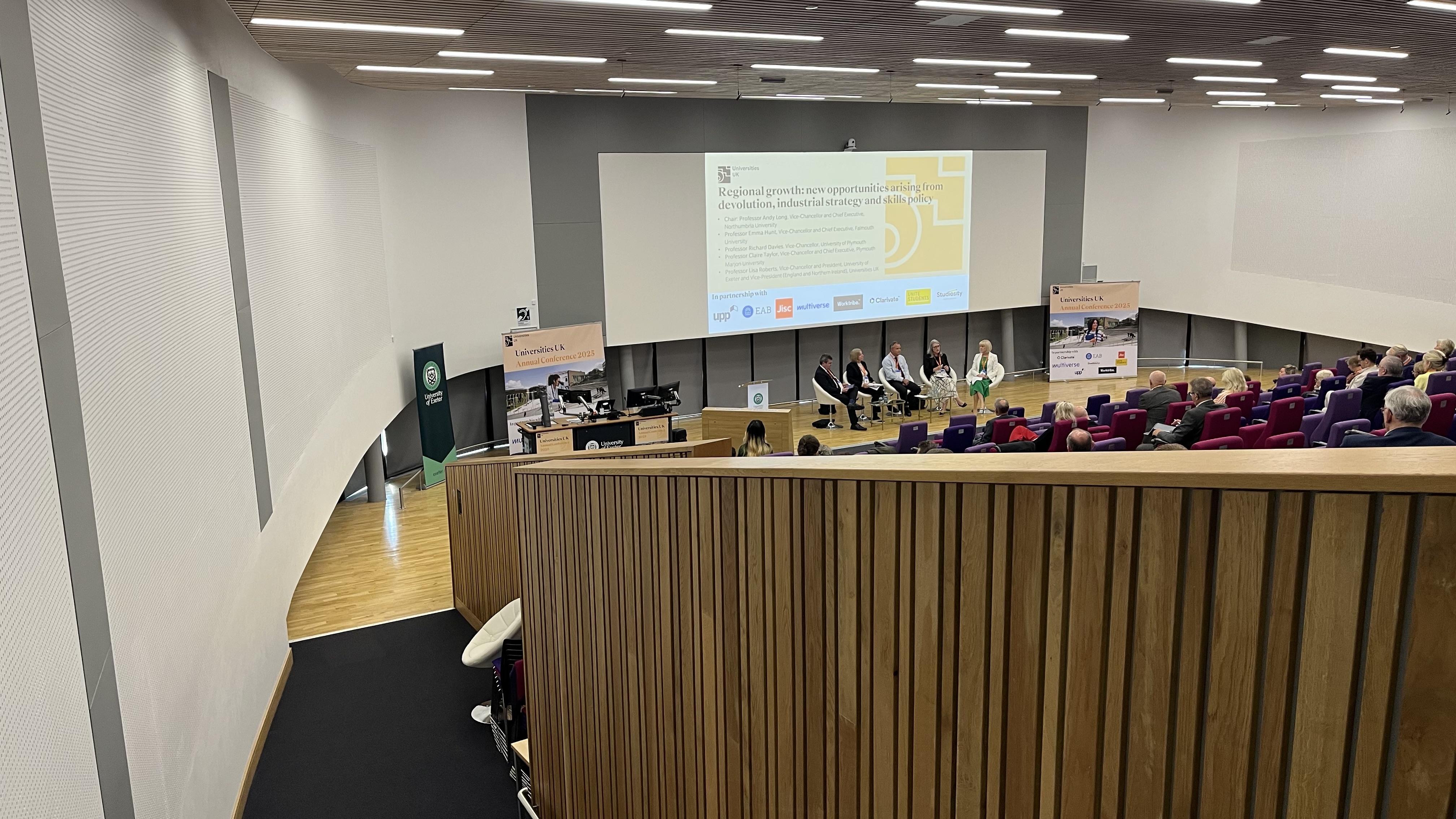
I was invited to attend the Universities UK’s Annual Conference 2025 which was taking place this week at the University of Exeter. Exeter is just over an hour away down the M5, so quite an easy place to get to. Jisc’s CEO was delivering two sessions supporting the publication of the report.
It was a good conference with some very good sessions and insights. I am though reminded of the recent post I wrote about hindsight in which I looked at the challenges and change that Intel and Kodak faced, and some would say failed to adapt to. I had listened to a podcast, which discussed how Kodak did not adapt well to the digital revolution in photography. It was interesting as it wasn’t as though Kodak ignored digital, they actually produced a handheld digital camera back in 1975.
The current economic climate and the state of financial sustainability is here, and universities know this. This was expressed many times during the conference. However universities may know and realise that they need to change, but they can’t afford to make those changes now. As a result they may never change.
Usually at the time of year I would be off to the ALT Conference, well I didn’t go last year. This year the conference is taking place later in October up in Glasgow. As my role is less about learning technology and more about strategic operational issues, the value of the conference to my work is less than in other years. There are some interesting looking sessions on the programme, so it’s on my list of possible conferences, but we will have to see.
I had a couple of meetings about NRENS 4 Education (or E in NREN as I have bene referring to it on the blog).