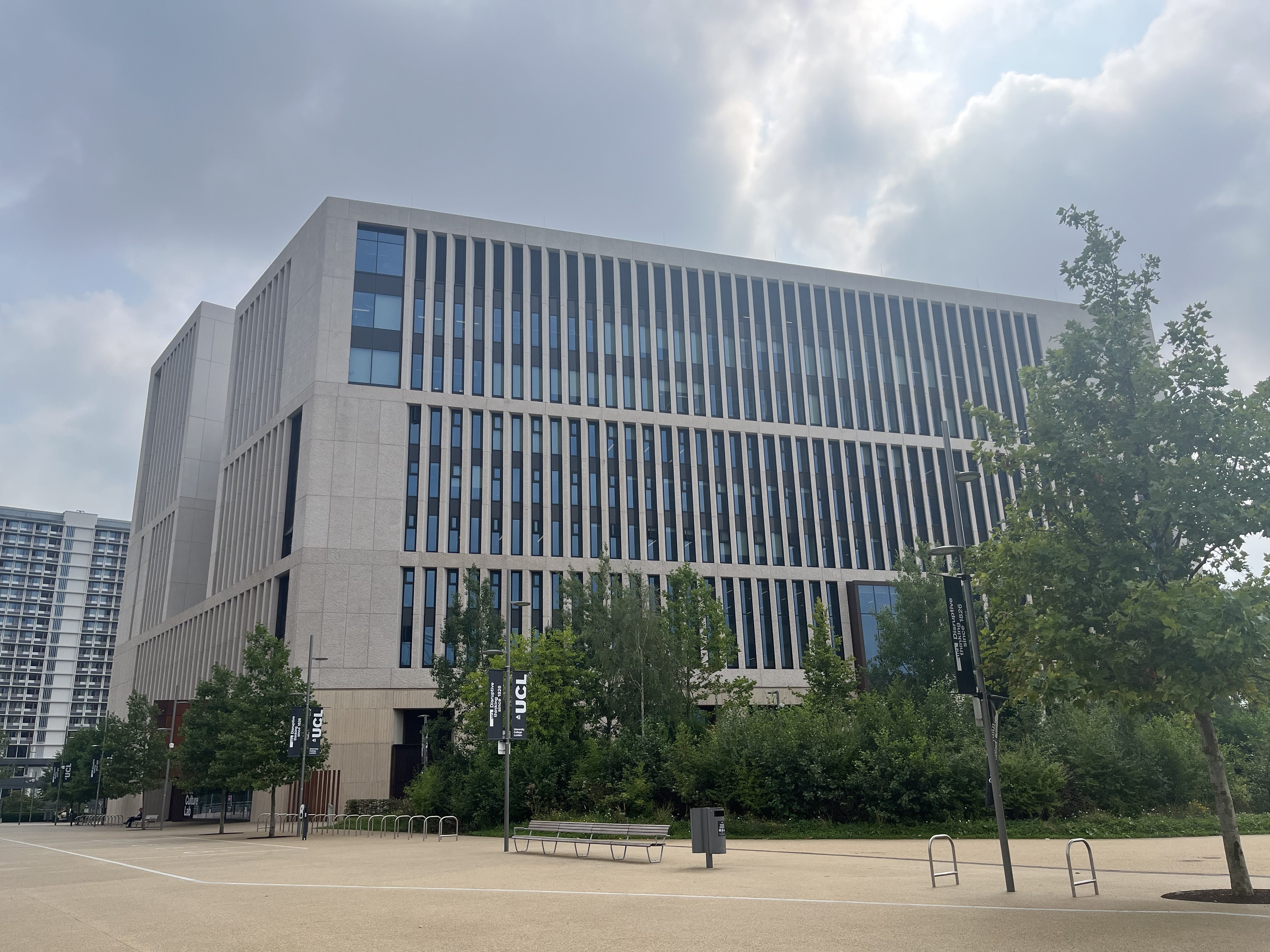
August is a quiet time in higher education. University campuses, usually bustling with staff and students, become a calm oasis of peace. As with many organisations associated with education, Jisc is less busy and quieter.
I have been working on a report, which has required, interviews with key stakeholders across higher education, and so it has been somewhat of a relief that people have been around for those conversations.
On Tuesday I headed down the Solent way to Southampton by train for a lunch meeting with some senior colleagues from Solent University. It was a really useful meeting to discuss their challenges and how Jisc could help and support them. I also took the opportunity to test the waters of the report we’re producing on collaboration.
It’s the time of year where I get told to refresh my mandatory training, this time it was Data Protection and Information Security. I generally try and get these done, as soon as I am notified it is needed. In the past (in previous jobs) I would de-prioritise this kind of activity, as I would be busy doing other things. Then it would either be at or pass the deadline. The training would then be rushed, and a manager would be chasing me. Now I just get it done, it gets prioritised, so that it’s less of a worry and an annoyance.
In a similar vein, I did my end of year review paperwork as well. This is relatively easy to do as I record weekly activities, and these feed into both the review paperwork and these weeknotes.
I spent the week in London undertaking various activities. Some of which had to change due to transport issues and the high summer temperatures.
We had our team away day in the London office.
Spent some of the week working on a collaborative activities report that will very likely be published in September.
It’s the time of the year where I have to refresh my mandatory training, this time it was on information security and data protection. I approach these with a positive attitude, I realise some people think of this as a tick box exercise, I don’t.
Attended an action learning set, which was an interesting training session. Something I hadn’t really done before.
Had lunch with a few of our relationship managers in the London office. Always nice to meet up, chat and discuss stuff with them.
I did some field research looking at geographical challenges in collaboration. I was intrigued by the setup at the old Olympic Park where quite a few universities, both London based and nationally, have sites. I was wondering what the issues would be for students if they collaborated together on areas of the student experience. One thing I found was that, looking at a map provides some insights, but doesn’t compare to actually physically being in the location and walking the walk. Really helpful in feeding into my work on optimising operations and collaboration.
After two weeks off on holiday I was back at work. I had worked a few days of my leave over the last two weeks, so took time this week to catch up on that.
The new Education Secretary Bridget Phillipson was on BBC Radio 4’s Today Programme to launch Skills England, however she also answered questions on HE funding, reaffirming there’s no more money coming from govt at the moment. As part of her interview she indicated that that the DfE will make an announcement in parliament about reform of the Office for Students (OfS).
I have in many meetings over the last year or so discussed the possibility that a new Labour government could abolish the OfS. The OfS was a Conservative government creation and with the recent focus on freedom of speech and other issues; could a new government replace the OfS with something new.
In the end, we still have the OfS and the announcement was about the review of the OfS:
The review found that the case for bold regulation of higher education is clear but that the OfS should more sharply focus on key priorities, which include monitoring financial sustainability, ensuring quality, protecting public money and regulating in the interests of students.
Wonkhe noted:
The review does not make substantial recommendations for OfS to be given new powers on financial sustainability but suggests that the desirability of market exit as a natural outcome of the market-based system should be reviewed, and OfS should work with government to build an infrastructure to offer advice and support for institutions experiencing financial sustainability challenges – including updating and strengthening student protection plans.
It was reported that Brunel University London to join University of London federation
Brunel University London will join the University of London federation from 1 October 2024, in a move that will strengthen the federation and open up new opportunities for collaboration between universities in London.
This is indicative of what we might see in the future across the sector on collaboration and merger as the continuing challenges impact on the sector.
This week saw the defeat of the Conservatives and a new Labour government.
Though the expectation is that there will be no new money for higher education, I think we can expect to see some reforms. Personally I am expecting major reforms for the Office for Students.
Took some leave this week as I had a fair amount of leave to take before the year end at the end of July.
Had various meetings and discussions about a report we have commissioned and the planning and processes we will use.
This included reflecting and feeding back on the UUK Chapter 7 – expert roundtable last week in London.
I reviewed the Intelligent Campus Maturity Model in regard to RIBA Smart Building Overlay. There was a lot of alignment and synergy.
I attended an internal Guiding Principles review focus group at Jisc. One thing I noted about our guiding principles (or values) was how well known and embedded they were somewhat dependent on who was driving them. Something to reflect on, if you have values, of course everyone owns them, the key is who is responsible for driving them? How many people are working in embedding them into the organisation? Are the aligned in their methodology in embedding?
I attended an online event, Four Futures: Shaping Higher Education in England.
I did some research into the Intelligent Campus aspects in providing support for Digital Elevation Tool business plan. This included writing statements and content for Digital Elevation Tool business plan.
I was in London for most of the week, attending meetings, going to a roundtable, working in the office and undertaking field research.
This Wonkhe article was interesting in that the argument was that universities should prepare for less autonomy in exchange for a more secure future. Will universities be willing to sacrifice their independence for financial security?
I attended an expert roundtable on funding hosted by UUK in London to support a report they will be publishing in September. Quite a limited conversation due to the limited time available and the limited timeframe for the report (next six weeks) and the purpose of the report which is to influence incoming government about external support HE sector needs. It was interesting to reflect that in some areas of the sector, there is still limited imagination on what needs to happen (fix a broken model), though there are other institutions who are already looking at how they can transform their operating model.
Attended a meeting about the Intelligent Campus Maturity Tool. Hopefully soon I will be able to publish some of the ideas we have for this tool. I have been working on the Intelligent Campus Maturity Tool competency statements, in the main covering the campus and technology.
I’m increasingly of the view that the reason for The Great Silence is that civilisations are inevitably crushed by the weight of nobheads shortly after inventing the internet.
I spent most of the week working from home, it is exam time for some in the house, so I was around to provide lifts to early revision sessions, or to ensure functionality in case of delayed buses. I did plan to go into the office one day, but even though it was June, the weather forecast was for heavy rain and strong winds. My reasoning for going to the office was that I had a series of later afternoon meetings, so I would then have somewhere quieter to participate in them. In the end, two of those three (and the most participative) were cancelled, or not needed.
I actually like going to work in the office, the change in space, place, and routine, makes a difference to how I feel, or even my wellbeing.
I have been working on a concept Intelligent Campus Maturity Tool. Based on the Further Education elevation tool Jisc produced, the idea is that you can use the tool to assess your progress in building your smart campus. I have already identified the key themes and sub-themes; I am now working on competency statements for those different sub-themes. I am planning to run a workshop in the autumn to test out the tool with the community.
At the beginning of the week I was marking and moderating some bids for a tender we had out on the opportunities for collective, collaborative, and inter-institutional activity.
A couple of meetings were cancelled which gave me some time back.
I am currently taking a leadership course at Jisc, and this week I completed some more work on this.
Had a volunteering day on Friday. Jisc provides staff with three volunteering days a year. I use mine to support the administration of running a Cub Pack. This involves planning the programme, badge administration, risk assessments, and communicating with other organisations.
I spent most of the week working from home, it is exam time for some in the house, so I was around to provide lifts to early revision sessions, or to ensure functionality in case of delayed buses. I had intended to work in the office at least one day this week, but I was also expecting a call from the garage about my car, and it would have been easier to pick it up travelling from home, than from the office.
I am currently taking a leadership course at Jisc, and this week I completed some more units from the Institute of Leadership. I have extensive management and leadership experience, running teams of various sizes, complexity and geographically distributed. I have planned, designed, and delivered shared services for consortia and complex organisations. I have also managed multi-million pound budgets and projects. In addition I have delivered management and leadership training, both at Jisc, to universities, and was a Management and Business Studies lecturer back in the 1990s.
Having said all that there is still room to both learn new things and to update existing knowledge. I also want to affirm my understanding of leadership as well. The course has been useful for these things.
Had a couple of internal meetings this week, they were scheduled for longer than they actually took. Though it’s nice to have time back, it would be even better if we had that time back before the meeting took place. Planning meetings takes time for the person planning the meeting but can save a lot more time for those participating in that meeting. Do they even need to be in that meeting?
I have written about meetings over my Technology Stuff blog. Back in 2021 I reflected on an article by Atlassian on making meetings better, useful and interesting.
Running effective meetings isn’t simply a matter of doing the obvious things like sharing the agenda and starting on time. While those things are important, they’re just table stakes. The real key to running a great meeting is organizing and running them with a human touch – not like some corporate management automaton.
The perspective we can solve engagement issues by having meetings, and so we need to improve the online meetings, misses the key problem, which is the lack of engagement. This is a leadership and management challenge not just about improving online meetings. People have a personal responsibility to engage with corporate communication, give them choice, make it easier, but to think you solve it by having a meeting, is a similar thinking that people read all their e-mail.
The author, Professor Sir Chris Husbands, is the former vice-chancellor at Sheffield Hallam University. He develops four plausible scenarios for the future of English higher education and looks at what they could mean for students, universities and government.
Scenario 1 considers what happens on the current funding trajectory.
Scenario 2 looks at what a higher education sector fully funded for high participation, research and innovation might look like.
Scenario 3 explores the implications of a tertiary system.
Scenario 4 considers what a more differentiated system might look like.
I have written some scenarios up as future visions as prompts for discussion. The HEPI visions are much more near-future (and probably more realistic) than my visions. However my future visions are not supposed to be accurate predictions of the future, more as discussion pieces to prompt thinking about how higher education can change.
It’s long been assumed that whatever the outcome of the coming general election, fees would remain stuck in the freezer for the time being. We’ve pored over Public First polling that has neatly demonstrated how unpopular raising fees would be and concluded that no political party could feasibly contemplate this. But the ground is now shifting beneath our feet and I think a modest but significant fee rise looks more likely than ever.
I think that may happen, as a last resort if there are real possibilities of universities failing, as well as declining international student recruitment, then the (next) government may need to raise fees to ensure that universities survive financially.
I have been working on an Intelligent Campus Maturity Tool, this has required me to map out competency statements that institutions would require to assess their current state of readiness in relation to smart and intelligent campus.
Wrote a section for our board report on the work I have been doing.
I planned, prepared and then cancelled my Senior Education and Student Experience group meeting. I have now been asked to attend UUK Round Table on the same date.
news and views on e-learning, TEL and learning stuff in general…