Category Archives: weeknotes

Returning – Weeknote #92 – 4th December 2020

lecture theatre
Image by Michal Jarmoluk from Pixabay

I have been thinking about the use of space for teaching and learning once we move beyond Covid-19. There are similar discussions thinking about the future of the office. I found this Wired article interesting – The Covid-19 vaccines will usher the dawn of the true hybrid office.

The promising vaccine news is making bosses think about the return to work. But when it does happen, the office won’t ever be the same again.

I had a good discussion on Tuesday about the future university campus. I have worked on an intelligent campus project in the past, back then we had a vision. However the current landscape has changed and will continue to change. This has implications for campus planning and usage.

Wednesday saw the publication by the Government of guidance for universities on students returning in the spring.

I did read this article from Wonkhe responding to  – DfE publishes staggering advice for universities on students return in 2021. Jim Dickinson and David Kernohan unpick the implications.

Thursday I was on leave…

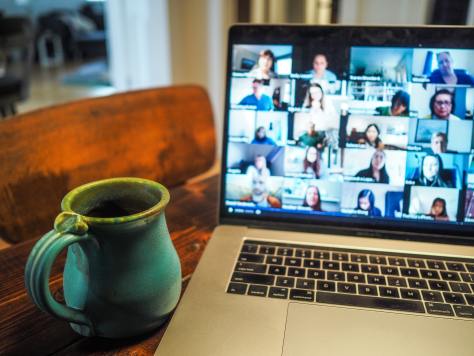
Friday was a full day of meetings and events. I actually have very few days where I spend most of the day in Zoom and Teams meetings, but today I had nearly six hours of online meetings. The key for me was to move away from the computer when I can.

My top tweet this week was this one.

Note that the original NY Post tweet this was referring to has now been deleted. It talked about the UK Christmas covid-19 planning with a picture of Paris.

However someone managed to get a screengrab before it was deleted.

Going home for Christmas – Weeknote #91 – 27th November 2020

A lot of news over the weekend on grade inflation. I was at an event last November where this was discussed and there was some despair about the issue, on one hand everyone is expecting the quality of teaching to be better, but at the same time they don’t want students to get better grades.

I spent a fair amount of time writing some proposals this week.

We’ve also been working on where Jisc goes next with Learning and teaching reimagined following the publication of the most recent report.

This report is the result of a five-month higher education initiative to understand the response to COVID-19 and explore the future of digital learning and teaching.

As the directorate I am now in is responsible for moving things forward, the key issue is how we move from a series of challenges and recommendations to a plan for change and transformation. We have a vision, we know where we are, it’s less about where we want to be, much more about how do we get there, what do we need to do to make it happen.

walking home
Image by 춘성 강 from Pixabay

So what’s going to be happening at Christmas as students flock home for Christmas? Continue reading Going home for Christmas – Weeknote #91 – 27th November 2020

I WON THE ELECTION – Weeknote #90 – 20th November 2020

Official sources called this election differently

The US election continues to dominate Twitter though seeing less of it on the mainstream news. Saw a number of people on Twitter claiming to have won the election!

Five years ago this week myself and Lawrie were delivering the second residential of the pilot for the Jisc Digital Leaders Programme at the Holland House Hotel in the heart of Bristol. We had spent four days delivering that week. We also had some great cakes and pastries.

Even the coffee was nice. We learnt a lot from the process and spent the next few months iterating the programme, dropping and adding stuff based on the feedback we had from the pilot delegates.

Less than a year later we delivered the programme to paying delegates in Loughborough, again we reviewed what we did and adapted the programme again, before delivering to groups in Manchester, Belfast and Leicester.

Continue reading I WON THE ELECTION – Weeknote #90 – 20th November 2020

Physical in-person face to face including aspects of digital and online as well as asynchronous – Weeknote #89 – 13th November 2020

The week started with a run through of an online event I was participating later in the week. I published a blog post called The second wave arrived in which I look at the impact of the second national (English) lockdown on the university sector. On Wonkhe, David Kernohan asked Is it really fair to blame universities for the second wave?

High case numbers in the early autumn have led some to conflate the second wave with students and universities. For David Kernohan, the data doesn’t show that.

This was an interesting article that looked at the data behind the second wave and how some people have been conflating the wave with university attendance and blaming students.

I spent a good part of Monday working on some internal documents for various projects, as well as some presentations for future events.

Tuesday I was on a panel session for the QAA looking at academic integrity. I don’t mind online events, but it can be really hard to read the audience compared to being on a panel at a live in-person face to face event.

On that note there was a discussion on Twitter about the term we use for that compared to online sessions.

I responded about how Jisc used the term in-person in their recent LTR report.

Personally looking back over my recent blog posts I have been using the (slightly clunky) term physical face to face For some it is a real issue and in some cases how it is interpreted by employers and the press. I personally think we might be spending a little too much time over thinking this.

Continue reading Physical in-person face to face including aspects of digital and online as well as asynchronous – Weeknote #89 – 13th November 2020

The second lockdown – Weeknote #88 – 6th November 2020

In an entirely expected move, the country faced a second wave of covid-19 and as a result there is now a second lockdown.

From my perspective not too much has changed. I am still working from home virtually all the time meeting via Teams and occasionally Zoom. I had started going to our office in Bristol once or twice a month, and was about to up this to once a week, I was in last week. However during November I will not be visiting the office or Bristol and will be following government guidelines.

The UCU said on Sunday that universities must move online for new national lockdown.

UCU said that universities must move all non-essential in-person teaching online as part of any plans for a national lockdown.

Now we have more details, we now know that the Government has said universities will remain open during this second lockdown. This will create headaches for universities as they plan to deliver more of their programmes online, but maintain some physical teaching to satisfy the Government. Of course some students will not want to attend physical lessons and lectures.

I did managed to get a coffee from one of my favourite coffee places before the lockdown. Continue reading The second lockdown – Weeknote #88 – 6th November 2020

Good afternoon Professor Phipps – Weeknote #87 – 30th October 2020

This week saw the continual increase in covid-19 cases, sadly increasing deaths and many areas of the UK entering Tier 3 lockdowns. The threat of a national lockdown was getting discussed, whilst in Wales they were already in lockdown.

Monday I went into the Bristol office to work, it was quiet and I managed to get some work done.

Tuesday I spent the day writing, but I did find it hard that day to be creative. The weather was frightful.

Wednesday I was back into Bristol and in our office to work, I did meet up with a couple of colleagues as well for working meetings.

In local news, UWE lecturers said that they ‘don’t feel safe’ due to lack of mandatory face masks.

Concerns have been raised over a lack of mandatory face masks for students and staff at the University of the West of England (UWE). One lecturer said staff “don’t feel safe” and he felt “insulted” at the suggestion staff were “happy to go to Sainsbury’s and the pub but not work”.

The impact of the coronavirus pandemic, local lockdowns and social isolation was across higher education, having a continual impact on students and student wellbeing. This was echoed in this guardian article: ‘I was just sat in my room all day’: lonely students seek mental health support.

University students are struggling with loneliness and anxiety due to campus lockdowns, with the risk that their mental health will deteriorate further unless urgent action is taken, counsellors and charities are warning.

The issue of Christmas and students was being treated differently across the UK with plans afoot in England to let students escape at Christmas.

Covid tests with results within an hour are being piloted in universities – which could help students in England get home for Christmas.

Whilst in Scotland the story was that students may not be allowed home for Christmas.

Students could be told not to return home at Christmas if the spread of the coronavirus has not been controlled, the deputy first minister has said.

Amongst all this I have been planning the programme for the Jisc, QAA and HESA Data Matters 2021 conference which is taking place in January and will be an online conference. I have a history of doing online conferences and I am planning to take advantage of the affordances that an online conference can bring to such an event. I am hoping to do podcasts, pre-recorded presentations, blogs and more, as well as streaming live keynotes and presentations. Find out more here about the conference.

Thursday I was on leave. It was nice though to see this tweet from Lawrie. Excellent news.

https://twitter.com/Lawrie/status/1321850362245140484

Friday I was working from home. Having left an empty inbox on Wednesday I was quite surprised to see 51 unread e-mails in my inbox. It actually didn’t take too long to process the e-mails. Some I read and then deleted, others I marked as spam, from some I created Jira tasks, and some I just did what was being asked.

My top tweet this week was this one.

Great Scott! – Weeknote #86 – 23rd October 2020

Over the week I have been working on various papers and reports, which have been going through a consultation and review process.

We launched the Data Matters 2021 conference this week, I am working with QAA and HESA on the programme for the event, which will be online.

This year’s theme will focus on ‘enabling data certainty’. The UK education sector is moving towards an uncertain future. The sector needs to transform to meet the requirements of industry 4.0 and student expectations. With COVID-19 having such a huge impact on the operation of the higher education sector now and in the foreseeable future, the entire student experience has been and will be disrupted by the restrictions in place to mitigate the risks of the virus. This has impacted on the use of formal and informal learning spaces, as well as an increasing reliance on online platforms and digital content.

It has also impacted on student recruitment, domestic as well as international. Universities have a responsibility to support all students to thrive and achieve, and it is increasingly recognised that students’ experiences are very different depending on a large number of factors, including background and personal circumstances, type and subject of their course. The mental health and wellbeing of students is an increasing concern for universities and sector bodies.

The role of data, analytics, data modelling, predictive analytics and visualisation will be a core aspect of this uncertain future, but the uncertainty will bring new challenges for the sector in how they utilise the potential of data. Public scepticism about algorithms and data use is creating new ethical and legal challenges in the gathering, processing and interpretation of data.

Book to attend the event.

Tuesday I took as leave. Went to the cinema and we were the only ones in there. We had the entire screen to ourselves, we were sat right in the middle and had the best view in the house. Continue reading Great Scott! – Weeknote #86 – 23rd October 2020

A highly statistically significant correlation exists between stork populations and human birth rates across Europe – Weeknote #85 – 16th October 2020

I have been working on some internal documents this week which has taken up quite some time.

I read David Kernohan’s piece, What is it about small areas with large numbers of Covid-19 cases? On Wonkhe.

A glance at the Wonkhe dashboards would suggest this is a reasonable conclusion to draw – there are no Mid-level Super Output Areas (MSOA) in England with more than 100 Covid-19 cases in the last 7 days that have less than 2,000 students in residence. As you have probably come to expect, things are a bit more complicated than that.

David points out that blaming students for the rise in covid-19 isn’t just not helpful, but also isn’t accurate.

Universities were suffering again from negative press, saying they shouldn’t have opened. However they weren’t given much choice and on top of that in the most recent restrictions, even at the highest tier, universities are expected to remain open. What does open mean anymore? When we had the full lockdown back in March, yes students were sent home, however universities remained open, their campus may have been shut down, but research was still happening, teaching was going ahead and many students were learning.

Universities can remain open, but doesn’t mean the campus has to be open. Maybe the government should have listened to the advice from their own SAGE scientists who said three weeks ago that “all university and college teaching to be online unless face-to-face teaching is absolutely essential.” If that advice had been followed maybe, many of those covid-19 infection hotspots could have been avoided.

What we do know is that many universities are moving to online delivery curriculum models and for many students self isolation is part of the student experience.

There was substantial press coverage about feeding the isolated students as well.

Universities are facing anger from students over conditions some have faced while self-isolating in campus accommodation. Students have criticised the cost and quality of food provided to them by universities while in isolation. Undergraduates say food parcels have often been filled with “junk”, meaning they have had to request fresh fruit and vegetables from parents.

By the end of the week we were starting to see concern not just about returning home for Christmas, but also if students would return in January.

Apple announced their new iPhone, didn’t watch the announcement and though it would be nice, I don’t think I will be getting one.

Wired published a somewhat sensational article on, as they said, Universities are using surveillance software to spy on students.

Screwed over by the A-levels algorithm, new university students are being hit by another kind of techno dystopia. Locked in their accommodation – some with no means of escape – students are now being monitored, with tracking software keeping tabs on what lectures they attend, what reading materials they download and what books they take out of the library.

Libraries have always taken note of who takes what books out of the library, that was an essential part of the system, so you know what’s been taken out and by whom, so you can track it down if necessary.

Of course analytics means that if you start analysing that data you can start to discover new insights, on how people are using books from the library. Throw in more data and you can start to discover what the story is with different cohorts and subjects.

As with any data collection and analysis there are issues and I sent this missive to a mailing list in response to a question on this issue.

A highly statistically significant correlation exists between stork populations and human birth rates across Europe.

One of the challenges with interpretation of data is that it is a difficult thing to do. You can look at data and have a view, which may not actually be true. When I was working on the Jisc Digital Capability project, one of the core issues that I discussed with colleagues in universities was data capability, having an understanding of what the data was telling them, what was the narrative behind the data. Data is only part of the story. Though talking about analytics the implications of data from VLE systems is just as relevant, so would recommend looking at the Jisc code of practice on analytics.

On Thursday evening Twitter stopped working for me… well what was I going to do now!

Earlier in the day we had a meeting with the Data and Analytics directorate to hear about their future plans.

My top tweet this week was this one.

I haz fibre soon! – Weeknote #84 – 9th October 2020

I had a fair few meetings this week on a range of topics, including learning and teaching, the Data Matters conference, consultancy, pipelines, and public affairs.

This story from The Register was not really surprising, Unis turn to webcam-watching AI to invigilate students taking exams. Of course, it struggles with people of color.

AI software designed to monitor students via webcam as they take their tests – to detect any attempts at cheating – sometimes fails to identify the students due to their skin color.

I am not surprised, in my work on the Intelligent Campus, when we did some research into facial recognition, there was quite a bit of coverage about how it only really worked with white males. Can we be surprised then when used for exam invigilation that it fails on the same issue?

In a similar story, UK passport photo checker shows bias against dark-skinned women.

Women with darker skin are more than twice as likely to be told their photos fail UK passport rules when they submit them online than lighter-skinned men, according to a BBC investigation. One black student said she was wrongly told her mouth looked open each time she uploaded five different photos to the government website.

There is a question here about removing the systemic bias we find in AI and algorthims being used in education (as well as the wider society). A deeper question is how does that bias get there in the first place?

Across the week we saw more universities report large covid-19 infections in their student populations.

Sheffield Hallam has seen over 370 cases of Covid since the beginning of term and the University of Sheffield has seen 589 cases. The local area has also seen a dramatic increase in the number of people testing positive.

 Another 1,600 students have tested positive for coronavirus at Newcastle’s two universities. Newcastle University says 1,003 students and 12 members of staff have tested positive for Covid-19 in the past week. That’s up from the 94 students reported last Friday. There have also been 619 new cases among students at Northumbria University, compared with 770 last week. That means nearly 2,500 students and staff have tested positive since returning to studies.

More than 400 students and eight staff members at the University of Nottingham have tested positive for Covid-19. The university said the figures would be “higher than other universities” because it was running its own asymptomatic testing programme.

Almost 400 students and staff at Queen’s University in Belfast, Northern Ireland, are self-isolating after more than 160 people tested positive for Covid-19. A university spokesperson said the safety and wellbeing of staff and students was the university’s first priority.

One result of this is a lot of universities are moving back to online teaching.

This week, the University of Sheffield and Sheffield Hallam University both said they will move more learning online. The University of Sheffield said all teaching will move online from Friday until 18 October. Sheffield Hallam said it will increase the proportion of online teaching, but keep some on-campus.

Both universities (Newcastle and Northumbria) said they had extensive plans in place to support students. Earlier today they said they would move most of their teaching online in response to the outbreaks.

The two main universities in Manchester are teaching online until “at least” the end of the month after a coronavirus outbreak among students. Manchester Metropolitan University (MMU) and the University of Manchester (UM) said it was a “collaborative decision” with public health bosses and “won’t impact” on teaching quality. It comes after 1,700 students were told to self-isolate at MMU on 26 September.

fibre
Image by Chaitawat Pawapoowadon from Pixabay

I took the plunge and ordered full fibre from BT and if it goes to plan I will be getting 900Mb/s down and 110Mb/s up from the new all fibre connection. This will be much faster than my current 32Mb/s FTTC connection and so much faster than the ADSL connection I had between 2012 and 2017 which rarely went above 1Mb/s.

My top tweet this week was this one.

The future is… – Weeknote #83 – 2nd October 2020

Over the weekend there was a huge amount of anti-university press in relation to Covid-19. I did think last week that this was just the beginning, when I posted my blog post about the uncertainty that the higher education sector was facing, when I noted a few stories about social distancing and isolation that was being reported in the press. I didn’t think that the story would blow up so soon! So much so that I wrote another blog post about all the stories that were coming in.

Radio 4’s Today programme made the mistake of thinking online was somehow cheaper and inferior.

https://twitter.com/Lawrie/status/1310486053615214592

Wonkhe went into more detail about what is happening at universities right now, and why?

What is going on? If you’ve not been following what has been going over the summer, or you are bewildered as to why we are in this situation, David Kernohan takes you through the basics.

Over the week even more stories came in, such as this one Coventry University student flats partygoers flout rules.

This perspective of what was happening to students was an insightful read, to be failed and abandoned time and time again, at first by an algorithm, then by institutions is draining and hurtful, writes student Kimi Chaddah.

Imagine having overcome a reformed and rigid GCSE system. Next, your A-levels are cancelled and you have to forcibly fight your way to a university place. Then, you’re forced into social isolation in a new place with people you don’t know, all the while being told to “not kill granny” by a man who discharged hospital patients into care homes. Meet the students of 2020.

The anti-student sentiment continued, so much so, that Johnson in his Wednesday press conference actually was quite sympathetic towards the student situation.

What we do know is that virtually all students are attempting to stick to the rules, but it doesn’t require very many students to be infected to infect many more in halls and residences. They are using the same kitchens, the same hallways, the same doors. They are in the same shops, the same bars and coffee places and visiting the same places across campus. Continue reading The future is… – Weeknote #83 – 2nd October 2020