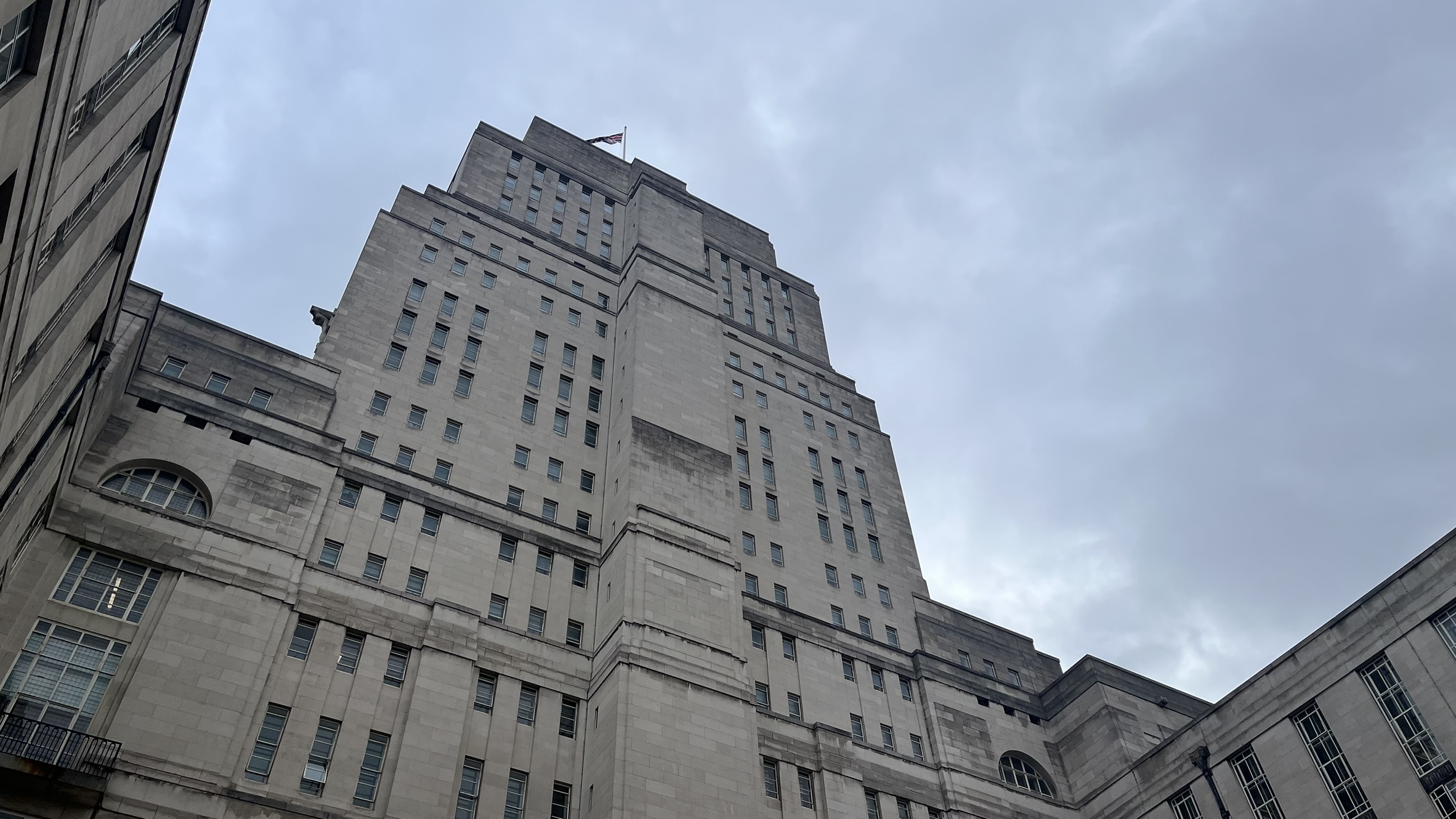
Much of this week was spent in London. Monday I was in our London office, and on Tuesday and Wednesday I was at the WonkHE Festival of Higher Education where I was speaking on a panel about collaboration.
I really enjoyed attending the WonkHE Festival of Higher Education and I am slightly sad that they are taking a fallow year in 2026. What works for me is the structure and format of the range of sessions that happen across the conference. I like the interview format of the keynote sessions which is different to the usual kinds of keynotes we see at other conferences. There was a dearth of PowerPoint slides in most sessions, which I liked. Sometimes slides dominate a session rather than enhance it.
My session was on how to collaborate, which seemed to go down well. Also decent audience for a penultimate session on the final day. The only issue for me was that I had a bad cough all week which meant that I had virtually lost my voice and did have trouble speaking in the session, a number of people referenced my radio voice.
I particularly enjoyed the final session about where will higher education be in 2050. There was an amusing lively debate on the discord channel for this conference session. It reminded me of how we would use what was the Twitter back in the early 2010s at conferences.
At the end of the week I braved the rain and delayed trains to get to the office in Bristol.
Shorter week this week with the August bank holiday in England.
I went to the office a few times this week. I have written a fair few times about how I quite like going to the office to work. The change in routine and location is refreshing, and helps, especially as my current workload is very much focused on reading, writing, and having online calls. August is a quiet time for meetings and events.
I have been looking at which events to attend over the next few months, the WonkHE Festival of Higher Education is on that list, as is their Secret Life of Students taking place in early 2025. I am speaking at the Education Summit in October in London. I am looking at an overseas conference as well, torn between OEB in Berlin, or ASCILITE in Melbourne. They are close together, but don’t clash.
Wrote an update for the Jisc board on the work I have been doing. As part of this work I also reviewed content for a holding web page.
Had to use Excel, not my favourite activity, I was doing some research into higher education expenditure and was playing with some data. Excel is one of those applications I use infrequently, so I don’t always remember how to do stuff.
Read the OfS report on the closure of Schumacher College. In their overview the OfS said:
The higher education sector is facing significant financial challenges and institutions are facing difficult decisions. Universities and colleges are responsible for running their businesses and it’s vital that each provider has effective systems in place to identify and manage these risks to ensure students’ interests and rights are protected.
Closures of higher education providers due to financial pressures have been predicted for a long time – Schumacher may have existed outside of the traditional university sector, and was also experiencing wider and more sustained difficulties, but it is unlikely to be the only specialist provider that is struggling to make ends meet as we move towards the 2024-25 academic year.
So is this the first of many? There is a question of whether one of the (larger) more traditional providers will fail? There has been for many years rumours that there are three large universities on the brink of bankruptcy. No one actually names the three but reading across the education press there are numerous stories of financial problems, staff cuts, and closures. Would a large university be allowed to fail? I suspect more likely would be a forced merger with another institution to protect the students and allow them to finish their programmes of study. Regardless, the sector is facing huge financial pressures and this has implications for the way they are organised and operate.
This paper discusses the proposition that the issue with higher education is not so much a lack of proper funding, but that the current operating model isn’t fit for purpose.
Higher education’s onrushing insolvency is not, as many would wish, merely a fixable fault in our funding model, caused by government backsliding on the tuition fee. Instead, we have a system-design problem, in which funding problems are simply a characteristic, not a cause. What other sector would allow itself to stall in an era of surging demand, as our addressable market expands from young people to all adults? The fault lies in our business models and our operating assumptions, as a sector and as providers. We must rethink the types of people we serve, and how we can meet their needs for education and skills in ways that meet the test of private and public goods. Our fascination with the ‘world-class university’ model has had negative systemic effects, draining resources from the wider sector. And we must question our default setting, our cherished high-quality, high-touch and high-cost model. These attributes are not inviolable aspects of our offer. Each places huge demands on students and providers. Can our system really be fit for purpose, if it is unworkable for large minorities of students and providers, and unaffordable for the state?
I am reminded of the recent post I wrote about hindsight in which I looked at the challenges and change that Intel and Kodak faced, and some would say failed to adapt to.
There are lots of examples of how organisations and companies did not respond to changes and trends. Hindsight is a wonderful thing, as you can ask, why didn’t they change, they could see the challenge, they could have changed, they could have adapted. The problem often is that though internally the organisation may know it needs to change, the current situation means they are unable to change.
Higher Education knows that they are facing challenges, and that they need to change. They know this. However a deeper question is not the one that Higher Education needs to be told they need to change, they know that, but they are actually unable to change and so the question is how do we change a sector, that knows it needs to change, but actually can’t make that change.
I am attending the WonkHE Festival of Higher Education 2023 at Senate House in London.
Originally called WonkFest I have attended the conference before, and it’s a great event to learn about higher education policy and the impact on the university sector.
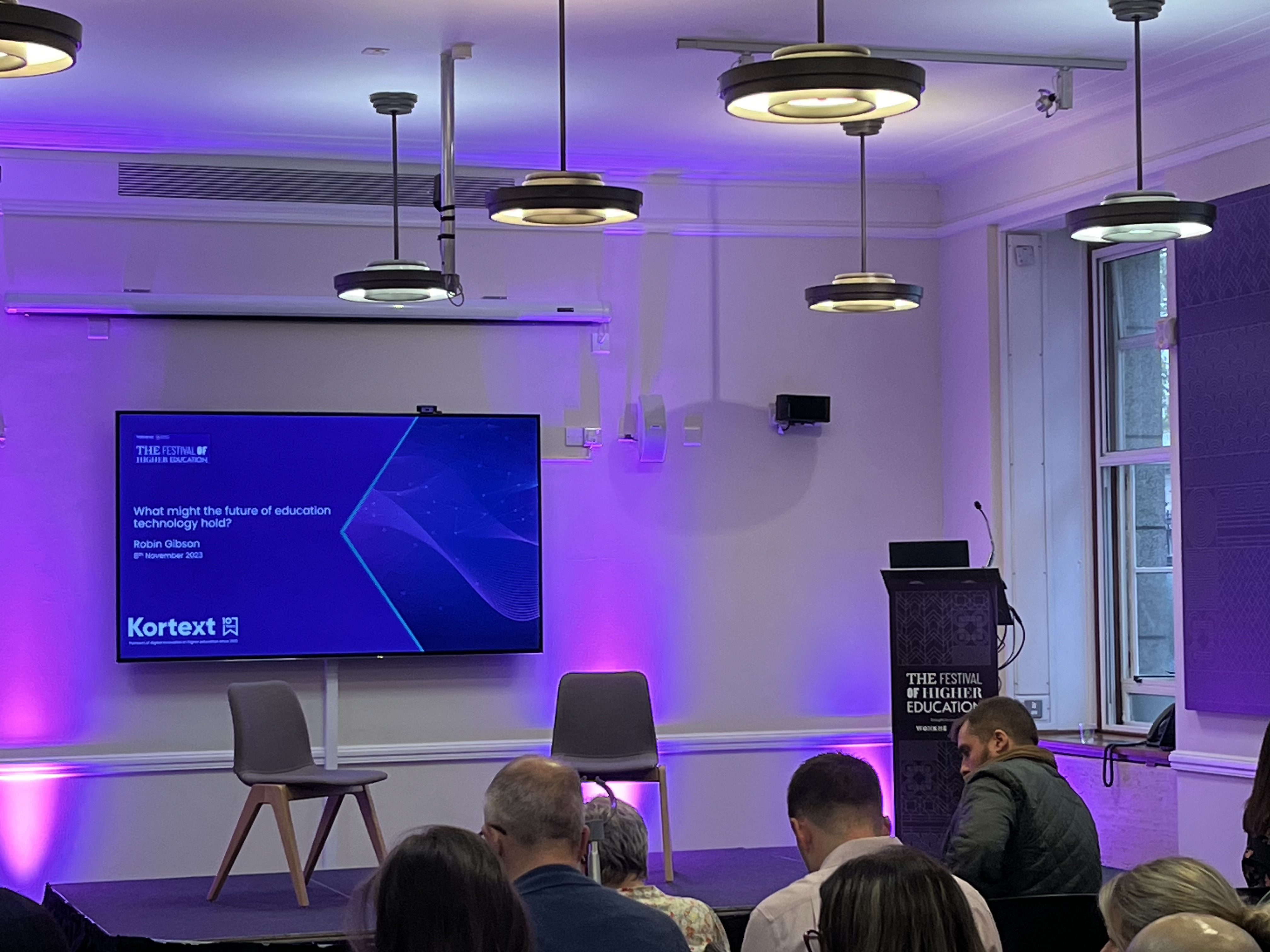
I attended the session titled: What might the future of education technology hold?
Beyond the hype, and the sales pitch, beyond digital transformation and digital natives – this session will explore how technology is likely to shape higher education provison in the years ahead, what changes universities can realistically expect to learning and teaching, and how they might work with technology providers to get ahead of the curve.
Despite the abstract this was alas something of a sales pitch. As well as the advertised PVC, Claire Pike, Mark Simpson, the PVC from Teesside was also on the stage. However in a thirty minute session, over twenty minutes was devoted to telling us how “wonderful” one specific product was. I think this was a missed opportunity. Yes, I know you sponsored the conference, do provide an insight into the product, but that would have been much more authentic and valuable if it had come one of the PVCs.
I also felt thirty minutes was quite short for the session, so there wasn’t time for question or further discussion.
Jisc did get a mention for their report on student perceptions of generative AI.
This report looks at how students are currently using generative AI and explores its potential impact on their learning experience.
I am attending the WonkHE Festival of Higher Education 2023 at Senate House in London.
Originally called WonkFest I have attended the conference before, and it’s a great event to learn about higher education policy and the impact on the university sector.
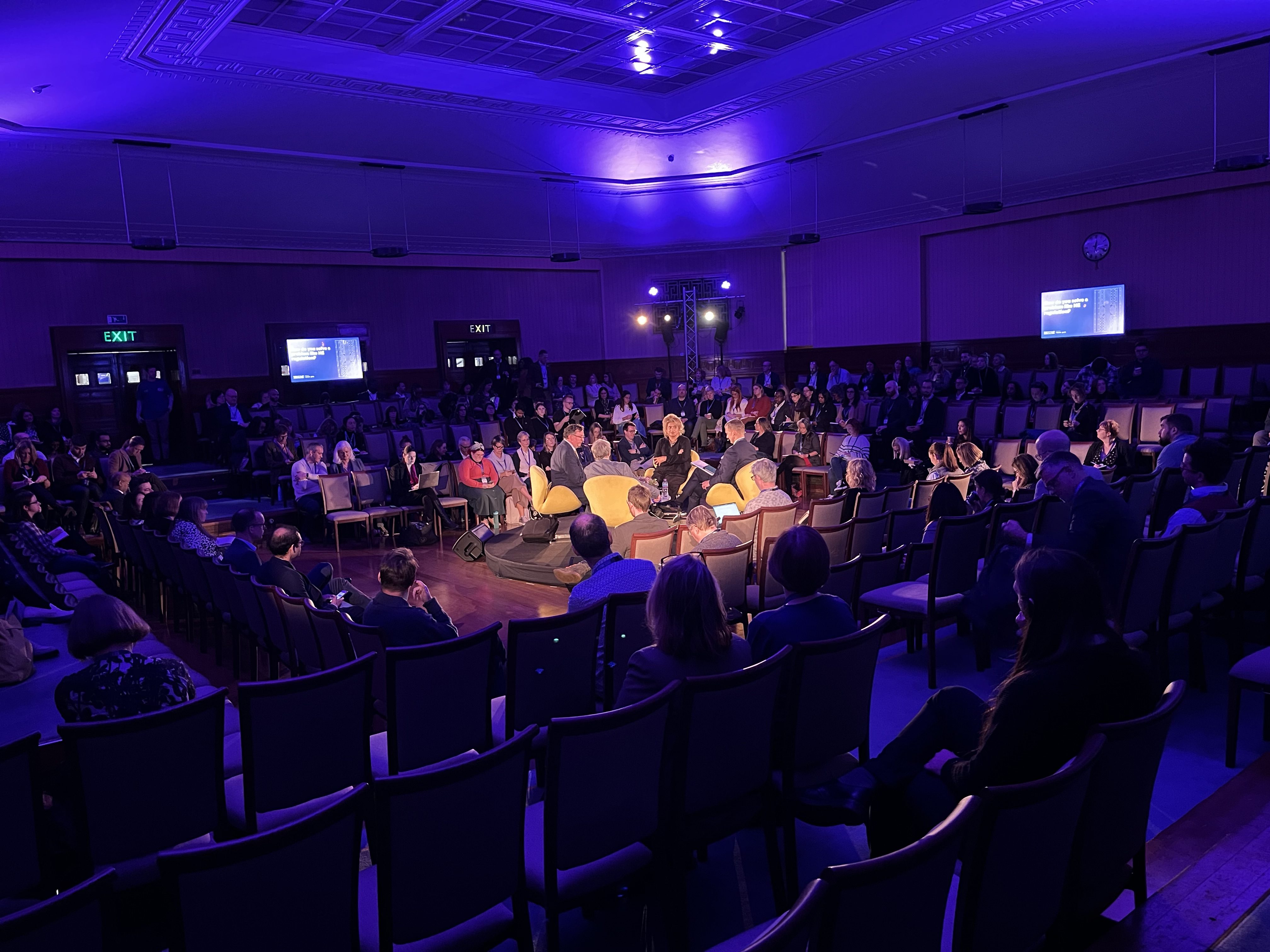
I attended the session titled: How do you solve a problem like HE regulation?
Can any higher education regulator realistically be expected to balance the interests of students, providers, government, and the nation – and not get itself into hot water? With regulatory divergence and reform across the UK and criticisms from a House of Lords committee over the efficacy of English regulator the Office for Students, our panel will assess the options for HE regulation and think through what might be done to make it work.
I did a sketchnote which shows the breadth and depth that was covered in the session.
I am attending the WonkHE Festival of Higher Education 2023 at Senate House in London.
Originally called WonkFest I have attended the conference before, and it’s a great event to learn about higher education policy and the impact on the university sector.
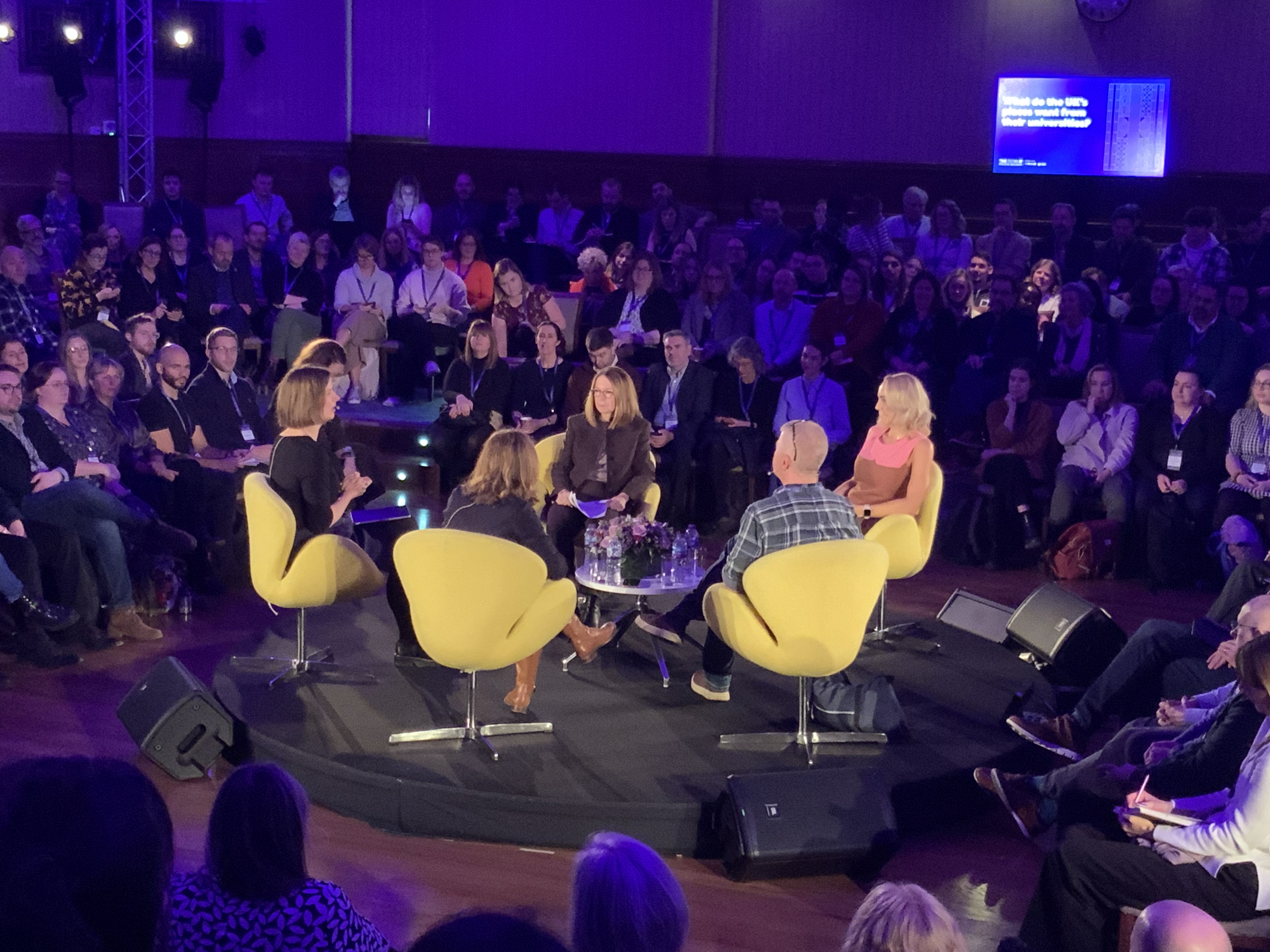
The opening panel session was entitled What do the UK’s places want from their universities?
“Levelling up” may no longer be the current buzzword in government, but long standing issues of inequitable economic growth, public health, cultural assets, and education outcomes across the UK haven’t gone away – nor has universities’ and colleges’ commitment to their places. As Britain gears up for a general election, how might “place” shape the next generation of policy thinking – and how can universities best meet the needs of their communities?
I did a sketchnote which shows the breadth and depth that was covered in the session.
news and views on e-learning, TEL and learning stuff in general…