

After two weeks spent travelling across Europe, this week I was back in the UK.
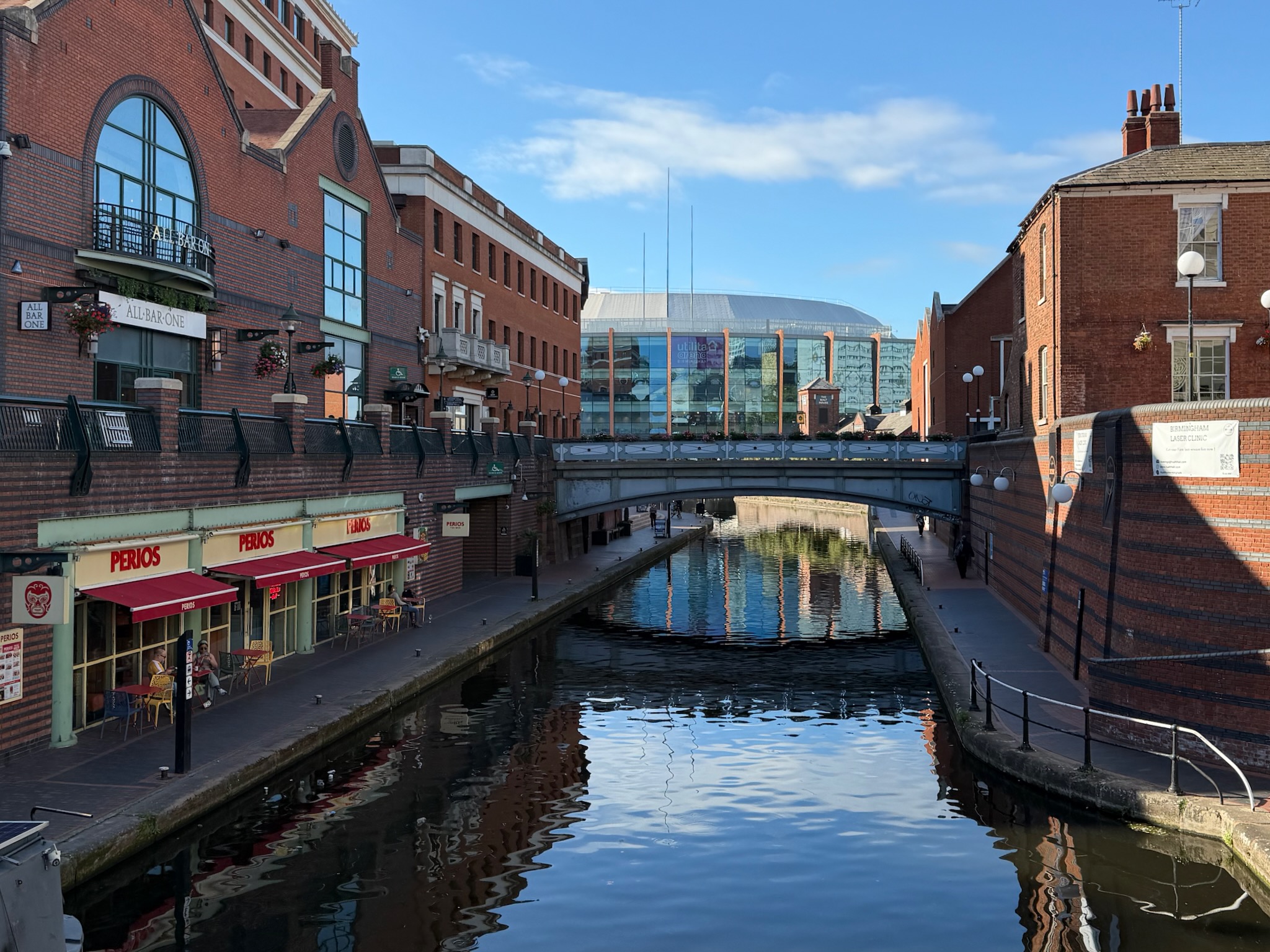
On Monday I was at the Jisc all staff conference in Birmingham. Originally I had planned to miss it, what with all my travelling over the previous two weeks, but I joined a new team on the 1st August and this was the first opportunity for us to all meet in-person. I had travelled up to Birmingham the day before.
It was a good event and a nice chance to chat and meet colleagues who for most of the time conversing is done via Teams.

WonkHE and KPMG have published a field guide to mergers in higher education.
This article by KPMG consultants examines why higher education mergers often succeed or fail, arguing that financial pressure alone is an insufficient reason to merge unless anchored by a clear strategic outcome. Most higher education mergers are effectively acquisitions of smaller, specialised institutions by larger ones, the authors advise leaders to be transparent about power dynamics, address cultural differences early, and select leadership quickly rather than focusing solely on legal agreements. Ultimately, they emphasise that true value is unlocked through detailed, bottom-up integration planning and open communication with staff, rather than top-down financial cost-cutting.
Having been involved in the collaboration agenda over the last few years, one concern not often expressed, is the impact of mergers on jobs. The amount of job reduction and redundancies across the sector is huge compared to the recent past. A merger between two universities will mean there is duplication across both academic teams and professional services. Much of this duplication can be at management level. Another aspect of merger is the reduction in the university estate as well.
Another concern is about loss of identity, though we have seen with the London and South East University merger between Greenwich and Kent, that merger doesn’t always mean losing identity.
We have seen similar scenarios from the Further Education sector. We have seen that in the large number of FE college groups that exist, where the local campus has retained their individual identities despite being part of a larger group structure. That same sector though has also seen job cuts and campus closures.

I had an informal meeting with The Knowledge Equity Network (Leeds University) about Open Education and proposed Open Education Alliance that we have both been part of discussions about.
Spent some time organising and managing a review of GÉANT Co-Ordination Group Education Digital Infrastructure and Interoperability. This will involve meetings and discussions with NREN colleagues from across Europe as well as core staff from GÉANT.
Spent time thinking and reflecting on the conferences and meetings attended over last two weeks.
Another conversation I had this week was on shared services. Something that has to be remembered, shared services are in their very nature a compromise. You aren’t necessarily going to get the same level of service (or cultural fit) that you would get with a bespoke institutional service.
However, shared services (or outsourcing) is really a solution to a different problem, they are not a problem to be solved, they are a solution to a different problem.
The compromise is the loss of independence, the benefit potentially could be lower costs.
As someone who delivered shared services and procured shared services, I always recognised that individual institutions could provide better services, the challenge was could they afford to.
Last weekend I visited Orford Ness over in Suffolk. What was once a secret military base was sold to the National Trust back in 1993. I had sailed past the Ness as a child in the 1970s and 1980s, but had never visited there until last weekend.
While I was there I took a bunch of photographs including one of a mysterious concrete ring in the shingle. The information boards implied no one was sure what the purpose was.

Then three days later the BBC News published this news item on their site, Mystery of concrete ring ‘solved after 30 years’.
The purpose and function of a mysterious concrete ring at a former military testing site has been uncovered, the National Trust said. The 50m (164ft) ring at Orford Ness, Suffolk, had baffled staff and volunteers at the coastal nature reserve since the trust acquired the site in 1993. However, it said the mystery was solved after researchers Steve Clifton and Olaf Kirchner discovered the ring was part of a radar known as the R-System – designed to detect nuclear explosions and rocket launches during the Cold War.
Coincidence? Of course it was… Or was it…


