Is Teams a VLE? – Weeknote #07 – 18th April 2019

coffee

Monday I was off to London for a workshop looking at Education 4.0 as well as a meeting discussing strategy. The workshop was looking at Jisc’s work in the Education 4.0 space and what others are doing in this space.

I published another couple of use cases for the Intelligent Campus blog.

Use Case: Intelligent Catering

Use Case: Intelligent Meetings

Working from home on Tuesday I had a couple of calls, though technical problems with VScene meant I didn’t get into one conference. I have no idea what the problem was, usually I don’t have an issue with VScene.

Wednesday I was into the office for an early meeting to discuss progress and objectives for my new role. I will be continuing some existing objectives on thought leadership (I know, I also hate the term); looking at the learning and research technical career pathway in Jisc; increasing member understanding of Jisc’s learning, teaching and student experience portfolio. In addition I am reviewing the HE and student experience strategy for 2020 onwards. Review our portfolio for the OfS and support a value study at the University of Hertfordshire (I discussed this back in March).

I had similar technical problems with VScene again, I was even using a different computer and browsers.  I think I may have narrowed down the problem to my Bluetooth wireless headset. So next time I am going to use a wired headset and see if that makes a difference.

Had a meeting to discuss some future ideas in a space that is new to me and to Jisc. Where could we apply our work in digital capabilities and analytics in new spaces.

Most of the afternoon I was doing a dry run through the Agile Implementation Workshop I am helping run next week in London. I am talking about reporting and also doing an introductory demo of JIRA.  Sometimes the value of a tool such as JIRA is not the value it adds to the individual using the tool, but the combined and added value you get when everyone in a team uses that tool. Reporting is something else that often is seen as a process between two people, but aggregated reports are valuable to a range of stakeholders in an organisation.

Had an interesting discussion with Lawrie on Thursday morning following a demonstration he had seen the day before.

Microsoft Teams is the digital hub that brings conversations, content, and apps together in one place. Create collaborative classrooms, connect in professional learning communities, and communicate with all staff – all from a single experience in Office 365 Education.

I’ve not looked in detail at all aspects of what makes Teams a possible VLE, though there are some key aspects of Teams that make it appealing as a VLE or LMS. It has all the functions you expect from a VLE or LMS, such as content, communication (individual and group) and assessment. You can connect a wide range of apps to Teams, you like using Twitter for tweetchats, connect it in.

This reminds me of the concept of the VLE I proposed at  the infamous VLE is Dead debate at ALT-C in 2009 (was that really ten years ago now). I saw the VLE still being the centre of the student online learning environment, but other tools and services would plug into it.

Today we have the technology to make that a reality. It can be done with Teams, but similar connectors and connnections exist for tools such as Moodle. From a student perspective, they will be using a tool (and a suite of tools connected to that) they will potentially be using in the future. Yes of course the skills that you gain using tools such as Moodle and Blackboard (and Google Apps) are skills that are transferable, but not everyone sees them in that way, both students and employers.

There are already universities and colleges out in the sector using Teams as their VLE, I am interested in not just who is using Teams as their VLE, but also how they are using it, and how embedded it is into practice.

One thing that I noted was that, it’s all very well having a great tool, it’s quite another thing to understanding and knowing the potential of the functionality of that tool to enhance and enrich the student experience. It’s also another thing to have that functionality exploited by staff and students.

I spent some time setting up a Confluence Site and JIRA project for the Agile Implementation Workshop next week, I didn’t want to do something “not real” so will be using the sites and boards for work I am doing for our Learning & Research Technical Career Pathway.

A shorter week this week, due to the Easter holiday weekend, so also means a later start next week as well.

My top tweet this week was this one.

Are you a unicorn? – Weeknote #06 – 11th April 2019

Bristol

Monday I was back in the office, I do like going to the office. You can interact with people online quite easily these days, and I have been doing that for years. However there is a different kind of interaction you get in the physical office environment. Our Bristol office was shrunk due to an impending merger and move, so it can get crowded and noisy, even so I do like being there. I also like the fact that as it is in the heart of Bristol, I can go for a walk at lunchtime around the city centre.

I published a new Intelligent Campus use case on the Intelligent Campus blog.

Use Case: Onboarding – Improving the new employee experience

I also reviewed the other use cases, however these needed more work on them before they go on the blog.

I had to prepare some slides for a colleague who is attending a funders meeting next week on progress we had made on our HE and student experience strategy.

As part of the research for the slides I took the time to re-read the Digital experience insights survey 2018: Findings from students in UK further and higher education report.

In it are some interesting findings, though of course, it’s not a representative survey of HE students, as students chose to fill in the survey.

74% of HE students rated the quality of digital teaching and learning on their course as above average (choosing to rate it as either good, excellent or best imaginable). This doesn’t mean that the digital teaching and learning was of a high quality, as the responses are very personal and subjective. My high quality experience, may not be the same as your high quality experience. Having said that, three quarter of HE students who filled in the survey felt the experience they were having was good or better.

Seven in ten HE students used digital tools on a weekly basis to look for additional resources not recommended by their lecturer.

The survey also found that HE learner use lots of personal devices for learning, for example 94% of HE students own a laptop. Over 80% use a smartphone to support their learning.
Universities may want to think about ensuring that they are providing reliable wi-fi not just across their campuses and buildings, but in all those places that students use for learning and research. In a similar vein, are your online services are mobile-friendly and work effectively on mobile platforms.

I spent Tuesday working from home, mainly as the weather was predicted to be wet and cold. As well as finishing the slides I was working on I spent some time preparing for the panel session I was doing in Nottingham on Wednesday.

I had a few technical issues with Outlook not sending e-mails in a timely manner. I can never work out why that Outlook will send some e-mails, but with others leaves them in the Outbox waiting for something. In the end I had one e-mail stuck in there for four hours before it was sent.

I wrote a blog post on the discussion on the ALT mailing list about what we call learning technologists. As you might expect the predominate response from a list of members of Association for Learning Technology who in the main are learning technologists was that these “learning technologists” should be called learning technologists.

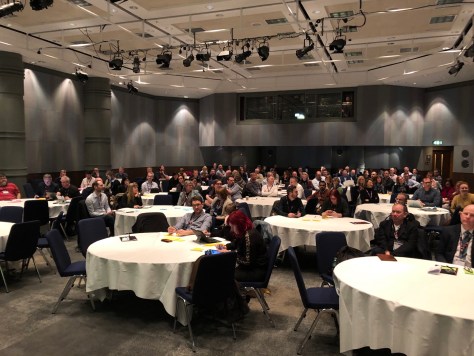
Wednesday I travelled to Nottingham for Networkshop, where I chaired a panel session. The session was entitled, What will the university look like in 2030?

Networkshop Panel Discussion

The background to the session described what we wanted to discuss.

What we hope to discuss and share our views on is about what the student experience will look like in 2030? What are the challenges students and staff will face in the future. Our panel of experts will discuss which emerging technologies offer the most promise in helping with the challenges universities and colleges face. The session will highlight the horizon report and Jisc’s view of education 4.0. This session is aimed at helping managers understand the future student experience, and what it potentially could look like and the challenges that may arise. What emerging technologies will help to meet these challenges, and how do they integrate these into the current and future institutional strategies. As you might expect with a somewhat technical audience some of the panellists will focus and discuss the technical aspects. How do we ensure we have the infrastructure and bandwidth to meet these challenges? How do we ensure security of the growing network, which takes advantage of the cloud and the internet of things?

I really quite enjoyed chairing the panel session, we had a great diverse panel with different backgrounds and experiences. We even had a student (which shouldn’t really be a big issue, but sometimes is at these conferences). We had a wide ranging discussion covering not just the student experience, but also opinions about the infrastructure needed to enable this. We had a good range of questions from the audience.

As it was scheduled the end of the day, it was a late finish. Nottingham isn’t in the middle of nowhere, but is a bit of a hike from Weston-super-Mare and back in a day.

Thursday was the final day of the week, a shorter week this week for me, as I am on leave on Friday. I was interviewed by Sophie Bailey and recorded for The EdTech Podcast in which I discussed my role, but also some of my thoughts on Education 4.0 and how we get there. I enjoyed the interview and reminded me of how much I enjoyed recording the elearning stuff podcast.

In between calls I looked at openetc which Lawrie had forwarded me the link, having attended a presentation about it at the OER conference which is taking place in Galway this week.

What Is OpenETC

I did consider going to OER19, but in the end decided not to. Not because it wasn’t going to be interesting and informative, but I am still relatively new in the role and the timeframe was quite short. Also it clashed with some home stuff.

Reading and reflecting on openetc, it reminds me of the PLE/VLE discussions we had ten years ago, when there would be these tools that students would use to create their own learning environment. My view back then was that the VLE would be at the hub of a learner’s online envruonment, and then they would plug in other tools. The use of LTI (Learning Tools Interoperability) which was initially developed back in 2008 with the final specification launched in 2010 made this much easier for people using tools such as Moodle, to then plug in other tools such as WordPress or Mahara.

The incarnation of openetc as a community also reminds me of the “offer” from ULCC of managed services that integrated Moodle and Mahara, the real advantage for FE was that it was a) managed so they didn’t need the skills and knowledge to maintain the service b) secure – they managed the security and patching. It is something that people may want to look at.

I had another meeting later about the future strategy, which was interesting and informative. One key thing we discussed was the importance of a robust data estate to fully exploit the advantages of analytics, across all aspects of the university.

Slightly annoyed that the meeting following that got cancelled at relative short notice. Something I need to reflect on, as it appears to be happening a lot with my diary.

I spent the rest of the day clearing through my inbox, nothing like Inbox Zero to end the week on. I also spent time planning for next week.

My top tweet this week was this one.

I am a unicorn!

It’s not your name that matters, it’s what do that counts.

Lego Unicorn
Lego Unicorn – Image by Joakim Roubert from Pixabay

One of the facets of membership of ALT is the busy, informative and interesting mailing list that you can participate in. As well as collaboration, asking for advice and information, there are also on the odd occasion entertaining discussions on topics related to learning technology.

Recently, Peter Bryant from USYD,  posted the following:

We are building a new team of educational and technology expertise at USYD. USYD are looking to build the kind of expertise that goes above and beyond system administration, learning object making and technology support (noble pursuits all mind). We are looking for a team of learning technologist type people who can work with designers to identify and deliver solutions for wicked and grand pedagogical challenges, work with academics on training and development, see and support innovation and pushing the technological envelope and to work collectively to evaluate the impact and success/failure of these interventions. 

So, my question for the list, what kind of job titles would you call such a unicorn?

There then followed a deluge of responses about what these unicorns should be called. As you might expect the predominate response from a list of members of Association for Learning Technology who in the main are learning technologists was that these unicorns should be called learning technologists.

Reading the discussion, I was reminded of something I wrote in 2017 about the name of my eleaningstuff blog.

It’s not what you say you do, it’s the way that you do it!

I was thinking the other day that I don’t have enough readers of the blog and insufficient engagement So the solution has to be that the name of the blog isn’t right. First idea would be change the name from “elearning stuff” to “blended learning stuff”. Then again maybe I could choose “e-pedagogy stuff” or what a about “threaded learning stuff”. How about “hybrid pedagogy stuff”?

Do you think that changing the name will significantly increase readership and engagement on the blog?

Of course the response to this question is a resounding no!

As I discussed in that blog post, I think that the job titles are a similar challenge to the name we call e-learning or blended learning or TEL, or digital learning or whatever the flavour of the month is.

The job title is (mostly) irrelevant (except maybe to identify to those looking for a role what the role may be about). Often we look at job titles as the people behind those job titles are finding it challenging to engage with academics to help them to make the best and most effective use of technology to enhance learning and teaching. We think that by changing the job title we will be more effective in engaging with academics. Of course how many times do you engage with someone by pushing your job title at them?

The real challenge has been working with academics and their mindset (and culture) and job titles will always be wrong in some people’s view, regardless of what that job title is, was or will be. This was identified and echoed by people on the list.

Academics in the main don’t see the value in these roles, so there’s a culture issue here too.

…one day we were told our TEL team was moving to be part of Teaching & Learning Enhancement (TLE). This move changed the mindset of how most academics viewed the TEL team…

It should be helpful for the staff you interact with, so the language should reflect the language of the institution.

If you are having challenges in engaging staff in the use of digital and learning technologies and thinking that changing the “name” for the people who do this, we use is the solution, i would suggest you may actually want to spend the time and effort thinking about your approaches and the methodology you are using.

Of course the real reason people choose to change the language, is that it is much easier to do that, then actually deal with people!

Addendum

Having written a draft of this blog post, I shared it with Peter and he divulged that the reason for asking the question was about attracting the right kind of recruit. Which is a reason, as I mentioned above, The job title is (mostly) irrelevant (except maybe to identify to those looking for a role what the role may be about).

The Intelligent Science Park – Weeknote #05 – 5th April 2019

I was in the Bristol office on Monday morning, firstly I was discussing the panel session I had agreed to attend at Jisc’s Networkshop event in Nottingham next week. The end result was I found myself seeking out some panellists for the session and to find myself chairing the whole thing.

The session is entitled, What will the university look like in 2030? What we hope to discuss and share our views on is about what the student experience will look like in 2030? What are the challenges students and staff will face in the future. Our panel of experts will discuss which  emerging technologies offer the most promise in helping with the challenges universities and colleges face. The session will highlight the horizon report and Jisc’s view of education 4.0.  This  session is aimed at helping managers understand the future student experience, and what it potentially could look like and the challenges that may arise. What emerging technologies will help to meet these challenges, and how do they integrate these into the current and future institutional strategies. As you might expect with a somewhat technical audience some of the panellists will focus and discuss the technical aspects. How do we ensure we have the infrastructure and bandwidth to meet these challenges? How do we ensure security of the growing network, which takes advantage of the cloud and the internet of things?

Following that I was in a meeting with my fellow sector strategy leads updating our progress and what challenges we were facing. This was the first of these meetings I had attended in my new role, so was both challenging and informative.

The afternoon saw myself and colleagues from my new directorate attend a tone of voice workshop. This was an interesting diversion and though there was a lot to take in, the key message for me was to collaborate more in my writing. I often pass draft blog posts to people for comment, but sometimes I am impatient and publish straight away. I know the value of a good proof reader and copy editor as well as collaborators.

On Tuesday I was off to the University of Birmingham for the UKSPA conference.

The mission of The United Kingdom Science Park Association (UKSPA) is to be the authoritative body on the planning, development and the creation of Science Parks and other innovation locations that are facilitating the development and management of innovative, high growth, knowledge-based organisations.

I had been invited, before I took on my new role,  to talk about the Intelligent Campus. I took my usual presentation on this and gave it a Science Park wrapper, so it was called The Intelligent Science Park.

The presentation as you can see is mainly, okay all, photographs. I use Pixabay and Unsplash a lot now to find images for presentations.

Lego Unicorn
Lego Unicorn – Image by Joakim Roubert from Pixabay

To a packed room I talked about the difference between the smart campus and the intelligent campus. I discussed the potential of an intelligent science park and the benefits this could provide organisations on those parks and for the people working there. I adapted our Intelligent Campus slide to convey what a hypothetical intelligent science park data infrastructure could look like.

I also went through the challenges that arise, the ethical considerations, the legal aspects (including GDPR), the importance of security, as well as the key challenges of technical and validity. There were lots of questions and interest in the topic.

Wednesday was an opportunity to catch up on missed e-mails and other communications.  I also finalised the plans and details for the panel session at Networkshop. I had a meeting to catch-up on the discovery work being undertaken in the area of curriculum analytics. Initially this had been tied up into the intelligent campus work, before been separated and worked on independently. It was good to see where it had got to and the potential for the future. This work was then presented later in the week to the Jisc Student Experience Experts Group.

The afternoon was catching up on the work being done by Jisc in the area of wellbeing and mental health. I think it’s important that when we say something like…

Working on how data and analytics and other technology related approaches can support mental health and well-being for staff, students and researchers.

That what we’re actually saying is something more like…

Working on how data and analytics and other technology related approaches can provide insight, intelligence and inform those staff and services that work in this space and support the mental health and well-being of staff, students and researchers.

This isn’t about just using data and analytics in the field of wellbeing, but using data to provide insights for people that work in this space, that may otherwise be missed, allow for earlier interventions, but also understand the impact of those interventions.

Thursday saw another meeting with a member of the Jisc ELT discussing the HE and student experience strategy. I am having a series of meetings with key members of the Executive to discuss the strategy.

On Thursday and Friday I had some administration to do, both for the new role, but also some legacy Intelligent Campus admin to sort and send out. Despite trying to maintain detailed notes on the Intelligent Campus Confluence site, you realise as you leave a project how much is buried inside the odd e-mail, in your head or was passed to other people in the team. We are recruiting a replacement for me to lead on the Intelligent Campus project, and I am sure that there will a lot of handover discussion as they bed into their new role.

My top tweet this week was this one.

What is required of us as educators for the future? – Weeknote #04 – 29th March 2019

After a busy week last week with three days in London, this week is nearly as busy with another three days in the big smoke. On Monday I attended an ideas workshop in London. There were two identical sessions looking at two grand challenges. I enjoyed both sessions and felt that I both learnt stuff and contributed stuff.

The following day I was preparing for my presentation on Thursday and the slidedeck I prepared was just images. I like to do that now and again. Back in 2006, which for me feels like last week, but was some time ago, I remember a senior manager commenting on the amount of text I had on my slides I gave for a presentation. I realised that despite having initially a minimalist approach, I had started to have “text creep”and my slides were filling with text.  I usually try and keep the number of words on my slide to a minimum, but now and again I miss words out completely and go just for images. So from then on I tried to do as little text as possible.

This blog post from 2005 (and the follow up post from 2007) were very influential in my presentation style and slidedeck design.

One meeting I was in was about Jisc’s student partners. I have always thought that the student voice is important and should inform your planning and development. Having students participate is really informative and useful, but as we do, consider what the student gets out of the experience as well.

Another meeting was discussing a development session we are running for staff towards the end of April on implementing agile. This was originally something I said I would do in my previous role, but am happy to do

Wednesday I was back in London for a workshop on looking at how Jisc can influence the influencers. This was an interesting day and again it reminded me how much I enjoy working in the London office. This was followed by a management meeting. A later finish and an earlier start the next day meant I was staying over in London. Gave me a chance to walk around the area near the hotel (close to BBC Broadcasting House) and have a nice meal at Wahaca.

Chargrilled Crown Prince squash grown for us by Riverford Organic, served with kale & cashew nut mole

On Thursday Waking up earlier than planned gave me a chance to have an early morning walk around Regent’s Park, there are some lovely green spaces in London and if I have the chance (and the time) I do like to explore some of them now and then.

Regent's Park

I was presenting on Thursday the keynote I prepared earlier in the week for the Association of Colleges and The Education and Training Foundation Data Science Conference. My session entitled What is required of us as educators for the future was an insight into fourth industrial revolution, Education 4.0 and what FE Colleges might need to consider to meet these exciting challenges and opportunities.

I also showed the Jisc Education 4.0 video.

The rest of the day was stimulating and informative. The hands on workshop run by my Jisc colleagues sparked a lot of interest from delegates.

Friday was a chance to update my colleagues on Jisc the state of play of the sector strategies that we have in place and are developing. I lead on the HE and student experience sector strategy and this was an chance to discuss progress on the existing strategy and where we may be heading in the future. You won’t be surprised to hear that Education 4.0 is on that horizon. I spent part of the day clearing out my inbox of e-mails, making sure I was up to date and planning for the next couple of weeks as well.

My top tweet this week was this one.

Brave New World – Weeknote #03 – 22nd March 2019

In my previous role I spent a fair amount of time working from home, this week I was out every day, three days in London and two days in Bristol. This was unusual, but was mainly as I am stlll transitioning from one role to another. Two days were focused on the Intelligent Campus, three in my new role.

The week started in London. I was leading a Senior TEL working group that advises and informs the work of Jisc. I see talking and importantly listening to the sector an important aspect of my role. This meeting was a great opportunity to introduce myself to some key stakeholders, but also find out the challenges they currently face and what their priorities are.

On Tuesday I had an initial meeting about a future Education 4.0 and student experience internal workshop. I also did some planning for a keynote presentation I am doing next week.

Wednesday was another visit to London, the main reason for my visit was to be available for an overview meeting of the Intelligent Campus, which in the end I did not need to participate in. I find our new London office a really nice place to work, with a variety of spaces for different kinds of working. Though some of the chairs in some of the spaces are not conducive for long term working, which I guess is a good thing.

I made my way to the Bristol office on Thursday to have a meeting with Axians to discuss Jisc’s work in the Intelligent Campus space. A key part of the project is to work with vendors and others who work in this space, to see how we can collaborate.

Despite having a new role, there is still a phased transition from my previous role, in regard to my work on the intelligent campus. I published some new use cases in the intelligent campus space. 

Intelligent equipment sharing 

Is it lunchtime? 

As I said in a previous weeknote, these use cases which have been written in collaboration with Hapsis provide universities and colleges with an insight into the potential of the possibilities of the intelligent campus. In the same way you should reflect on the pedagogy before hitting the edtech, with the intelligent campus it’s useful to know what you want to do, before thinking about the technical possibilities.   

Here is East

The week ended in London, where I was participating in an Advance HE event, Brave New World: Is the HE Sector ready for the Fourth Industrial Revolution?

AdvanceHE Brave New World event

With my colleagues Martin Hamilton were part of the world café session of the event which allowed participants engage in debate around 4IR and understand some of the current good practice and thinking in this area. We were talking about Education 4.0 in the context of the fourth industrial revolution. Made me think about how we take this discussion further in the future.

So there’s me thinking hopefully next week will be less busy, no it isn’t.

My top tweet this week was this one.

Intelligent Talking – Weeknote #02 – 15th March

Monday I was working at home and spent some time preparing for my talk on the Intelligent Campus which I am delivering at Digifest.

I spent two days in Birmingham at the annual Jisc Digital Festival, Digifest. On the first day I delivered a one hour thought leadership session on the intelligent campus.

There were over a hundred people in the room and I enjoyed talking about the intelligent campus, defining what it means, how it could work, the potential for universities and colleges.

The second day of Digifest gave me a chance to participate in a range of sessions, though I really did enjoy the panel session on the listening to teachers report run by Lawrie Phipps and Donna Lanclos.

I had a fair few calls about future events and my role within those events.

Towards the end of the week I was ensuring that all the logistical details of the Senior TEL working group meeting were completed. In a new directorate meant that not everything was done in the same way as was done in my previous role. Some of the processes though were the same. I also took the time to doing some background reading for the meeting.

My top tweet this week was this one.

First week – Weeknote #01 – 8th March 

University of Hertfordshire

The week started first thing on Monday morning with a meeting at the Hatfield campus of the University of Hertfordshire.  This was the initiation meeting for a project that is looking at how universities use services provided by Jisc. I had gone up the night before as it was a 9am meeting and to be honest to get over to the other side of the country first thing Monday morning isn’t that practical.

Understanding the relationship between Jisc and its funders was the subject of various meetings I attended this week, meeting key people in Jisc who I will be working with in the new role. Despite having a new role, there is still a phased transition from my previous role, in regard to my work on the intelligent campus.

I published three new use cases in the intelligent campus space.

It’s too noisy! 

Congestion ahead 

Intelligent energy 

These use cases which have been written in collaboration with Hapsis provide universities and colleges with an insight into the potential of the possibilities of the intelligent campus. In the same way you should reflect on the pedagogy before hitting the edtech, with the intelligent campus it’s useful to know what you want to do, before thinking about the technical possibilities.

Spent some time discussing a World Café session myself and Martin Hamilton would run at an AdvanceHE event in a couple of weeks time about the Fourth Industrial Revolution. We decided our focus would be on Education 4.0, the Jisc response to the challenges of the  Fourth Industrial Revolution.

I also found myself being invited to keynote at the forthcoming AoC/ETF Data Sciences Conference at the end of the month.

My top tweet this week was this one.

Talking Intelligently at #Digifest19

Digifest

Next week it’s time for Jisc’s Digifest and I am doing a one hour interactive presentation on the Intelligent Campus.

The smart campus is already here; the technology, sensors and data analysis capability is all available, but it isn’t all joined up and so has limited scope in terms of what we can learn and how we can use the knowledge.

In order to enhance the student experience, allow for more effective and efficient use of space, could we take the smart campus and make it intelligent?

Universities and colleges spend billions on their campuses, yet they are frequently underutilised and are often a frustrating experience for students. In this session, I will describe the campus of the future. How does a traditional campus become a smart campus? What are the steps to make a smart campus, an intelligent campus? We have an opportunity to provide our members with a service that can help them address that problem. If we extend our learning analytics infrastructure to collect data from a wider range of institutional software and devices then we can deliver novel insights to institutional managers to help them make their campuses more efficient, improve student experience and deliver higher quality teaching.

The future intelligent campus service aims to find effective ways to use data gathered from the physical estate and combine it with learning and student data from student records, library systems, the virtual learning environment (VLE) and other digital systems. This session will describe what data can be gathered, how it can be measured and explore the potential for enhancing the student experience. It will demonstrate and explain to the delegates what the exciting future of the intelligent campus. Importantly I will also ask delegates to consider the ethical issues when implementing an intelligent campus as well as the legal requirements.

The one hour session takes place on there 12th March, at 11:30 in hall 9.

To read more about what is an intelligent campus have a read of this article, What makes an intelligent campus?, in Educational Technology written by me.

To find out more about the Jisc Intelligent Campus project – Using data to make smarter use of your university or college estate – see this webpage.

Jisc have published a guide for universities and colleges who are interested in venturing into the Intelligent Campus space.

In order to understand the potential of the Intelligent Campus space we have published a series of use cases.

For regular updates on the project and what is happening in the Intelligent Campus space then visit the project blog.

So long and thanks for all the fish…

Well time for a new job. Having spent just over three years at Jisc as a Senior Co-Design Manager, I have a new role at Jisc as the Head of higher education and student experience.

I have enjoyed my three years in the Futures Directorate at Jisc starting working for Sarah Davies on the digital capabilities project, before moving onto developing the Digital Leaders Programme with Lawrie Phipps, and working in the apprenticeships space and the Intelligent Campus.

I have had the opportunity to work with some great people in Futures and from the sector. I did start to list them and realised that there had been so many I was bound to miss someone out. Thanks to everyone.

As Jisc’s Head of higher education and student experience I coordinate Jisc’s overall strategy for HE learning, teaching and student experience and have lead responsbility for promoting the total programme and value and impact of all HE learning, teaching and student experience products and services delivered by Jisc.

I lead the ongoing review of Jisc’s HE learning and teaching strategy, positioning this work within the organisation’s overall strategy I ensure that Jisc’s portfolio of activity in this area remains in line with Jisc’s HE learning and teaching priorities and work closely with colleagues to develop Jisc’s understanding of the value and impact of all of our HE learning, teaching and student experience activities.

As Head of higher education and student experience I am also responsible for framing how current and future challenges in this area can be resolved by technological innovation and translating the key insights into actionable innovation pipelines that deliver real impact.

I manage the monitoring of national and regional HE learning, teaching and student experience customer and funder priorities, and work with Jisc account managers to examine the value ascribed by customers to Jisc products and services in this area, the join up of intelligence from funders and customers and the internal sharing of this, as appropriate.

I also manage the process of directorates identifying and mapping operational activities to our HE learning, teaching and student experience priorities, and the tracking and measuring of impact, highlighting gaps, challenging work if it is not aligned to priorities and identify emerging opportunities as these materialise.

If you are going to Jisc’s Digifest next week, come and say hello.

news and views on e-learning, TEL and learning stuff in general…