Tag Archives: european higher education interoperability framework

Discovery and student mobility

typing
Image by StartupStockPhotos from Pixabay

I have been looking at student mobility in the UK. What I mean by student mobility is how a student can choose when and where to study, at a time and place that is suitable for them. It’s about enabling students to take parts of courses from different institutions. This (in theory) is possible now, but was challenging for students from both a financial perspective and administratively.

One of the use cases of the European Higher Education Interoperability Framework is about discovery.

Enhancing the visibility and comparability of diverse learning and mobility opportunities across HEls, emphasising the importance of machine-readable metadata for easy comparison and discovery.

The discovery use case marks the beginning of the learner journey. This use case focuses on the concept of a course catalogue. 

coffee
Image by Engin Akyurt from Pixabay

Student story

Margo wants to study towards a degree but wants to combine different modules from different courses across Europe. She knows the subjects she is interested in; she also knows which countries where she would like to study. However, she doesn’t know which universities across Europe offer which modules. Discovery would allow Freya to access the course and module catalogues from across a range of universities, compare different offerings and would be able to refine her search based on specific criteria. She would also be sure that the information she finds is up to date.

When you start looking into discovery you start to realise that there are quite a few different doors into discovering what higher education is on offer.

Firstly every higher education institution offers a catalogue of courses, usually on their website, often they will also offer a print prospectus.

If you are looking at a three year undergraduate degree and you have just finished your A Levels then the UCAS website can tell what courses are out there and other can use it as well.

The government has a website, DiscoverUni, which uses HESA data to provide information on what higher education courses are been delivered.

The Student Loans Company also has a list of courses, not all courses, but all those that can be funded by a student loan.

However the data requirements for all these services are different. So, each institution has to provide the data to all the services using a different structure and format. This must add to the administrative burden for institutions. Also, at the moment this isn’t dynamic data, so regular updates need to be provided.

Of course from a student perspective, discovering and choosing a course is one thing, the next stage is application. Only one of these services, UCAS, providers an application route. With the other discovery services, the student will need to work out how to apply, whether that be through UCAS, or going direct to the providers’ website. Each higher education institution has a different process of application, virtually all will ask you to create an account on their application portal, and you will need to do this each time for different institutions.

LLE will add a huge level of complexity to the student experience in discovering courses as well as increasing the number of applications. At one stage a prospective student  may be looking on the provider’s website, then they will need to check the SLC website, then they will need to apply, which may be on the provider’s website or potentially through UCAS. They will then need to do this each time they want to complete a module of study.

In many ways, discovery is one of the more simple use cases, the data requirements are quite minimal. However, the reality is that there are multiple stakeholders with different needs and requirements, so getting consensus and agreement could be challenging.
Ivory Towers – Weeknote #369 – 27th March 2026

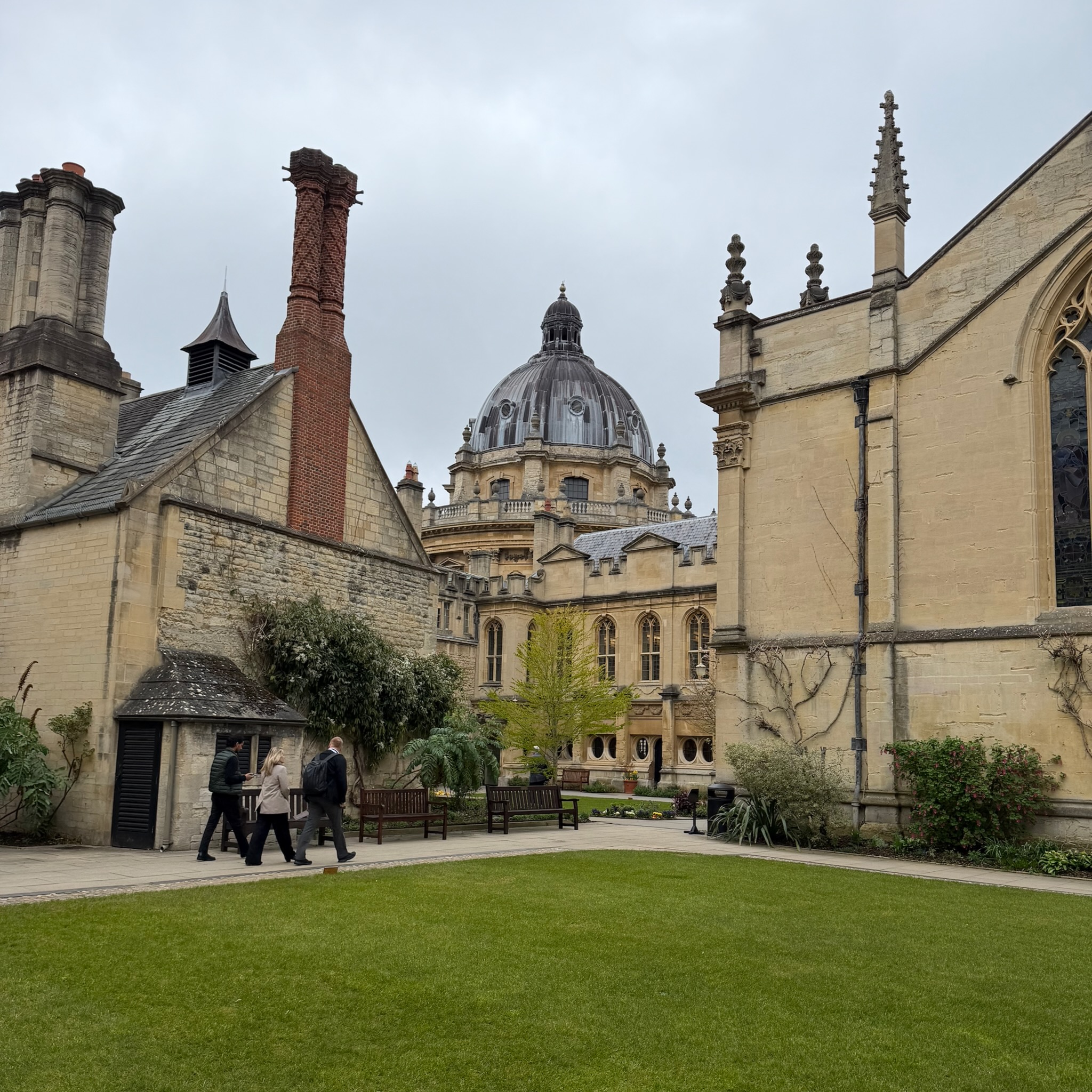
This week I was in Oxford for the HESCA conference. I enjoyed the conference and it was good to hear a range of diverse viewpoints on the use of technology to support the student experience.

I was talking once more about collaboration, but taking more of a reflective look on where we are. I was presenting a state of the nation look at collaboration and why the higher education sector is not doing more collaboration. In many ways the focus of my presentation was based on my blog post on building bridges.

On my way back from Oxford I did pop in and have a meeting at our offices in Milton Park before then heading back to our Bristol office.

I have been having conversations and discussions with colleagues inside Jisc on digital credentials and digital wallets. Within the European Higher Education Interoperability Framework one of the use cases is about how a student can communicate their educational credentials to both other educational institutions and employers. There has been quite a bit of work done in this space, what I was interested in was what has been happening in Jisc.

I wrote a blog post about the impact of student loans on peoples’ lives.

Over the last couple of years I have been saying across various conversations about the impact of paying back student loans could have on future student recruitment. I would talk about how the next generation of students will be the first whose parents were required to take out student loans to pay their fees and for the maintenance. Their parents would have the seen the real life impact of their student debt on their lifestyle. It would reduce their real income and would have had an impact on other financial choices such as mortgage affordability.

I read WonkHE’s report on AI and students. It reflected much of my (admittedly limited) knowledge on how students are using AI. 

Wonderful, Wonderful Copenhagen – Weeknote #368 – 20th March 2026

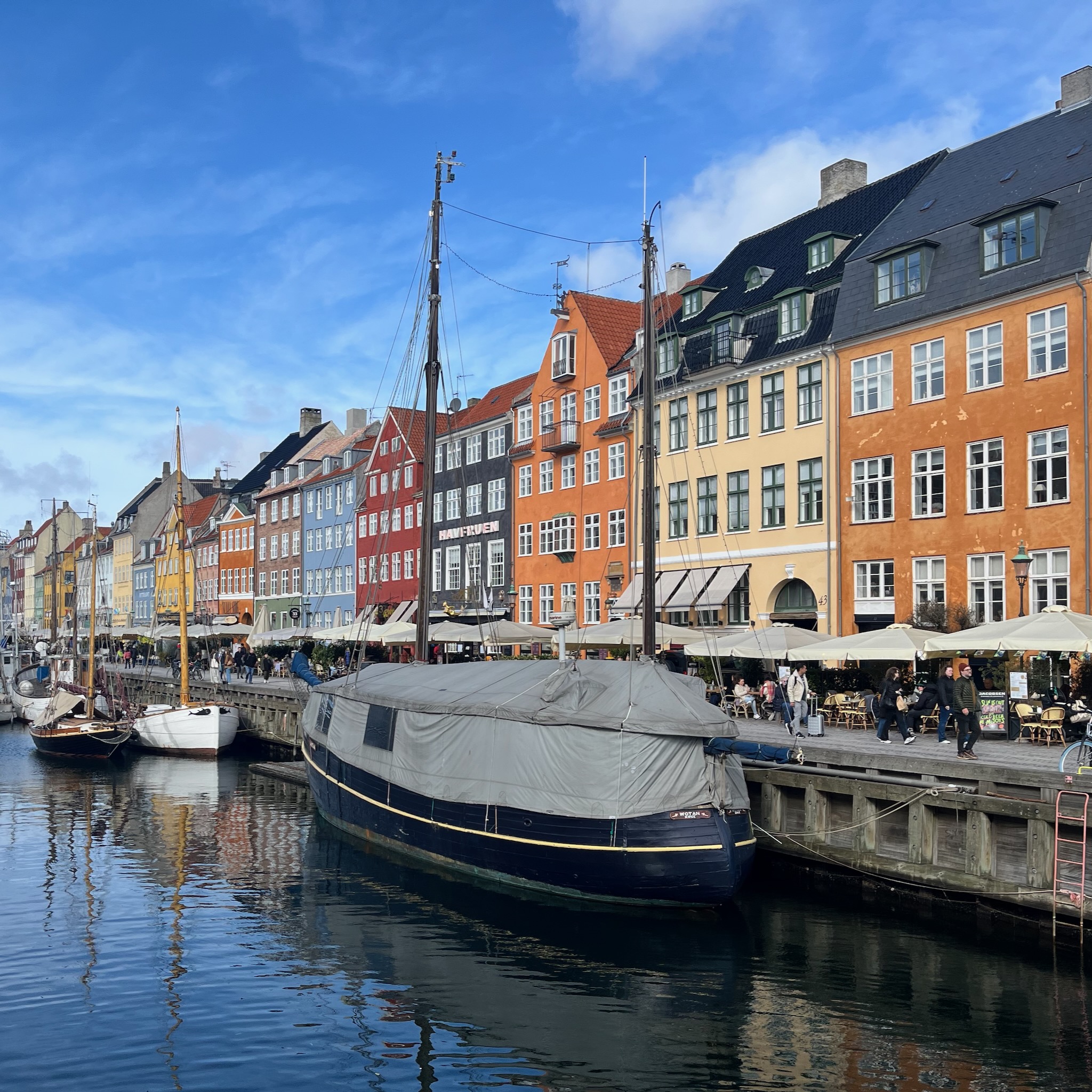
Nyhavn, Copenhagen

This week was a slightly shorter week, as I took a day off and did another crazy extreme day out, this time to Copenhagen, the capital of Denmark. I have been there before back in July 2004 staying with family. I am anticipating that future extreme day trips will be curtailed, as they become more expensive due to the spike in jet fuel prices. Though I recently did see one to Palma for £40. Hmmm…

laptop and headphones
Image by Regina Störk from Pixabay

So, what about work then?

Well at one point I was planning to attend a meeting in Helsinki in Finland, but this was cancelled last week. I also didn’t attend the UCISA Leadership Summit that was taking place in Liverpool this week. Mainly, as it clashed with the potential visit to Helsinki, but also as I found two years ago in Edinburgh that the sessions in the conference had less applicability and reference to the work I am doing.

I did a presentation to my team on my work and how it was coming together. It was useful to actually build a slide deck that told the story of the different forks of my work and how they have now come together. I always thought they would at some point, but wasn’t planning for it to be this year.

I also did some preparation for next week where I am presenting at the HESCA (Higher Education Smart Campus Association) conference in Oxford, looking at collaboration and what this means for the future.

I had an excellent discussion with a colleague who works in the part of Jisc that does HEDD and Prospects and how the work I am doing on the EHEIF (European Higher Education Interoperability Framework) is aligned. The process of qualification verification is something that HEDD has been doing for years, whilst Prospects provides a discovery services for post graduate courses, core aspects of the student journey in the EHEIF. This discussion is one of many I am having as start to understand where the UK is currently standing in the EHEFI landscape, where Jisc is in that same landscape, what this could mean for LLE (Lifelong Learning Entitlement), the data requirements, and where are the gaps and what are the potential opportunities.

online meeting
Image by Lynette Coulston from Pixabay

I did write a post about conference connections.

One of the nice things about attending any in person conference is connecting and reconnecting with people and friends.

I discuss how sometimes you lose that connection in an online space that you find in a physical in-person conference.

It had been a draft for a while, but I did get around to finishing it. I have been attempting to write more blog posts for this blog, as I was finding that though I was good at getting my weekly work notes out, I was writing less and less other kinds of posts.