Despite a lot of scepticism and negative coverage about Amazon’s new digital book reader, the device has sold out according to the BBC.
Amazon’s Kindle e-book reader has sold out despite scepticism about whether the device will prove popular. A notice on the Kindle pages on the Amazon web store said “heavy customer demand” for the device meant it would be out of stock until 3 December. Since its launch on 19 November the device has been widely examined but opinions about it are mixed.
Looks like people are interested in this digital book reader. Is this the device for e-books what the iPod was for digital music? We will have to wait and see.
BBC reports that T-Mobile to open up iPhone sales.
T-Mobile is to start allowing German customers to buy Apple’s iPhone without a contract to its network, as it moves to comply with a court injunction.
However this is in Germany only and the iPhone will be twice as expensive as the contract version.
Legislation in the UK allows for locked phones, but you could import iPhones from Germany and then avoid the two year contract making it available for testing and usability.
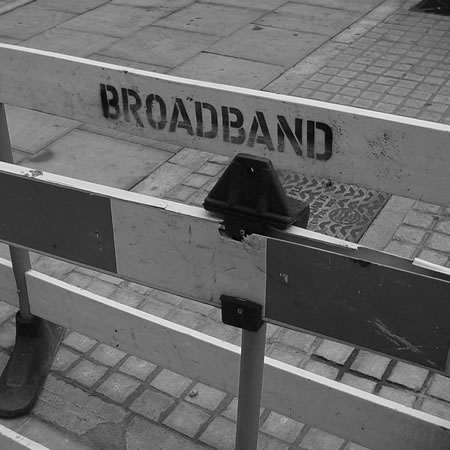
The BBC is reporting that nine out of ten internet connections are broadband connections.
Almost nine out of 10 UK net users are connecting via broadband services, official figures reveal.
Information gathered by National Statistics (ONS) for September show that 88.4% of Britons are choosing to use broadband rather than dial-up.
This means that delivering e-learning content does not need to rely on the assumption that learners are on dial-up.
With broadband often cheaper than dial-up now, if learners wish to access e-learning from home rather than in college (or in their local library) then more than likely they will be choosing broadband.
I have been using the site for that long now, so it’s nice to see that not only is it still around and still very popular, more importantly, all the stories I was reading and using for learning back in the late 1990s are still available as well. For example this story about Sainsburys from 1999 is still online and the links still work!
Too often on the web sites will rebrand or rename and all their old links die or change or become redundant. At least with the BBC News it is possible to link stories from nearly ten years ago.
The UK computer agency Becta is advising schools not to sign licensing agreements with Microsoft because of alleged anti-competitive practices. The government agency has complained to the Office of Fair Trading.
Becta is advising schools not to move to Microsoft’s subscription licensing model. They are also advising schools to look at open source solutions as well.
There was an interesting article in yesterday’s (Tuesday’s) Guardian about how un-e-enabled a lot of FE colleges are in the UK.
While not unimpressed with these statistics, the British Educational Communications and Technology Agency (Becta) puts a different slant on the overall state of ICT in FE. By its reckoning, barely a quarter of colleges are “e-enabled”, to use the quango’s unlovely jargon. A further quarter, by contrast, are either not convinced about the need to sharpen up their ICT or are late-comers to it.
This blog is not really new, I did blog about e-learning when I worked at the WCC, but I have reached a milestone with this blog, my 200th post (this one). The blog has also had over 4000 visits. Thanks for visiting and here’s to the next two hundred posts.
news and views on e-learning, TEL and learning stuff in general…