Category Archives: weeknotes

Tough times – Weeknote #285 – 16th August 2024

The HE sector is facing tough financial times ahead. Thursday’s A Level results may have been a good news item, but the university sector are facing falling student numbers, both domestic and international. In addition, flat student funding combined with rising costs, means that universities can not sustain their current expenditure and operating model. This has many implications for university priorities, including universities looking to cut costs, reduce new expenditure, and their focus being on financial sustainability and being more efficient.

Despite the positive news yesterday about the A Level results, the university sector is facing a financial crisis like never before.

 Cash-strapped universities could go bust before new students graduate

Cash-strapped universities could fold within three years due to a “perfect storm” of plummeting international student numbers and being unable to attract undergraduates through A-level clearing, a leading education expert (HEPI) has warned. A funding crisis has left 40 per cent of universities facing budget deficits, a recent report has found, with around 70 undergoing redundancy or restructuring programmes amid growing fears over the higher education sector’s financial stability.

Universities face job losses as ‘perfect storm’ gathers

Some of the universities that today’s happy students will be aiming to attend from the autumn are facing huge financial pressures. Adam McCulloch investigates a sector that could well be on the cusp of contraction – with job losses and closed departments ahead.

As mentioned in the article, a list of job losses as collated by UCU

It is clear that the higher education sector is facing challenges it hasn’t had to face before.

I thought this collated thread by Cory Doctorow was an interesting read. It is about how scholarly publishing is a “collective action problem”.

Once you learn about the “collective action problem,” you start seeing it everywhere. Democrats – including elected officials – all wanted Biden to step down, but none of them wanted to be the first one to take a firm stand, so for months, his campaign limped on: a collective action problem.

He has some examples from other industries and then spends time discussing academic publishing.

Here’s how the scholarly publishing scam works: academics do original scholarly research, funded by a mix of private grants, public funding, funding from their universities and other institutions, and private funds. These academics write up their research and send it to a scholarly journal, usually one that’s owned by a small number of firms that formed a scholarly publishing cartel by buying all the smaller publishers in a string of anticompetitive acquisitions. Then, other scholars review the submission, for free. More unpaid scholars do the work of editing the paper. The paper’s author is sent a non-negotiable contract that requires them to permanently assign their copyright to the journal, again, for free. Finally, the paper is published, and the institution that paid the researcher to do the original research has to pay again – sometimes tens of thousands of dollars per year! – for the journal in which it appears.

Take the time to read the thread.

I wrote a blog post about change and hindsight.

Hindsight is a wonderful thing, as you can ask, why didn’t they change, they could see the challenge, they could have changed, they could have adapted.

Down Solent Way – Weeknote #284 – 9th August 2024

August is a quiet time in higher education. University campuses, usually bustling with staff and students, become a calm oasis of peace. As with many organisations associated with education, Jisc is less busy and quieter.

I have been working on a report, which has required, interviews with key stakeholders across higher education, and so it has been somewhat of a relief that people have been around for those conversations.

On Tuesday I headed down the Solent way to Southampton by train for a lunch meeting with some senior colleagues from Solent University. It was a really useful meeting to discuss their challenges and how Jisc could help and support them. I also took the opportunity to test the waters of the report we’re producing on collaboration.

It’s the time of year where I get told to refresh my mandatory training, this time it was Data Protection and Information Security. I generally try and get these done, as soon as I am notified it is needed. In the past (in previous jobs) I would de-prioritise this kind of activity, as I would be busy doing other things. Then it would either be at or pass the deadline. The training would then be rushed, and a manager would be chasing me. Now I just get it done, it gets prioritised, so that it’s less of a worry and an annoyance.

In a similar vein, I did my end of year review paperwork as well. This is relatively easy to do as I record weekly activities, and these feed into both the review paperwork and these weeknotes.

Mandatory – Weeknote #283 – 2nd August 2024

I spent the week in London undertaking various activities. Some of which had to change due to transport issues and the high summer temperatures.

We had our team away day in the London office.

Spent some of the week working on a collaborative activities report that will very likely be published in September.

It’s the time of the year where I have to refresh my mandatory training, this time it was on information security and data protection. I approach these with a positive attitude, I realise some people think of this as a tick box exercise, I don’t.

Attended an action learning set, which was an interesting training session. Something I hadn’t really done before.

Had lunch with a few of our relationship managers in the London office. Always nice to meet up, chat and discuss stuff with them.

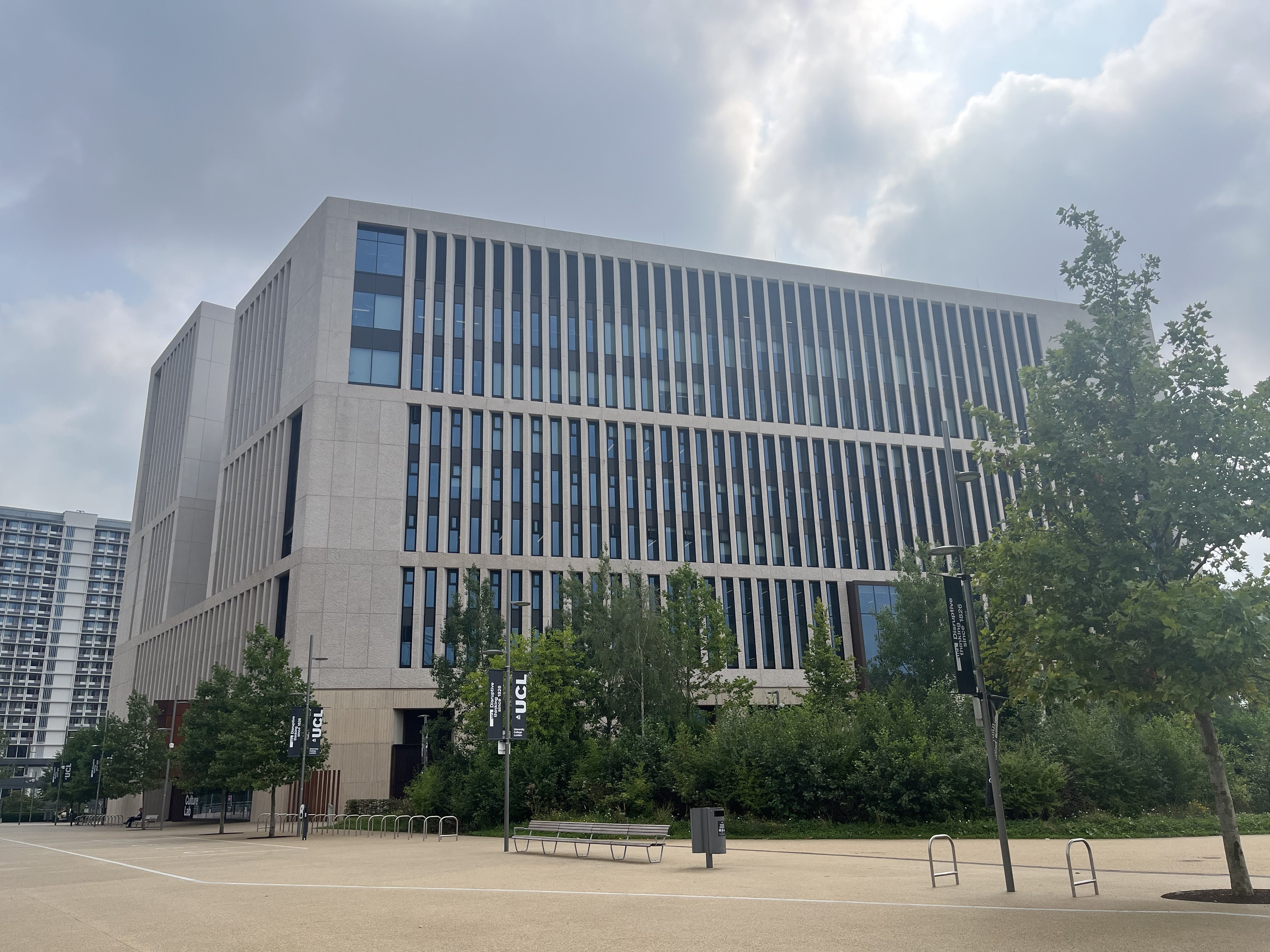
I did some field research looking at geographical challenges in collaboration. I was intrigued by the setup at the old Olympic Park where quite a few universities, both London based and nationally, have sites. I was wondering what the issues would be for students if they collaborated together on areas of the student experience. One thing I found was that, looking at a map provides some insights, but doesn’t compare to actually physically being in the location and walking the walk. Really helpful in feeding into my work on optimising operations and collaboration.

Reviewing the role of the OfS – Weeknote #282 – 26th July 2024

Keyboard

After two weeks off on holiday I was back at work. I had worked a few days of my leave over the last two weeks, so took time this week to catch up on that.

The new Education Secretary Bridget Phillipson was on BBC Radio 4’s Today Programme to launch Skills England, however she also answered questions on HE funding, reaffirming there’s no more money coming from govt at the moment.  As part of her interview she indicated that that the DfE will make an announcement in parliament about reform of the Office for Students (OfS).

I have in many meetings over the last year or so discussed the possibility that a new Labour government could abolish the OfS. The OfS was a Conservative government creation and with the recent focus on freedom of speech and other issues; could a new government replace the OfS with something new.

In the end, we still have the OfS and the announcement was about the review of the OfS:

The review found that the case for bold regulation of higher education is clear but that the OfS should more sharply focus on key priorities, which include monitoring financial sustainability, ensuring quality, protecting public money and regulating in the interests of students.

Wonkhe noted:

The review does not make substantial recommendations for OfS to be given new powers on financial sustainability but suggests that the desirability of market exit as a natural outcome of the market-based system should be reviewed, and OfS should work with government to build an infrastructure to offer advice and support for institutions experiencing financial sustainability challenges – including updating and strengthening student protection plans.

It was reported that Brunel University London to join University of London federation

Brunel University London will join the University of London federation from 1 October 2024, in a move that will strengthen the federation and open up new opportunities for collaboration between universities in London.   

This is indicative of what we might see in the future across the sector on collaboration and merger as the continuing challenges impact on the sector.

We have a new government – Weeknote #279 – 5th July 2024

This week saw the defeat of the Conservatives and a new Labour government.

Though the expectation is that there will be no new money for higher education, I think we can expect to see some reforms. Personally I am expecting major reforms for the Office for Students.

Took some leave this week as I had a fair amount of leave to take before the year end at the end of July.

Had various meetings and discussions about a report we have commissioned and the planning and processes we will use.

Driving value – Weeknote #278 – 28th June 2024

A somewhat desk based week this week.

This included reflecting and feeding back on the UUK Chapter 7 – expert roundtable last week in London.

I reviewed the Intelligent Campus Maturity Model in regard to RIBA Smart Building Overlay. There was a lot of alignment and synergy.

I attended an internal Guiding Principles review focus group at Jisc. One thing I noted about our guiding principles (or values) was how well known and embedded they were somewhat dependent on who was driving them. Something to reflect on, if you have values, of course everyone owns them, the key is who is responsible for driving them? How many people are working in embedding them into the organisation? Are the aligned in their methodology in embedding?

I attended an online event, Four Futures: Shaping Higher Education in England.

I did some research into the Intelligent Campus aspects in providing support for Digital Elevation Tool business plan. This included writing statements and content for Digital Elevation Tool business plan.

They’ll never take our freedom! – Weeknote #277 – 21st June 2024

I was in London for most of the week, attending meetings, going to a roundtable, working in the office and undertaking field research.

This Wonkhe article was interesting in that the argument was that universities should prepare for less autonomy in exchange for a more secure future. Will universities be willing to sacrifice their independence for financial security?

I attended an expert roundtable on funding hosted by UUK in London to support a report they will be publishing in September. Quite a limited conversation due to the limited time available and the limited timeframe for the report (next six weeks) and the purpose of the report which is to influence incoming government about external support HE sector needs. It was interesting to reflect that in some areas of the sector, there is still limited imagination on what needs to happen (fix a broken model), though there are other institutions who are already looking at how they can transform their operating model.

Attended a meeting about the Intelligent Campus Maturity Tool. Hopefully soon I will be able to publish some of the ideas we have for this tool. I have been working on the Intelligent Campus Maturity Tool competency statements, in the main covering the campus and technology.

This tweet made me smile

I’m increasingly of the view that the reason for The Great Silence is that civilisations are inevitably crushed by the weight of nobheads shortly after inventing the internet.

Marking – Weeknote #276 – 14th June 2024

I spent most of the week working from home, it is exam time for some in the house, so I was around to provide lifts to early revision sessions, or to ensure functionality in case of delayed buses. I did plan to go into the office one day, but even though it was June, the weather forecast was for heavy rain and strong winds. My reasoning for going to the office was that I had a series of later afternoon meetings, so I would then have somewhere quieter to participate in them. In the end, two of those three (and the most participative) were cancelled, or not needed.

I actually like going to work in the office, the change in space, place, and routine, makes a difference to how I feel, or even my wellbeing.

I have been working on a concept Intelligent Campus Maturity Tool. Based on the Further Education elevation tool Jisc produced, the idea is that you can use the tool to assess your progress in building your smart campus. I have already identified the key themes and sub-themes; I am now working on competency statements for those different sub-themes. I am planning to run a workshop in the autumn to test out the tool with the community.

At the beginning of the week I was marking and moderating some bids for a tender we had out on the opportunities for collective, collaborative, and inter-institutional activity.

A couple of meetings were cancelled which gave me some time back.

I am currently taking a leadership course at Jisc, and this week I completed some more work on this.

Had a volunteering day on Friday. Jisc provides staff with three volunteering days a year. I use mine to support the administration of running a Cub Pack. This involves planning the programme, badge administration, risk assessments, and communicating with other organisations.